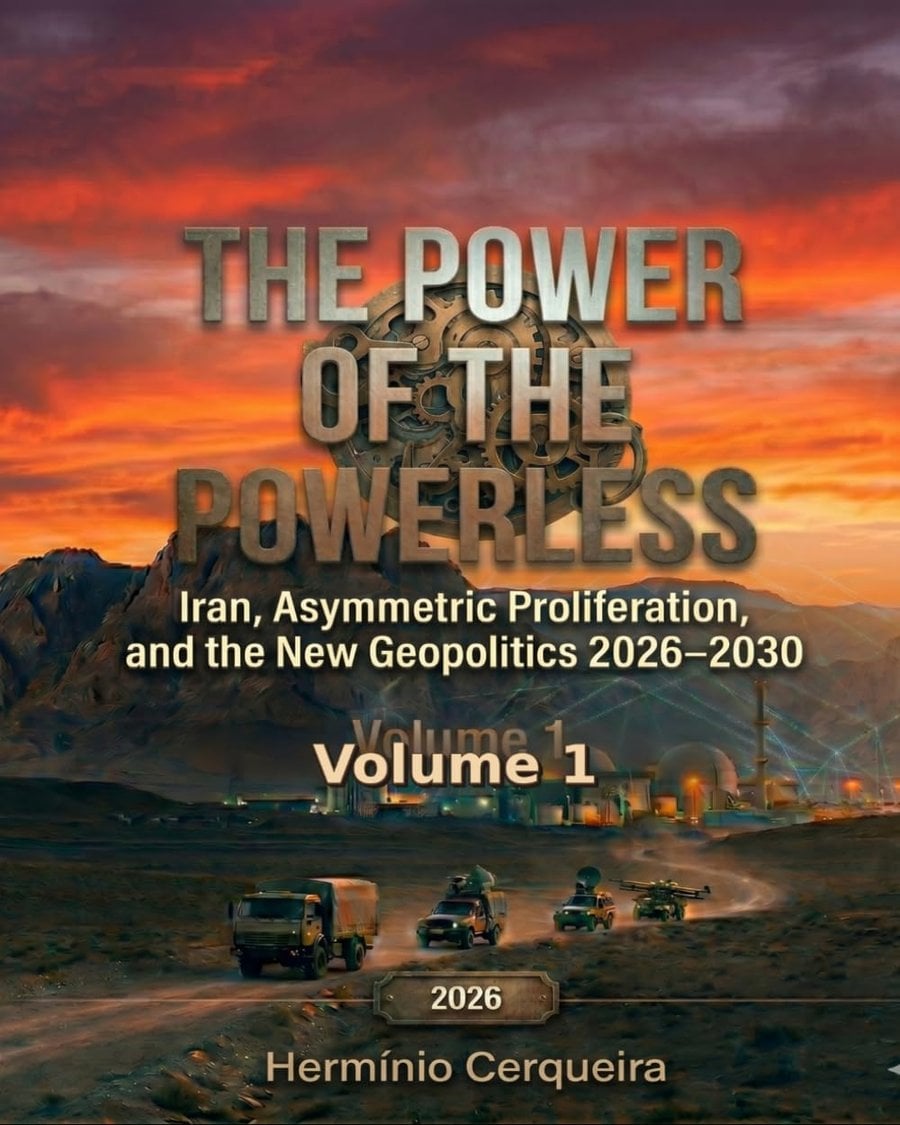
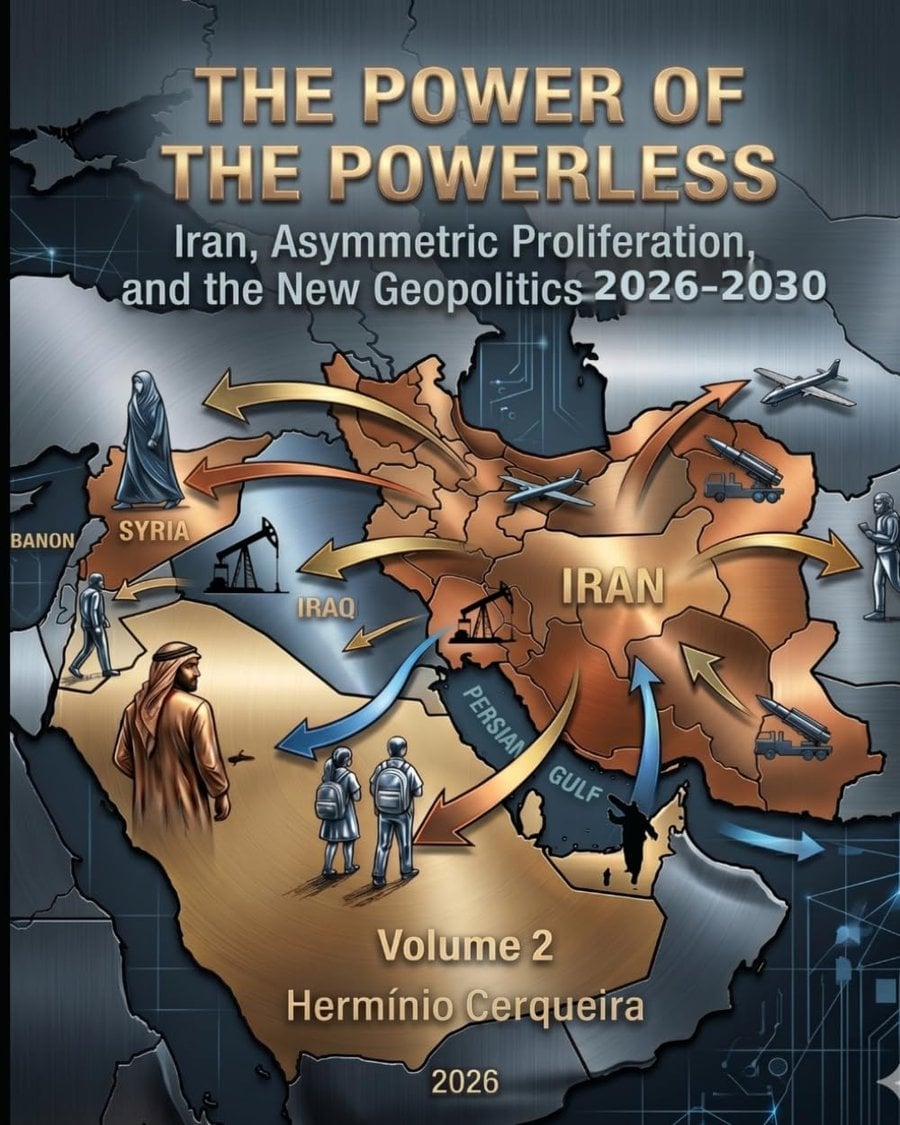
Strategi och geopolitikEssäVolym 2
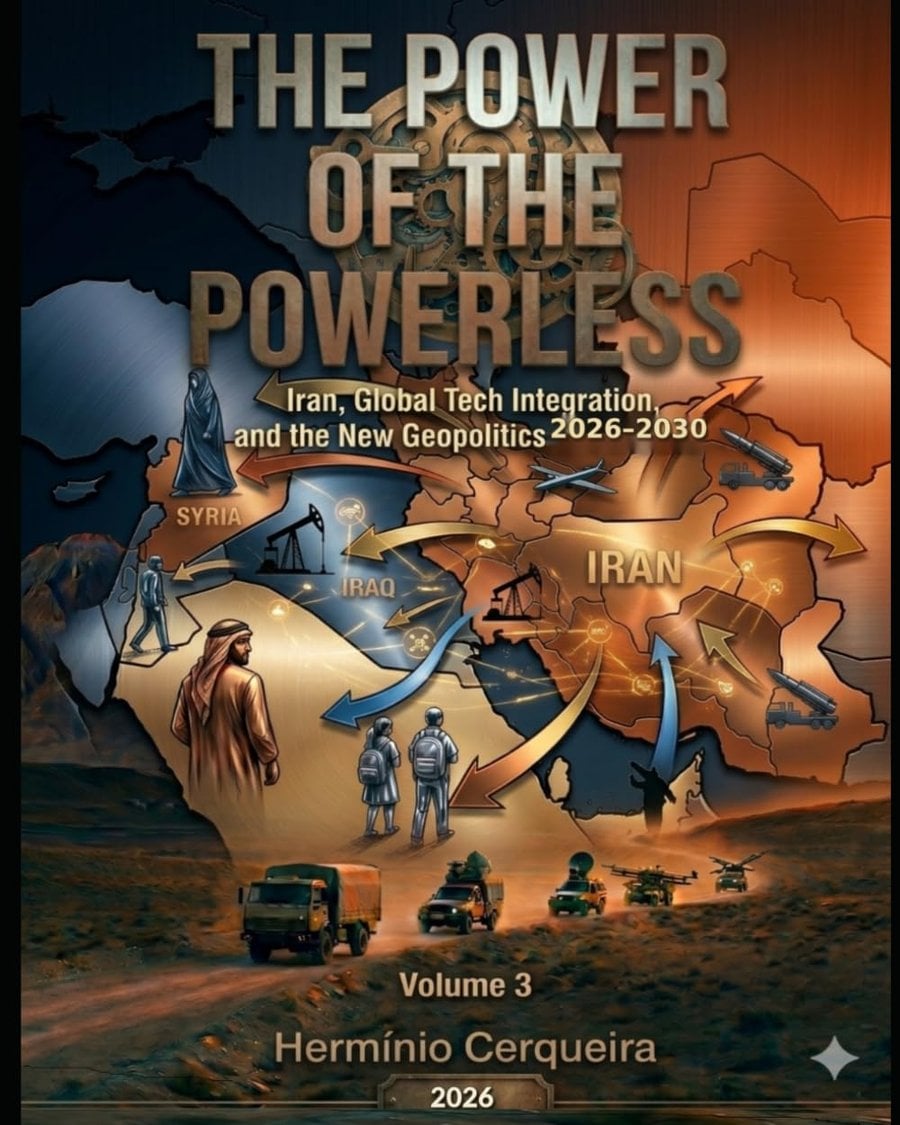
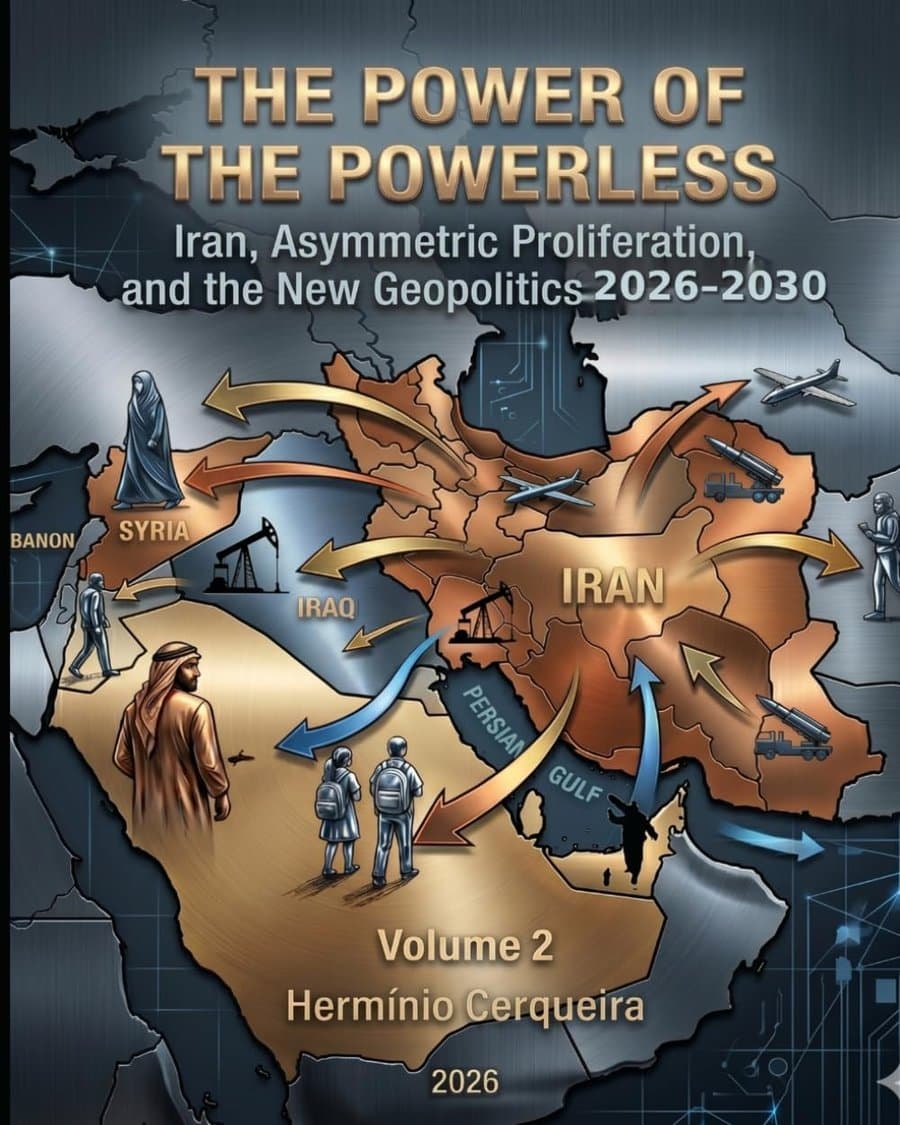
The Power of the Powerless, Volym 2
Strategic Execution and Directive 2026–2030
”o conjunto organizado de capacidades pelas quais Estados, organizações pseudo-estatais ou actores não-estatais, tecnologicamente inferiores”
- Sidor
- 459 sidor
- ISBN
- ISBN 979-8195722753
- Först utgiven
- Format
- Kindle och häftad
Om boken
Beskrivning i originalutgåvan, på engelska.
“Deterrence only works as long as the adversary believes we are capable of doing it—and willing to do it.” »
— Thomas C. Schelling, Arms and Influence, 1966
“When the weak learn to play with the weaknesses of the strong, hegemony ceases to be a structure and becomes a permanent calculation.” »
— Herminio Cerqueira, Volume I, 2025
“Power is less the ability to impose one's will than the ability to shift the terrain on which the will of others is exercised.” »
— Joseph S. Nye, Soft Power, 2004
“The history of international relations is, ultimately, the history of orders that refused to die in silence.” »
— G. John Ikenberry, A World Safe for Democracy, 2020
“There is no error-free strategic execution; at best, there is execution that learns faster than the adversary.” »
— Graham T. Allison, adapted
This volume is the logical and operational continuation of the first volume of this work, entitled The Architecture of Asymmetry, published in 2025. While Volume I focused on laying out the conceptual framework—the grammar of relations between unequal states, the genealogy of deterrence by the weak, the analytical categories inherited from classical realism, and their reinterpretation in light of the post-2022 world—Volume II delves into the most challenging and, therefore, most fruitful terrain: that of execution.
Writing about strategic execution at a time when the international order is being reconfigured before our very eyes is, by its very nature, an inconclusive task. The analyst finds himself in the uncomfortable position of a cartographer mapping coastlines that are still being carved out by the tides. However, I have assumed that the exercise is worthwhile, even if partially out of date at the time of publication: because the way of thinking about the problem—its categories, hypotheses, and falsification criteria—survives the circumstances of the moment. That is the contribution this work aims to make.
Readers who open this volume without having read the first will not be turned away: the introductory sections of the core chapters contain sufficient operational summaries. However, for readers who want to understand why this book is structured the way it is—why it begins with strategic radiology, why it culminates in the 2030 projections, why it insists on treating de-dollarization as a phenomenon of transition rather than rupture—I recommend that they return, whenever possible, to Parts I, II, and III of Volume I. The continuity of the argument is real; it is not rhetorical.
One final note. This book is not a public policy handbook, an operational briefing, or a prescriptive exercise. It is an analytical essay, with doctoral ambitions, and as such, it accepts the risk of requiring a leisurely read. The chapters are long, the notes are dense, and the appendices are extensive. Those seeking a journalistic summary should look elsewhere; those who wish to reflect on the emerging order in a structured manner may find this book useful.
Förteckning över utgåvor
En rad per utgåva, på det språk den gavs ut på. Amazonbutiken väljer du en gång, och valet gäller för alla.
Utgåva på engelska:
The Power of the Powerless
459 sidorKindle och häftad
- I Amazonbutikerna använder varje länk utgåvans egen kod (ASIN); tillgängligheten i varje land sköts av Amazon.
Kritisk läsning – ”A Obra Comentada” (2026)
En kritisk läsning i tredje person, återgiven ur ”A Obra Comentada”, den kommenterade katalog över verket som författaren själv gett ut. Det är inte en recension i pressen.
Originaltext på portugisiska.
O Poder dos que Não Têm Poder — Irão, Proliferação Assimétrica e a Nova Geopolítica 2026-2030 é o projecto de maior fôlego académico do eixo: o Volume II apresenta-se expressamente como «ensaio doutoral sobre dissuasão assimétrica, reengenharia institucional e teatros emergentes da competição entre grandes potências», e todo o conjunto — concebido como trilogia, de que se conhecem os dois primeiros volumes — adopta o aparato correspondente: nota metodológica preliminar, hipóteses de trabalho, desenho de investigação misto, tabelas quantitativas, glossário e bibliografia de fontes primárias da AIEA, do BIS, do CSIS e do Congressional Research Service.
A relação com Václav Havel, inscrita no título, é assumida e trabalhada, não meramente decorativa. O autor reconhece que Havel escrevia «sobre um contexto muito distinto: a dissidência cívica dos súbditos dos regimes pós-totalitários da Europa Central», e opera um deslocamento deliberado da expressão para a teoria estratégica: o poder dos que não têm poder passa a designar «o conjunto organizado de capacidades pelas quais Estados, organizações pseudo-estatais ou actores não-estatais, tecnologicamente inferiores», impõem custos proibitivos a potências muito superiores. Mas o fio havelinao regressa no fecho, agora em registo moral, quando o autor parafraseia o ensaio de 1978: «o poder dos que não têm poder reside em viver na verdade, em recusar a mentira institucionalizada». Entre estes dois pólos — o operacional e o ético — joga-se a originalidade do livro: a assimetria é estudada como técnica e interrogada como condição.
A tese central assenta numa tríade conceptual operatória — latência nuclear, negação assimétrica, ambiguidade estratégica — aplicada ao caso iraniano no interregno 2026-2030, sobre uma ontologia do poder em quatro estratos (produtivo, coercitivo, de negação, cognitivo) que dialoga criticamente com Morgenthau, Kissinger e Aron, com o soft power de Nye e Keohane e com o poder relacional-estrutural de Michael Mann e Susan Strange. O Volume I («A Arquitetura da Assimetria e o Tabuleiro Global») constrói os fundamentos e a genealogia da estratégia dos «fracos» — da Indochina ao Afeganistão soviético, do modelo Hezbollah ao laboratório ucraniano —, analisa o Eixo da Resistência, a economia iraniana sob sanções e a aritmética do breakout nuclear depois da operação Epic Fury, e alarga o foco às superpotências fatigadas e ao bloco BRICS+. O Volume II («A Execução Estratégica e a Ordem 2026-2030») desce ao terreno mais espinhoso: a arma radiológica e a arte do limiar psicológico — com estudos de caso de Goiânia a Litvinenko e Skripal —, a infra-estrutura da desdolarização (mBridge, «The Unit») e as projecções institucionais para 2030. As epígrafes fixam a linhagem: Sun Tzu, Tucídides no Diálogo de Melos, Waltz e Gilpin.
No conjunto da obra, este é o livro que dá profundidade teórica ao actor que os volumes narrativos do ciclo de Ormuz tratam como beligerante: onde O Atlântico em Chamas conta a guerra e a Crise Energética Mundial mede as suas ondas de choque, O Poder dos que Não Têm Poder pergunta porque é que um Estado cercado, sancionado e tecnologicamente inferior continua a ser capaz de negar a vitória ao mais poderoso exército da história. A resposta — paciente, documentada, por vezes desconfortável — é o contributo mais duradouro do díptico, e a dedicatória diz o resto: aos «que estudam a guerra na esperança de a evitar».
Citat ur boken
”ensaio doutoral sobre dissuasão assimétrica, reengenharia institucional e teatros emergentes da competição entre grandes potências”
”sobre um contexto muito distinto: a dissidência cívica dos súbditos dos regimes pós-totalitários da Europa Central”
”o poder dos que não têm poder reside em viver na verdade, em recusar a mentira institucionalizada”
”A Arquitetura da Assimetria e o Tabuleiro Global”
”A Execução Estratégica e a Ordem 2026-2030”
”que estudam a guerra na esperança de a evitar”
Andra citerade uttryck ur boken
”fracos””The Unit”
Källa: «A Obra Comentada» (Sintra, Julho de 2026) — comentário crítico
Bokfakta
- Genre
- Essä
- Verkets axel
- Strategi och geopolitik
- Först utgiven
- Sidor
- 459 (utgåva på engelska)
- Format
- E-bok för Kindle · Tryckt bok (häftad)
- Språk
- 1 — engelska
- ISBN
- 979-8195722753