Artificiell intelligensHandbok och teknik
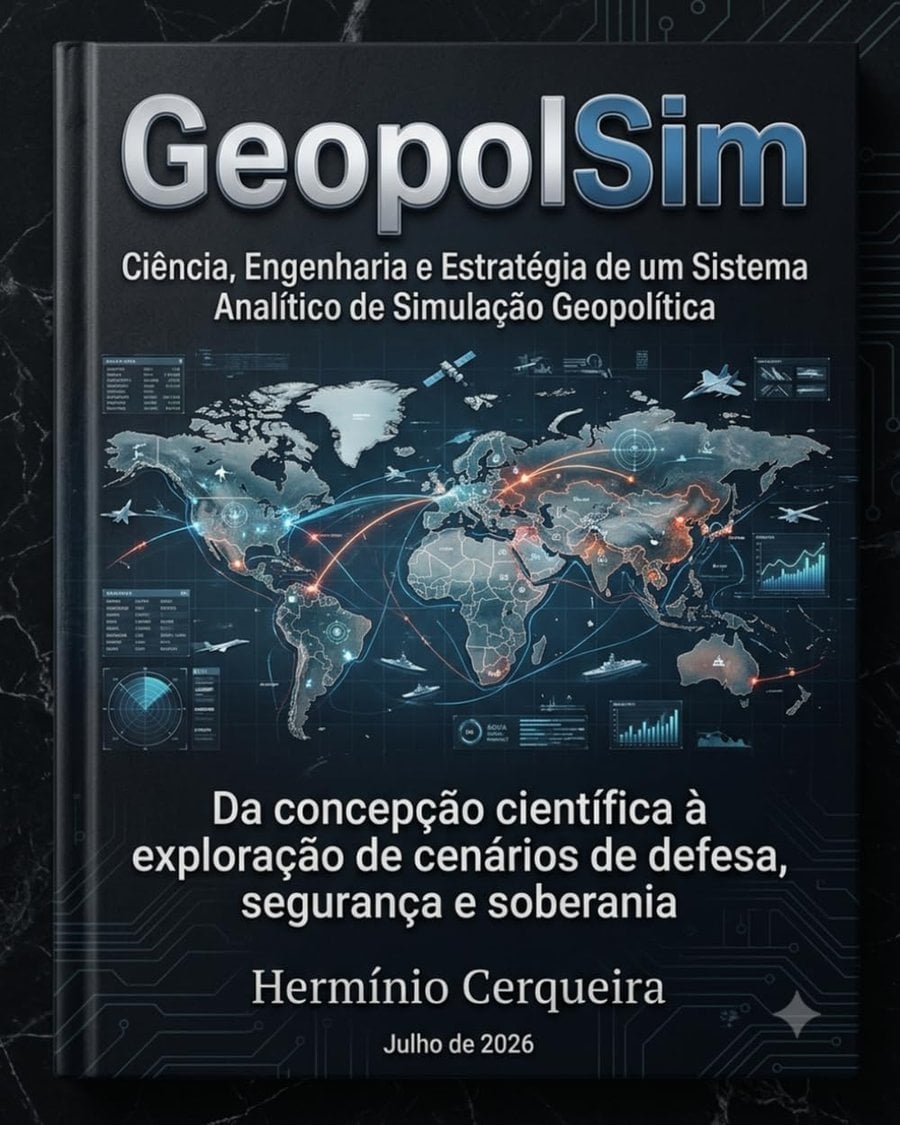
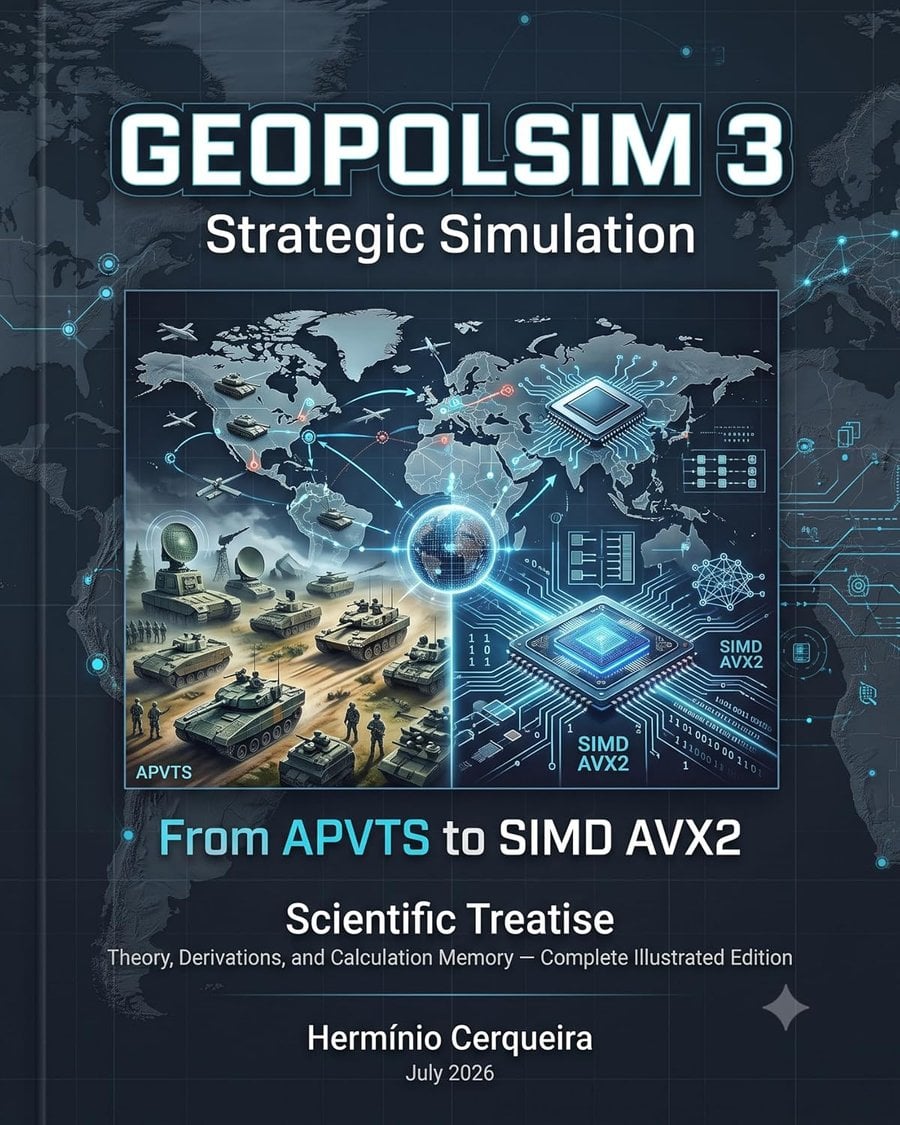
GeopolSim 3GeopolSim 3
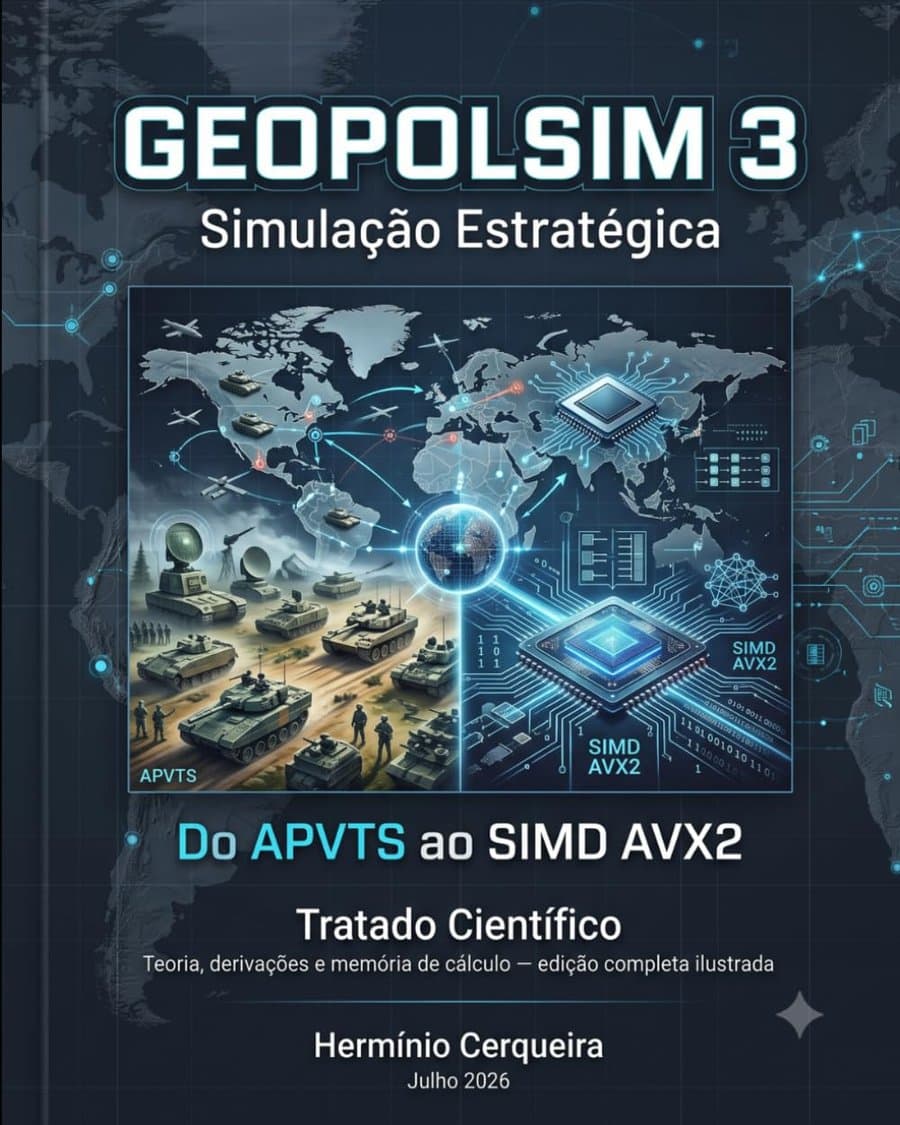
Simulação Estratégica: Do APVTS ao SIMD AVX2 · Tratado Científico
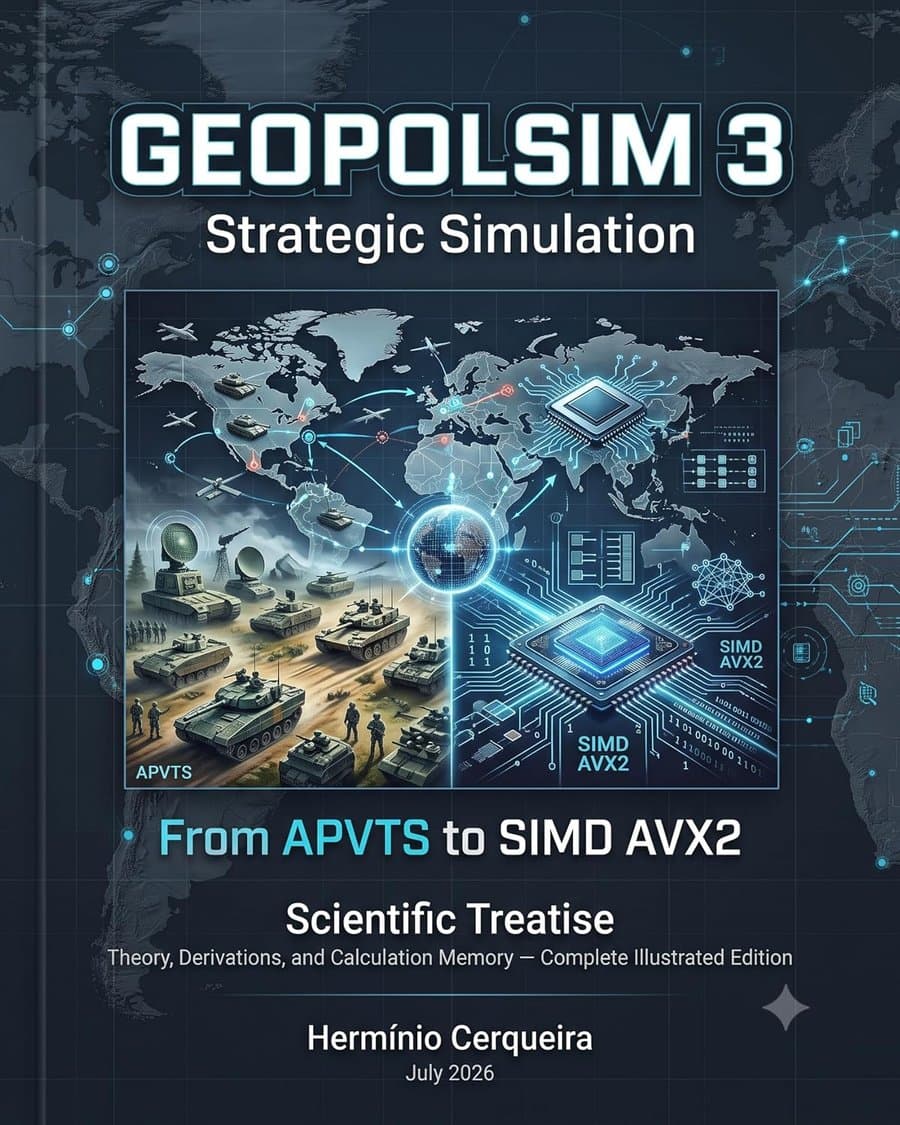
Scientific Treatise
- Sidor
- 437 sidor
- ISBN
- ISBN 979-8187859504
- Först utgiven
- Format
- Kindle och häftad
- Sidor
- 684 sidor
- Utgiven
- Format
- Kindle och häftad
Beskrivning
Beskrivning i originalutgåvan, på portugisiska.
Text publicerad med utgåvan på engelska (Amazon).
Visa merVisa mindre — Beskrivning
Tratado Científico - Teoria, derivações e memória de cálculo
Natureza e propósito do instrumento
Antes de escrever uma única equação, um livro honesto sobre um instrumento de simulação deve responder a uma pergunta que quase todos os manuais evitam: que tipo de objecto é, afinal, aquilo que estamos a construir? A resposta condiciona tudo o que se segue — o significado dos números que o motor produz, o alcance das conclusões que deles podemos tirar, e a linha exacta a partir da qual deixamos de fazer ciência para começar a fazer ficção. O GeopolSim 3 é um artefacto de software; mas a categoria a que pertence não é a de um programa que prevê o futuro. É a de um instrumento de raciocínio.
Esta distinção não é retórica. Um previsor e um instrumento de raciocínio partilham a mesma aparência exterior — recebem números, calculam, devolvem números — e, no entanto, fazem afirmações epistemicamente incompatíveis sobre o mundo. O previsor diz: «isto vai acontecer». O instrumento de raciocínio diz: «SE aceitarmos estas premissas E estas regras, ENTÃO segue-se necessariamente este resultado». O primeiro compromete-se com a realidade; o segundo compromete-se apenas com a coerência interna do argumento que encarna. O GeopolSim pertence, sem ambiguidade, à segunda espécie, e a própria documentação do projecto o declara de forma inequívoca.
1.1 O que o instrumento declara ser
O README.md do projecto (raiz da árvore GeopolSim-v3.0-dev) abre com uma advertência de leitura que vale a pena ler devagar, porque nela está condensada toda a filosofia do instrumento. Ela diz que o GeopolSim «não é um processador de áudio» mas «um instrumento de análise», e que cada actor geopolítico — Rússia, Ucrânia, NATO, China — é modelado como um channel strip com um pequeno número de parâmetros automatizáveis. O sinal de áudio, acrescenta, «passa incólume da entrada para a saída». Esta última frase é decisiva: o GeopolSim vive dentro de um host de áudio, mas não transforma áudio nenhum. Aproveita a infra-estrutura de um plugin — automação de parâmetros, recall de estado, um relógio de tempo real determinista — para outra coisa completamente diferente: correr uma simulação e mostrar as suas trajectórias.
Consequência. O facto de o instrumento ser um plugin de áudio não é um detalhe técnico incidental; é uma escolha epistémica. Um plugin de áudio é, por construção, determinista e reprodutível — o mesmo estado e a mesma sequência de blocos produzem exactamente a mesma saída, senão os músicos não poderiam confiar nele. O GeopolSim herda essa reprodutibilidade e fá-la sua virtude central. É isto que o torna um instrumento científico e não um oráculo: os seus resultados são repetíveis à instrução.
A lista de verificação de testes do README torna esta exigência operacional. Um dos critérios de aceitação lê-se: «Blocos de tamanho variável (32 … 4096) dão a mesma trajectória.» Ou seja, a trajectória da simulação não pode depender de um pormenor de implementação como o tamanho do bloco de áudio que o host escolheu nesse instante. Se dependesse, o número deixaria de ser um facto do modelo e passaria a ser um artefacto do ambiente — e um artefacto não se pode citar como resultado.
1.2 Três produtores de conteúdo, três estatutos epistémicos
O fio condutor deste tratado é uma fronteira epistémica de três níveis que atravessa todo o sistema. É indispensável fixá-la já no primeiro capítulo, porque é a régua com que julgaremos cada afirmação que o instrumento faz. Há três produtores de conteúdo, e cada um produz um tipo de coisa distinto, com um estatuto distinto...
Visa merVisa mindre — Beskrivning
Before writing a single equation, an honest book about a simulation instrument must answer a question that almost all manuals avoid: what kind of object is it, after all, that we are building? The answer conditions everything that follows — the meaning of the numbers the engine produces, the reach of the conclusions we can draw from them, and the exact line beyond which we stop doing science and begin doing fiction. GeopolSim 3 is a software artifact; but the category to which it belongs is not that of a program that predicts the future. It is that of an instrument of reasoning.
This distinction is not rhetorical. A predictor and an instrument of reasoning share the same outward appearance — they take numbers, compute, return numbers — and yet they make epistemically incompatible claims about the world. The predictor says: "this is going to happen." The instrument of reasoning says: "IF we accept these premises AND these rules, THEN this outcome follows necessarily." The first commits to reality; the second commits only to the internal coherence of the argument it embodies. GeopolSim belongs, without ambiguity, to the second species, and the project's own documentation declares it unambiguously.
1.1 What the instrument declares itself to be
The project's README.md (root of the GeopolSim-v3.0-dev tree) opens with a reading caveat worth reading slowly, because condensed within it is the entire philosophy of the instrument. It states that GeopolSim "is not an audio processor" but "an analysis instrument," and that each geopolitical actor — Russia, Ukraine, NATO, China — is modeled as a channel strip with a small number of automatable parameters. The audio signal, it adds, "passes unharmed from input to output." This last sentence is decisive: GeopolSim lives inside an audio host, but transforms no audio at all. It takes advantage of a plugin's infrastructure — parameter automation, state recall, a deterministic real-time clock — for something completely different: running a simulation and displaying its trajectories.
Consequence. The fact that the instrument is an audio plugin is not an incidental technical detail; it is an epistemic choice. An audio plugin is, by construction, deterministic and reproducible — the same state and the same sequence of blocks produce exactly the same output, otherwise musicians could not rely on it. GeopolSim inherits that reproducibility and makes it its central virtue. This is what makes it a scientific instrument and not an oracle: its results are repeatable to the instruction.
The README's test checklist makes this requirement operational. One of the acceptance criteria reads: "Variable-size blocks (32 … 4096) give the same trajectory." That is, the simulation's trajectory cannot depend on an implementation detail such as the size of the audio block the host happened to choose at that instant. If it did, the number would cease to be a fact of the model and would become an artifact of the environment — and an artifact cannot be cited as a result.
1.2 Three producers of content, three epistemic statuses
The guiding thread of this treatise is a three-tier epistemic boundary that runs through the whole system. It is indispensable to fix it as early as the first chapter, because it is the ruler with which we will judge every claim the instrument makes. There are three producers of content, and each produces a distinct kind of thing, with a distinct status:..
Förteckning över utgåvor
En rad per utgåva, på det språk den gavs ut på. Amazonbutiken väljer du en gång, och valet gäller för alla.
Utgåva på portugisiska:
GeopolSim 3
437 sidorKindle och häftad
Utgåva på engelska:
GeopolSim 3
684 sidorKindle och häftad
- I Amazonbutikerna använder varje länk utgåvans egen kod (ASIN); tillgängligheten i varje land sköts av Amazon.
- I Portugal handlar du på Amazon Spanien: det finns ingen portugisisk Amazonbutik.
Bokfakta
- Genre
- Handbok och teknik
- Verkets axel
- Artificiell intelligens
- Först utgiven
- Sidor
- 437 (utgåva på portugisiska)
- Format
- E-bok för Kindle · Tryckt bok (häftad)
- Språk
- 2 — portugisiska och engelska
- ISBN
- 979-8187859504
Det här kan också intressera dig

 Artificiell intelligens
Construindo um Plugin JUCE de Simulação Estratégica
2026 · 772 sidor · på portugisiska