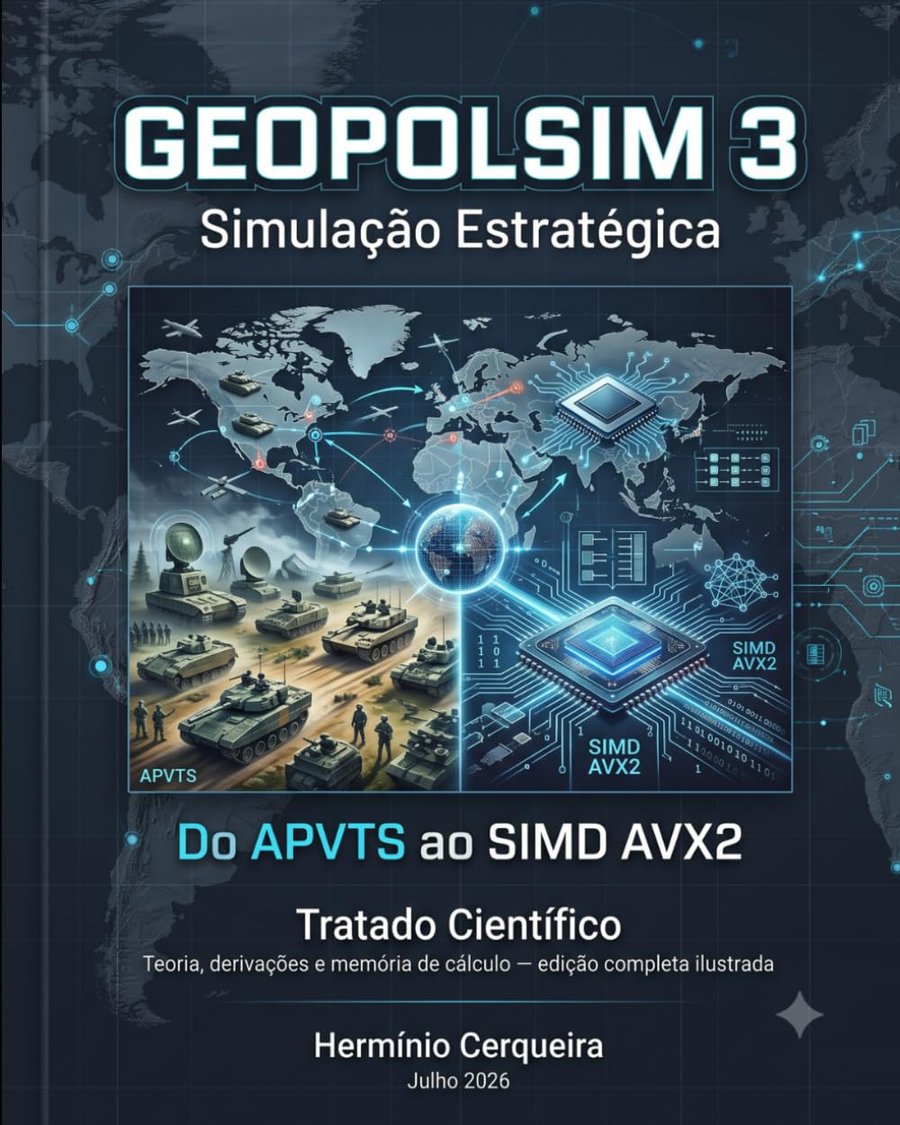

Artificiell intelligens
Construindo um Plugin JUCE de Simulação Estratégica
2026 · 772 sidor · på portugisiska

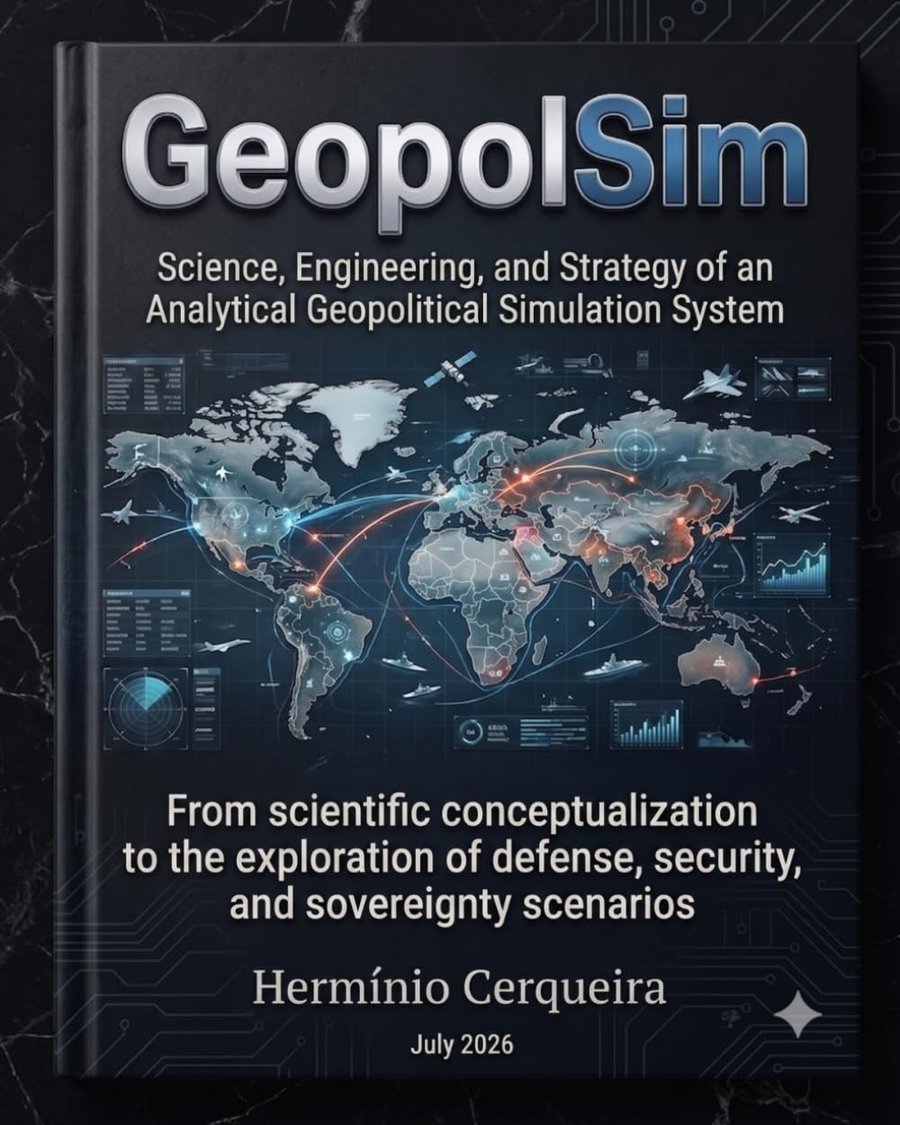
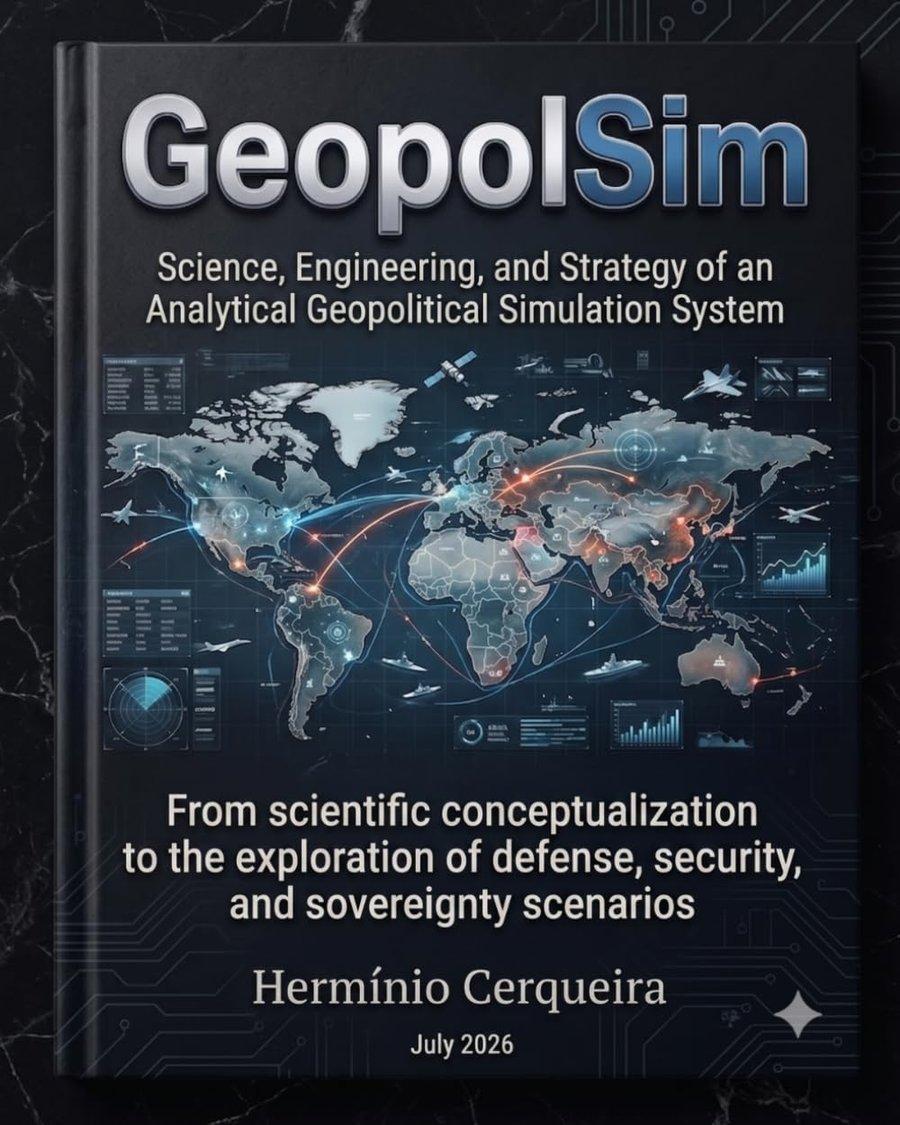
Ciência, Engenharia e Estratégia de um Sistema Analítico de Simulação Geopolítica
Science, Engineering and Strategy of a System Geopolitical Simulation Analytics
Beskrivning i originalutgåvan, på portugisiska.
Text publicerad med utgåvan på engelska (Amazon).
Esta obra nasce de um projeto concreto e de uma convicção. O projeto é o GeopolSim, um sistema de software para simulação analítica de dinâmicas geopolíticas, concebido, desenhado e construído como instrumento de apoio ao raciocínio estratégico. A convicção é a de que as questões de defesa e segurança — precisamente por serem graves, incertas e frequentemente irreversíveis — exigem mais rigor, e não menos; mais transparência, e não mais mistério; mais humildade epistémica, e não mais falsas certezas.
Escrevo na primeira pessoa apenas nesta nota. O restante da obra adota a voz impessoal e o registo próprios de um trabalho técnico e científico, porque é essa a forma adequada ao seu propósito: servir de referência a quem projeta, decide, ensina e investiga. Reuni, para o efeito, as perspetivas de uma equipa multidisciplinar imaginada mas metodologicamente disciplinada — a do investigador científico, a do engenheiro de sistemas, a do estratega militar, a do analista de defesa, a do especialista em geopolítica, a do historiador militar, a do economista da defesa, a do especialista em logística, a do jurista, a do gestor de risco e a do editor. Cada capítulo procura honrar essas perspetivas sem se render à tentação de as diluir num denominador comum vago.
Devo ao leitor duas advertências. A primeira é que o GeopolSim não prevê o futuro, nem foi concebido para o fazer; descreve estados hipotéticos e a sua coerência, e é nessa contenção que reside a sua utilidade. A segunda é que, sempre que os dados são insuficientes, a incerteza é declarada e as conjeturas são identificadas como tal. Nenhum dado, organização, experiência ou resultado foi inventado para preencher lacunas. Onde falta prova, escreve-se que falta.
Há ainda um terceiro ponto que me parece justo tornar explícito, precisamente por ser o menos evidente. A decisão de escrever um livro sobre um sistema de software — e não apenas de documentar o software — obedece a uma razão de fundo: um instrumento que se propõe apoiar o raciocínio sobre poder, conflito e dissuasão não pode ser avaliado apenas pelo que faz, mas também pelo que assume, pelo que exclui e pelo que declara não saber. Um código executa; um livro presta contas. O que aqui se procura é que o sistema seja compreensível não só nas suas funções, mas nas suas fronteiras, e que essas fronteiras sejam matéria de discussão aberta, e não de silêncio conveniente.
Confesso também uma reserva que atravessou todo o trabalho e que preferi conservar em vez de dissimular. A facilidade com que um instrumento de aparência técnica adquire autoridade — o efeito quase automático pelo qual um número num ecrã parece mais verdadeiro do que o juízo que o produziu — é, a meu ver, um dos riscos mais sérios deste género de ferramentas. Escrevi boa parte desta obra a pensar nesse risco e contra ele. Daí a insistência, que o leitor por certo notará e talvez ache excessiva, em repetir que os índices são relativos, que os resultados são condicionados por pressupostos, e que a decisão permanece, inteira e indelegável, do lado humano.
Por fim, uma palavra sobre o que esta obra deliberadamente não é. Não é uma defesa do sistema perante hipotéticos críticos, nem um argumento de venda dirigido a hipotéticos adquirentes. É uma tentativa de expor, com a maior honestidade de que fui capaz, aquilo que o GeopolSim é, aquilo que legitimamente permite fazer e aquilo que, por natureza ou por estado de maturidade, ainda não permite. Se o leitor terminar o livro mais consciente das limitações do que das promessas, terei cumprido o essencial do que me propus, porque é dessa consciência — e não do entusiasmo — que nasce o uso responsável de qualquer instrumento de apoio à decisão em matéria de defesa.
This work stems from a concrete project and a conviction. The project is GeopolSim, a software system for analytical simulation of geopolitical dynamics, conceived, designed, and built as a tool to support strategic reasoning. The conviction is that defense and security issues—precisely because they are serious, uncertain, and often irreversible—demand more rigor, not less; more transparency, not more mystery; more epistemic humility, not more false certainties.
I write in the first person only in this note. The rest of the work adopts the impersonal voice and register proper to a technical and scientific work, because that is the appropriate form for its purpose: to serve as a reference for those who design, decide, teach, and research. To this end, I have gathered the perspectives of an imagined, but methodologically disciplined, multidisciplinary team—that of the scientific researcher, the systems engineer, the military strategist, the defense analyst, the geopolitics specialist, the military historian, the defense economist, the logistics specialist, the jurist, the risk manager, and the editor. Each chapter seeks to honor these perspectives without succumbing to the temptation of diluting them into a vague common denominator.
I owe the reader two warnings. The first is that GeopolSim does not predict the future, nor was it designed to do so; it describes hypothetical states and their coherence, and it is in this restraint that its usefulness lies. The second is that, whenever data is insufficient, the uncertainty is stated and conjectures are identified as such. No data, organization, experiment, or result was invented to fill gaps. Where proof is lacking, it is written that it is lacking.
There is a third point that seems fair to explain, precisely because it is the least obvious. The decision to write a book about a software system—and not just to document the software—is based on a fundamental reason: an instrument that aims to support reasoning about power, conflict, and deterrence cannot be evaluated solely by what it does, but also by what it assumes, what it excludes, and what it declares it does not know. Code executes; a book accounts for what it does. What is sought here is that the system be understandable not only in its functions, but also in its boundaries, and that these boundaries be a matter of open discussion, not convenient silence.
I also confess to a reservation that permeated the entire work and which I preferred to keep rather than conceal. The ease with which a seemingly technical instrument acquires authority—the almost automatic effect by which a number on a screen appears more truthful than the judgment that produced it—is, in my view, one of the most serious risks of this kind of tool. I wrote a good part of this work thinking about this risk and against it. Hence the insistence, which the reader will certainly notice and perhaps find excessive, on repeating that the indices are relative, that the results are conditioned by assumptions, and that the decision remains, entirely and non-delegable, on the human side.
Finally, a word about what this work deliberately is not. It is not a defense of the system against hypothetical critics, nor a sales pitch aimed at hypothetical buyers. It is an attempt to expose, with the greatest honesty I could muster, what GeopolSim is, what it legitimately allows you to do, and what, by nature or by state of maturity, it does not yet allow. If the reader finishes the book more aware of its limitations than of its promises, I will have fulfilled the essential purpose of what I set out to do, because it is from this awareness—and not from enthusiasm—that the responsible use of any defense decision-support tool is born...
Utgåva på portugisiska:
GeopolSim
828 sidorHäftad och Kindle
Utgåva på engelska:
GeopolSim
815 sidorHäftad och Kindle
2026 · 772 sidor · på portugisiska