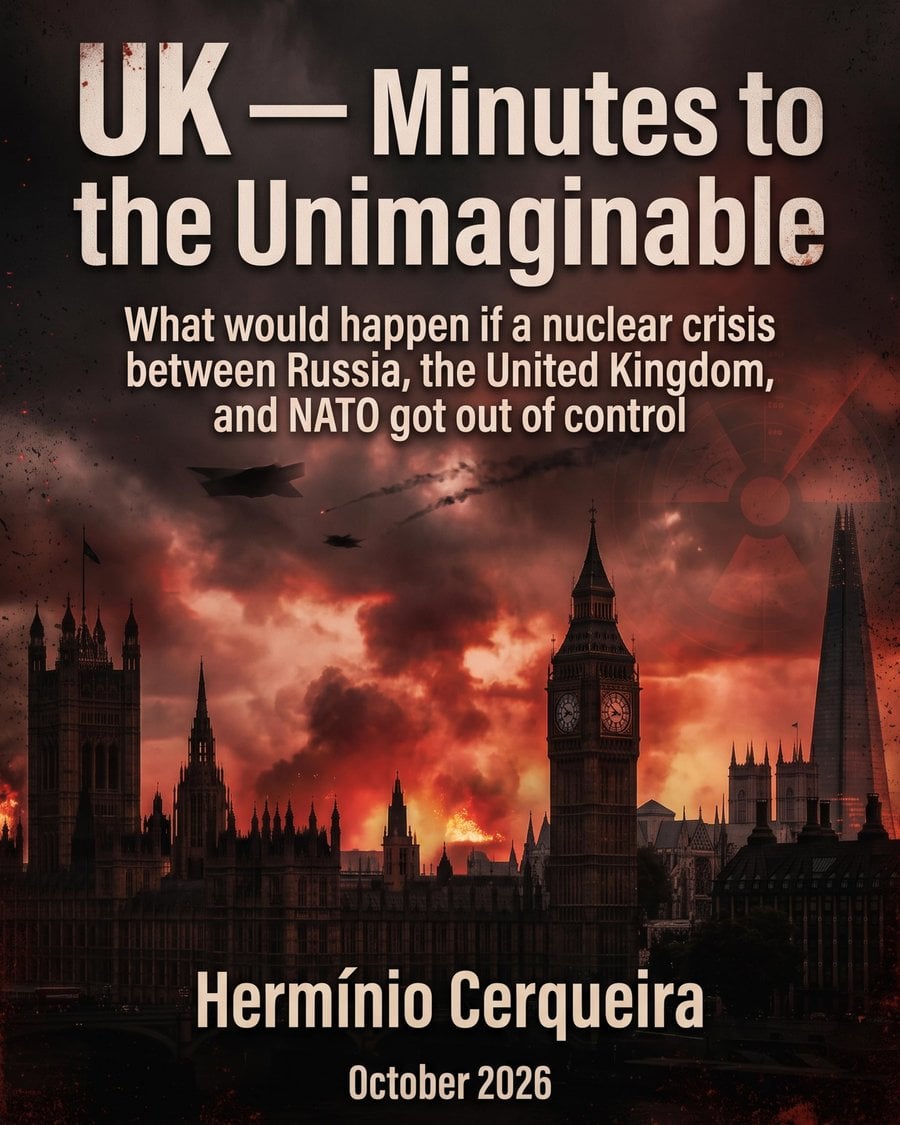
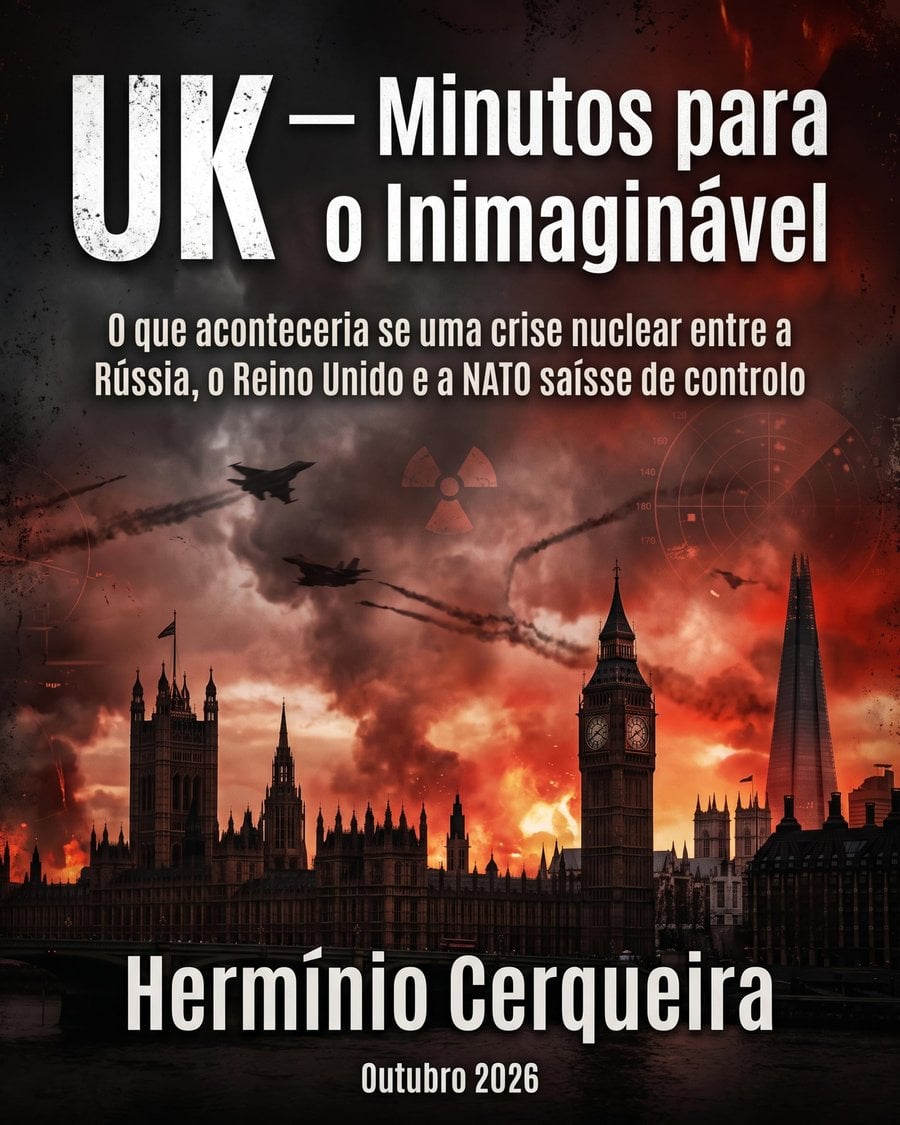
UK — Minutes for the UnimaginableUK — Minutos para o Inimaginável
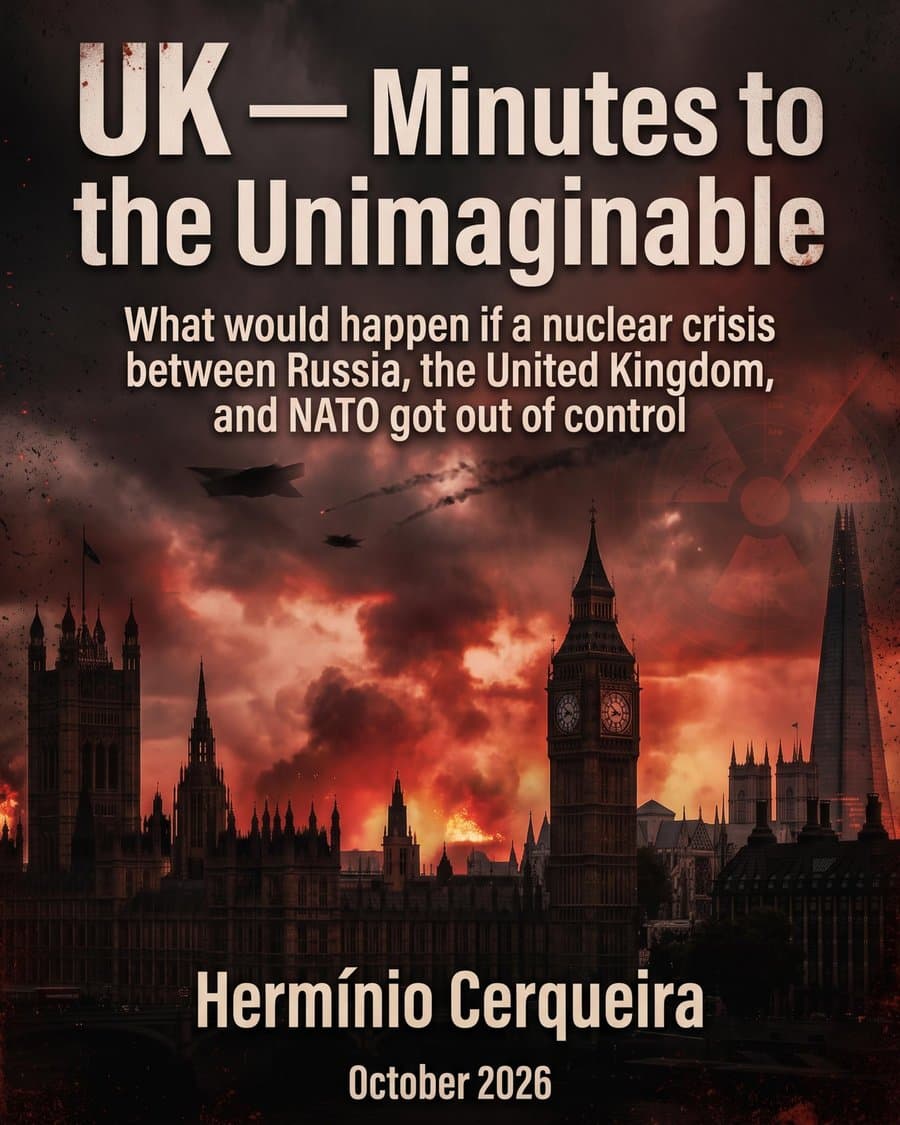
What would happen if a nuclear crisis between Russia, the United Kingdom, and NATO spiraled out of control?
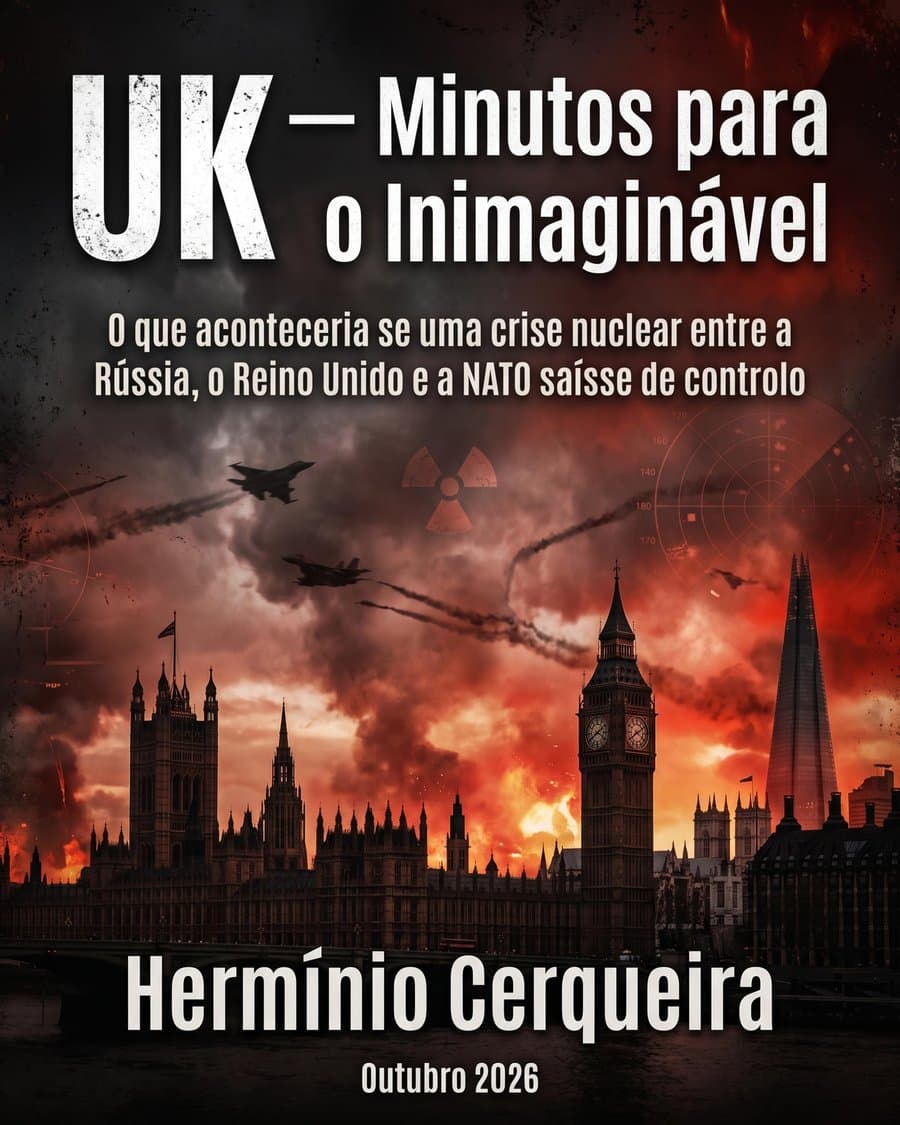
O que aconteceria se uma crise nuclear entre a Rússia, o Reino Unido e a NATO saísse de controlo
Available in 2 languages
- Pages
- 809 pages
- Published
- Formats
- Paperback and Kindle
- Pages
- 826 pages
- First published
- Formats
- Paperback and Kindle
Description
Text published with the English edition (Amazon).
Description from the original edition, in Portuguese.
Show moreShow less — Description
The Balance of Fear, Trident, Russia, NATO, and the fight to save Europe from nuclear war. What would happen if a nuclear crisis between Russia, the United Kingdom, and NATO spiraled out of control? This book was born from a headline. A Daily Express report , based on statements by Russian nuclear policy researcher Maxim Starchak, promised to tell "exactly" what would happen, minute by minute, if the Kremlin launched a nuclear weapon against the United Kingdom. [1]The piece had the merit of reminding us of an uncomfortable truth: in a nuclear crisis, the decision-making time can be reduced to minutes and, in the case of a missile launched from a nearby submarine, perhaps to almost nothing. But the word that most captivated me was precisely "exactly." No one outside the restricted circles of decision-making knows the complete nuclear command and control procedures, the real-times of a crisis, or the confidential rules governing the transition from alert to order. Anyone who claims to know this with cinematic precision is, at best, simplifying; at worst, giving the reader an illusion of knowledge that is itself a risk factor. I therefore took the news report as a starting point, not as an end point. I treated it critically, separating what is solid in it from what is speculative. It is solid that RAF Fylingdales maintains a permanent early warning mission for ballistic missiles; that the United Kingdom has maintained at least one armed submarine on continuous patrol since 1969; that the decision to employ British nuclear weapons rests with the Prime Minister; [2]that an armed attack against British territory would trigger the collective defense mechanism of Article 5 of the North Atlantic Treaty. It is speculative, or simply unverifiable, everything concerning exact times presented as universal, specific targets, the detailed sequence of orders and confirmations, or the idea that a Russian nuclear decision would be a personal and automatic act of a single man. The distance between these two lists is the stuff this book is made of. What this book is, therefore, should be stated clearly. It is an informed strategic essay, of an academic nature, on British nuclear deterrence, on the United Kingdom's position in the nuclear system of the Atlantic Alliance and Europe, and on what might happen if a crisis between Russia, the United Kingdom, and NATO became uncontrollable. It traces the chain of command, the Letters of Last Resort, early warning, continuous deterrence at sea, the transition from the Vanguard class to the Dreadnought class , the Anglo-American nuclear relationship, the Franco-British dialogue, and Russian doctrine. It then imagines a crisis, with its first sixty minutes, its hotlines, its false alarms, and its "hawks." It then examines seven possible outcomes, from useless threat to general strategic war, through containment and a new Cold War. And it ends with what popular imagination usually omits: what comes after the explosion, the climate, the famine, the State that falls apart and has to be restored. What this book is not matters as much as what it is. It is not a prediction. It does not argue that nuclear war is likely, much less inevitable; on the contrary, it argues that the most likely scenario in a serious crisis remains one in which nuclear weapons are not used, but in which the nuclear threat is employed as an instrument of coercion, wrapped in hybrid warfare, sabotage, disinformation, and conventional competition. It is not a technical manual: it does not contain, nor should it contain, details of the design, manufacture, or use of weapons, nor target plans; the analysis deliberately remains at the strategic, political, and humanitarian level. Finally, it is not a pamphlet. I am not driven by either the advocacy of nuclear weapons or their rhetorical condemnation, but by the effort to understand an architecture of fear that has governed European security for eight decades.
Show moreShow less — Description
O Equilíbrio do Medo, Trident, Rússia, NATO e a luta para salvar a Europa de uma guerra nuclear. O que aconteceria se uma crise nuclear entre a Rússia, o Reino Unido e a NATO saísse de controlo.
Este livro nasceu de uma manchete. Uma reportagem do Daily Express, apoiada nas declarações do investigador de política nuclear russa Maxim Starchak, prometia contar «exactamente» o que aconteceria, minuto a minuto, se o Kremlin lançasse uma arma nuclear contra o Reino Unido.[1] A peça tinha o mérito de lembrar uma verdade incómoda: numa crise nuclear, o tempo de decisão pode reduzir-se a minutos e, no caso de um míssil lançado de um submarino próximo, talvez a quase nada. Mas a palavra que mais me deteve foi precisamente «exactamente». Ninguém fora dos círculos restritos de decisão conhece os procedimentos completos de comando e controlo nuclear, os tempos reais de uma crise ou as regras confidenciais que regem a passagem do alerta à ordem. Quem afirma sabê-lo com precisão cinematográfica está, na melhor das hipóteses, a simplificar; na pior, a dar ao leitor uma ilusão de conhecimento que é, ela própria, um factor de risco.
Tomei, por isso, a reportagem como ponto de partida e não como ponto de chegada. Tratei-a criticamente, separando o que nela é sólido do que é especulativo. É sólido que a RAF Fylingdales mantém uma missão permanente de alerta precoce de mísseis balísticos; que o Reino Unido conserva desde 1969 pelo menos um submarino armado em patrulha contínua; que a decisão de empregar armas nucleares britânicas cabe ao Primeiro-Ministro;[2] que um ataque armado contra o território britânico accionaria o mecanismo de defesa colectiva do Artigo 5.º do Tratado do Atlântico Norte. É especulativo, ou simplesmente não verificável, tudo o que diz respeito a tempos exactos apresentados como universais, a alvos concretos, à sequência pormenorizada de ordens e confirmações, ou à ideia de que uma decisão nuclear russa seria um gesto pessoal e automático de um só homem. A distância entre estas duas listas é a matéria de que este livro é feito.
O que este livro é, portanto, convém dizê-lo com clareza. É um ensaio estratégico informado, de natureza académica, sobre a dissuasão nuclear britânica, sobre a posição do Reino Unido no sistema nuclear da Aliança Atlântica e da Europa, e sobre o que poderia acontecer se uma crise entre a Rússia, o Reino Unido e a NATO deixasse de ser controlável. Percorre a cadeia de comando, as Cartas de Último Recurso, o alerta precoce, a dissuasão contínua no mar, a passagem da classe Vanguard para a classe Dreadnought, a relação nuclear anglo-americana, o diálogo franco-britânico e a doutrina russa. Imagina depois uma crise, com os seus primeiros sessenta minutos, as suas linhas directas, os seus alarmes falsos e os seus «falcões». Examina, a seguir, sete cenários de desfecho, da ameaça sem uso à guerra estratégica geral, passando pela contenção e por uma nova Guerra Fria. E termina naquilo que a imaginação popular costuma omitir: o que vem depois da explosão, o clima, a fome, o Estado que se desfaz e tem de ser restaurado.
O que este livro não é importa tanto quanto o que é. Não é uma previsão. Não sustenta que uma guerra nuclear seja provável, muito menos inevitável; sustenta, pelo contrário, que o cenário mais provável numa crise grave continua a ser aquele em que as armas nucleares não são usadas, mas em que a ameaça nuclear é empregada como instrumento de coerção, envolta em guerra híbrida, sabotagem, desinformação e competição convencional. Não é um manual técnico: não contém, nem deveria conter, pormenores de concepção, fabrico ou emprego de armas, nem planos de alvos; a análise mantém-se deliberadamente ao nível estratégico, político e humanitário. Não é, finalmente, um panfleto. Não me move nem a apologia das armas nucleares nem a sua condenação retórica, mas o esforço de compreender uma arquitectura de medo que governa, há oito décadas, a segurança europeia.
Index of editions
One line per edition, in the language in which it was published. Choose your Amazon store once; it applies to every edition.
English edition:
UK — Minutes for the Unimaginable
809 pagesPaperback and Kindle
Portuguese edition:
UK — Minutos para o Inimaginável
826 pagesPaperback and Kindle
- In the Amazon stores, each link uses the edition’s own code (ASIN); availability in each country is managed by Amazon.
- In Portugal, buy from Amazon Spain: there is no Portuguese Amazon store.
Book details
- Genre
- Essay
- Axis of the work
- Strategy and Geopolitics
- First published
- Pages
- 809 (English edition)
- Formats
- Paperback · Kindle e-book
- Languages
- 2 — Portuguese and English