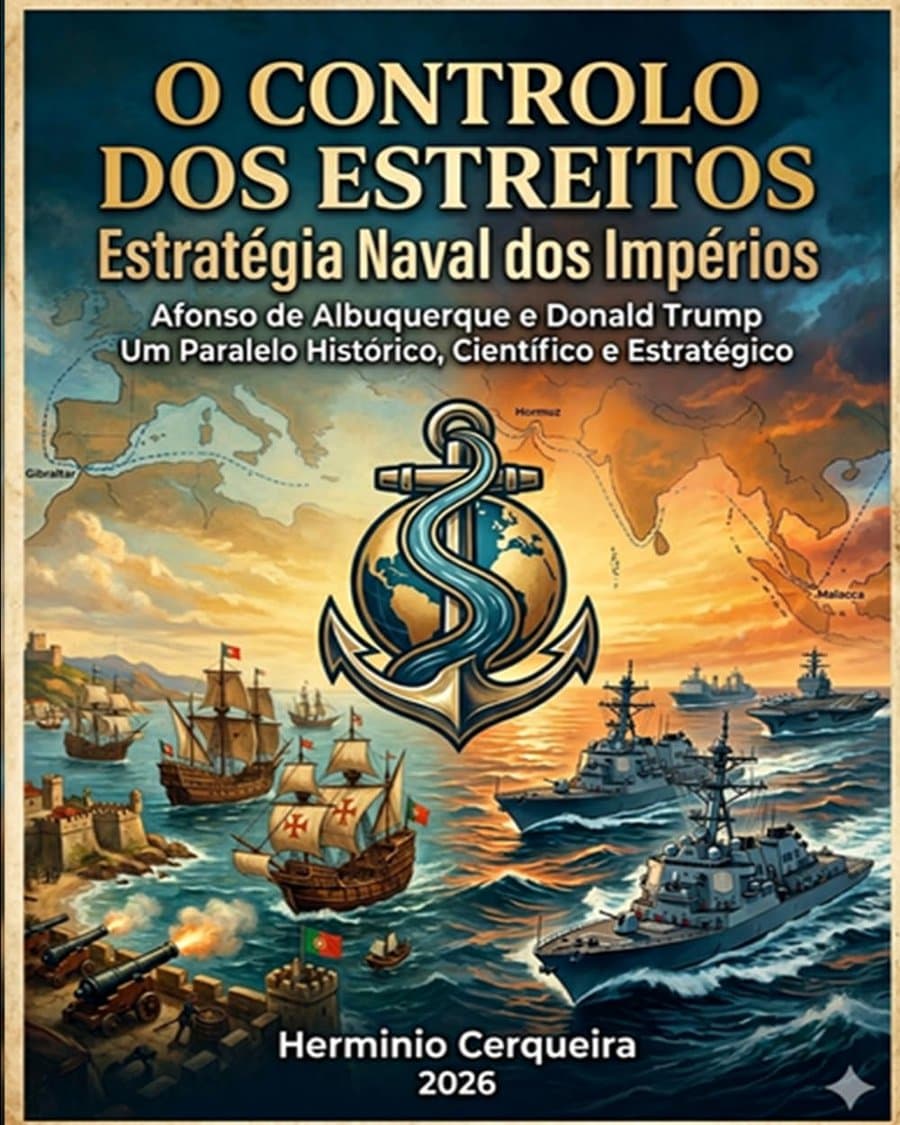
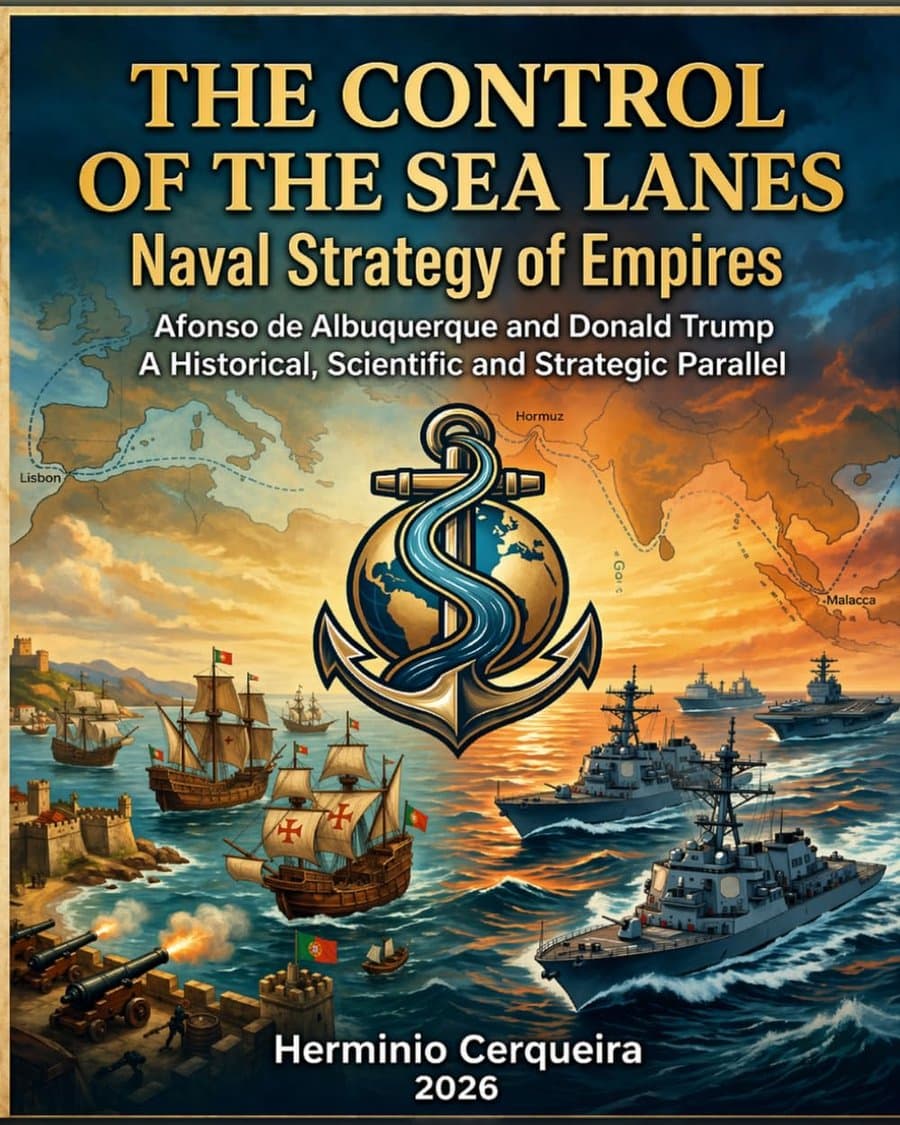
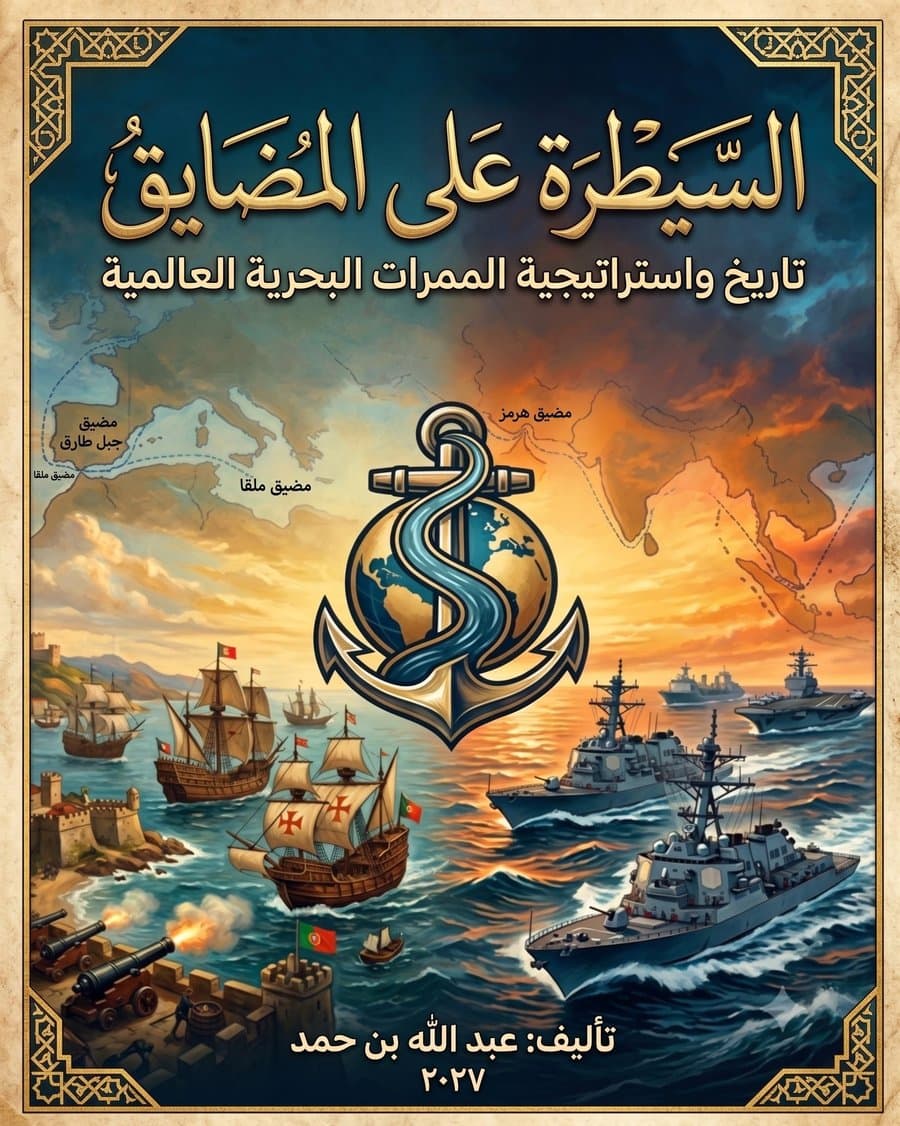
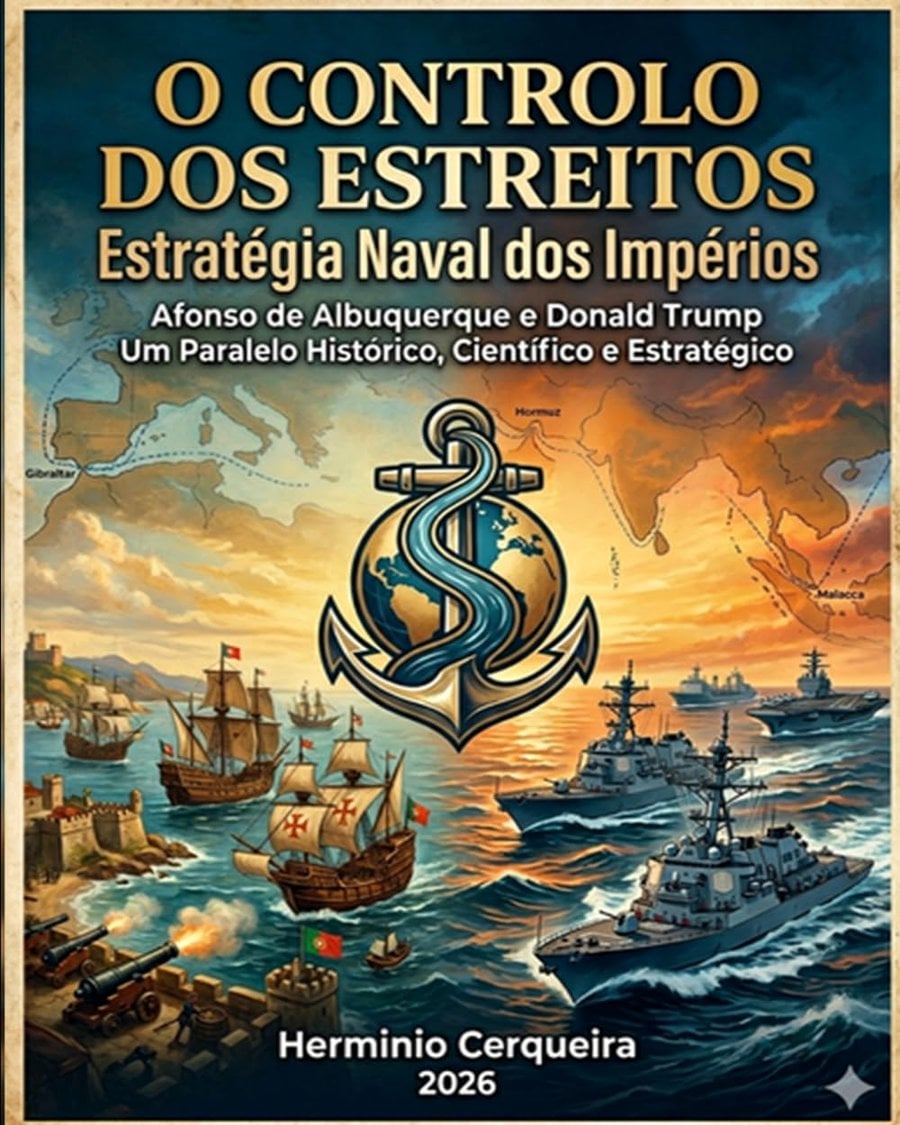
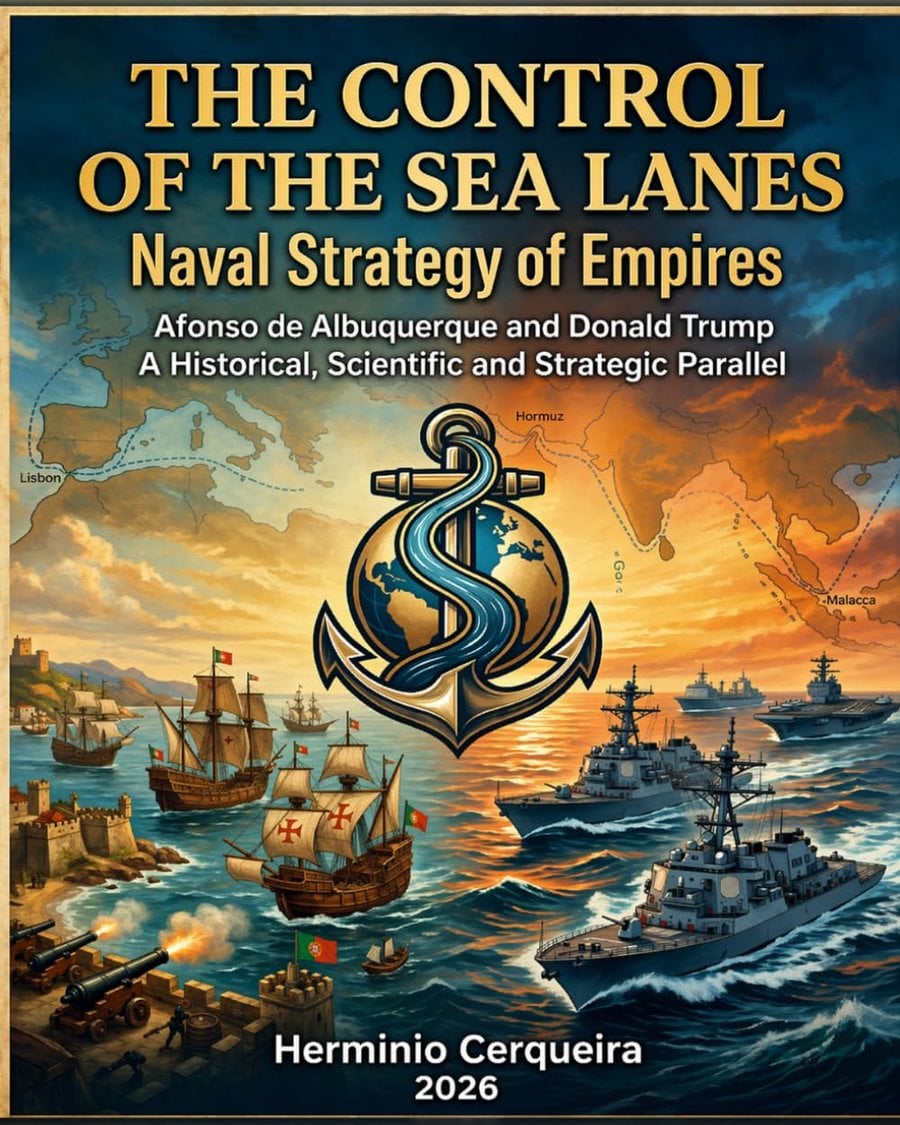
O Controlo dos EstreitosControl of the Straitsالسيطرة على المضائق
Estratégia Naval dos Impérios
Naval Strategy of Empires
الاستراتيجية البحرية للإمبراطوريات
Erhältlich in 3 Sprachen
Albuquerque e Trump: paralelo histórico-estratégico
- Seiten
- 713 Seiten
- ISBN
- ISBN 979-8199394611
- Erstveröffentlichung
- Formate
- Kindle und Taschenbuch
- Seiten
- 679 Seiten
- ISBN
- ISBN 979-8199401647
- Erschienen
- Formate
- Kindle und Taschenbuch
- Seiten
- 1.120 Seiten
- Erschienen
- Formate
- Kindle
Beschreibung
Beschreibung aus der Originalausgabe, auf Portugiesisch.
Mit der Ausgabe auf Englisch veröffentlichter Text (Amazon).
Mit der Ausgabe auf Arabisch veröffentlichter Text (Amazon).
Mehr anzeigenWeniger anzeigen — Beschreibung
Dedicatória
À memória de Afonso de Albuquerque, Leão dos Mares, que demonstrou que a inteligência estratégica supera a força bruta, e que o controlo do mar é o controlo do mundo.
E a todos os que navegam estreitos impossíveis com recursos insuficientes e visão ilimitada.
-Hermínio Cerqueira
«Quem é senhor do comércio é senhor da riqueza do mundo, e assim do próprio mundo.»
— Afonso de Albuquerque, carta ao rei D. Manuel I, c. 1513
«Whoever commands the sea commands the trade; whoever commands the trade of the world commands the riches of the world, and consequently the world itself.»
— Walter Raleigh
O Mar como Instrumento de Poder Global
1.1 A geometria do poder marítimo
O oceano não é um vazio. É, pelo contrário, o mais antigo e mais persistente eixo de poder que a humanidade construiu, um espaço tridimensional onde se cruzam rotas comerciais, linhas de abastecimento energético, cadeias logísticas industriais e vetores de projeção militar. Compreender o poder marítimo exige, antes de mais, reconhecer a sua geometria específica: ao contrário do poder terrestre, que se exerce em contiguidade e que conhece fronteiras, fricções e barreiras físicas, o poder sobre o mar tende para a ubiquidade — quem o domina pode, em teoria, aparecer em qualquer ponto da superfície oceânica, com força concentrada e mobilidade irrestrita. Esta assimetria fundamental entre o domínio terrestre e o domínio marítimo é a base de toda a teoria estratégica que se desenvolveu desde o século XVI até ao presente.
A geometria do poder marítimo organiza-se em torno de três categorias analíticas que se interpenetram sem nunca se confundir: o acesso, o controlo e a negação. O acesso diz respeito à capacidade de utilizar livremente o mar — para fins comerciais, para projeção de força ou para vigilância estratégica. O controlo implica a capacidade de regulamentar o uso do mar por parte de terceiros, distinguindo entre aliados a quem se concede passagem e adversários a quem se recusa. A negação, por seu turno, refere-se à capacidade de impedir que um adversário utilize o mar, mesmo sem necessidade de controlo absoluto — basta que o custo imposto seja suficientemente elevado para alterar o comportamento do adversário. A crise de Ormuz de 2026 é, na sua essência, um exercício combinado de controlo e negação seletiva: o Irão não fechou o estreito a todos os navegantes, mas instituiu um regime discriminatório que distinguia entre nações "hostis" e "amigas", impondo portagens em yuan a umas e concedendo passagem livre às outras (CSIS, 2026).
A geometria do poder marítimo também se organiza verticalmente no tempo histórico. Os impérios que compreenderam o mar como instrumento de poder — Atenas, Cartago, Veneza, Portugal, os Países Baixos, a Grã-Bretanha, os Estados Unidos — partilharam uma característica estrutural: a capacidade de converter mobilidade naval em riqueza comercial e, inversamente, riqueza comercial em capacidade naval sustentada. Paul Kennedy denominou este ciclo de reforço mútuo o "fundamento material do poder imperial" (Kennedy, 1987), e a sua ausência é frequentemente o prelúdio do declínio. A China dos séculos XIV e XV exemplifica a outra face: Zheng He conduziu sete grandes expedições até ao Índico e à costa oriental africana entre 1405 e 1433, mas o Estado Ming optou por retirar-se do mar e destruir os registos das frotas, entregando espontaneamente a vantagem marítima aos europeus que ali chegariam poucas décadas depois...
Mehr anzeigenWeniger anzeigen — Beschreibung
In memory of Afonso de Albuquerque, Lion of the Seas, who demonstrated that strategic intelligence surpasses brute force, and that control of the sea is control of the world.
And to all those who navigate impossible straits with insufficient resources and unlimited vision.
- Hermínio Cerqueira
The Sea as an Instrument of Global Power
1.1 The geometry of sea power
The ocean is not a void. On the contrary, it is the oldest and most persistent axis of power that humanity has built, a three-dimensional space where trade routes, energy supply lines, industrial logistics chains, and vectors of military projection intersect. Understanding maritime power requires, first and foremost, recognizing its specific geometry: unlike land power, which is exercised in contiguity and knows borders, friction, and physical barriers, power over the sea tends towards ubiquity—whoever dominates it can, in theory, appear at any point on the ocean's surface, with concentrated force and unrestricted mobility. This fundamental asymmetry between land dominance and maritime dominance is the basis of all strategic theory that has developed from the 16th century to the present.
The geometry of maritime power is organized around three analytical categories that interpenetrate without ever becoming confused: access, control, and denial. Access refers to the ability to freely use the sea—for commercial purposes, for projecting force, or for strategic surveillance. Control implies the ability to regulate the use of the sea by third parties, distinguishing between allies who are granted passage and adversaries who are denied it. Denial, in turn, refers to the ability to prevent an adversary from using the sea, even without the need for absolute control—it is enough that the imposed cost is high enough to change the adversary's behavior. The 2026 Hormuz crisis is, in essence, a combined exercise of selective control and denial: Iran did not close the strait to all navigators, but instituted a discriminatory regime that distinguished between "hostile" and "friendly" nations, imposing tolls in yuan on some and granting free passage to others (CSIS, 2026).
The geometry of maritime power is also organized vertically in historical time. Empires that understood the sea as an instrument of power—Athens, Carthage, Venice, Portugal, the Netherlands, Great Britain, the United States—shared a structural characteristic: the ability to convert naval mobility into commercial wealth and, conversely, commercial wealth into sustained naval capacity. Paul Kennedy called this cycle of mutual reinforcement the "material foundation of imperial power" (Kennedy, 1987), and its absence is often the prelude to decline. Fourteenth- and fifteenth-century China exemplifies the other side: Zheng He led seven major expeditions to the Indian Ocean and the east coast of Africa between 1405 and 1433, but the Ming state chose to withdraw from the sea and destroy fleet records, spontaneously surrendering the maritime advantage to the Europeans who would arrive there a few decades later.
Maritime power is neither static nor automatic. It depends on maintaining a set of conditions that Alfred Thayer Mahan first systematized with scientific rigor in 1890, and which subsequent authors have deepened and revisited in light of technological and geopolitical transformations. What is important to emphasize in this analytical overview is that the sea is simultaneously a resource and a vulnerability: a resource for those who dominate it, because it allows global projection at a relatively low cost; a vulnerability for those who depend on its routes without having the means to defend them.
Mehr anzeigenWeniger anzeigen — Beschreibung
المحيط ليس فراغا. بل على العكس، هو أقدم وأكثر محور القوة استمرارية بناه البشر، فضاء ثلاثي الأبعاد حيث تتقاطع طرق التجارة وخطوط إمداد الطاقة وسلاسل اللوجستيات الصناعية ومتجهات الإسقاط العسكري. فهم القوة البحرية يتطلب أولا التعرف على هندستها الخاصة: على عكس القوة البرية التي تمارس في التجاور، وتعرف الحدود والاحتكاكات والحواجز المادية، تميل القوة على البحر إلى الانتشار — فمن يهيمن عليها يمكنها، نظريا، الظهور في أي مكان على سطح المحيط، بقوة مركزة وحركة غير مقيدة. هذا التفاوت الأساسي بين المجال البري والبحري هو أساس كل النظريات الاستراتيجية التي تطورت من القرن السادس عشر حتى الوقت الحاضر.
تنظم هندسة القوة البحرية حول ثلاث فئات تحليلية تتداخل دون أن تخلط بعضها البعض: الوصول، السيطرة، والإنكار. يشير الوصول إلى القدرة على استخدام البحر بحرية — لأغراض تجارية، أو لإسقاط القوة، أو للمراقبة الاستراتيجية. السيطرة تعني القدرة على تنظيم استخدام البحر من قبل أطراف ثالثة، مما يميز بين الحلفاء الذين يمنحون المرور والخصوم الذين يرفضون. أما النفي، فيشير إلى القدرة على منع الخصم من استخدام البحر، حتى دون الحاجة إلى السيطرة المطلقة — فيكفي أن تكون التكلفة المفروضة مرتفعة بما يكفي لتغيير سلوك الخصم. أزمة هرمز عام 2026 هي، في جوهرها، تمرين مشترك في السيطرة الانتقائية والإنكار: لم تغلق إيران المضيق أمام جميع البحارة، بل فرضت نظاما تمييزيا يميز بين الدول "المعادية" و"الصديقة"، وفرض رسوم يوان على بعضها ومنح آخرين حرية المرور (CSIS، 2026).
هندسة القوة البحرية منظمة أيضا عموديا في الزمن التاريخي. الإمبراطوريات التي فهمت البحر كأداة للقوة — أثينا، قرطاج، فينيسيا، البرتغال، هولندا، بريطانيا العظمى، الولايات المتحدة — كانت تشترك في سمة هيكلية: القدرة على تحويل التنقل البحري إلى ثروة تجارية، وعلى العكس، الثروة التجارية إلى قدرة بحرية مستدامة. وصف بول كينيدي هذه الدورة من التعزيز المتبادل بأنها "الأساس المادي للسلطة الإمبريالية" (كينيدي، 1987)، وغالبا ما يكون غيابها مقدمة للانحدار. الصين في القرنين الرابع عشر والخامس عشر تجسد الجانب الآخر: فقد قاد تشنغ هي سبع بعثات كبرى إلى المحيط الهندي والساحل الشرقي لأفريقيا بين عامي 1405 و1433، لكن دولة مينغ اختارت الانسحاب من البحر وتدمير سجلات الأساطيل، مما سلم الميزة البحرية بشكل عفوي للأوروبيين الذين وصلوا إليها بعد بضعة عقود.
القوة البحرية ليست ثابتة ولا تلقائية. يعتمد ذلك على الحفاظ على مجموعة من الشروط التي نظمها ألفريد ثاير ماهان لأول مرة بدقة علمية في عام 1890، والتي عمقها المؤلفون اللاحقون وأعادوا النظر فيها في ضوء التحولات التكنولوجية والجيوسياسية. ما هو مهم للتأكيد في هذا الافتتاح التحليلي هو أن البحر مورد ونقطة ضعف في آن واحد: مورد لأولئك الذين يهيمنون عليه، لأنه يسمح بالإسقاط العالمي بتكلفة نسبية منخفضة؛ نقطة ضعف لأولئك الذين يعتمدون على طرقهم دون أن يكون لديهم وسائل للدفاع عنها. لقد ورث القرن الحادي والعشرون للنظام الدولي تكوينا متناقضا: حيث تحافظ الولايات المتحدة على تفوق بحري لا يطعن فيه في البحار، لكنها أظهرت في عام 2026 عدم قدرتها على ضمان الوصول الآمن إلى مضيق عرضه حوالي خمسين كيلومترا عند أضيق نقطة (EIA، 2025)، في مواجهة خصم إقليمي يتمتع بوسائل غير متماثلة متواضعة نسبيا.
Verzeichnis der Ausgaben
Eine Zeile pro Ausgabe, in der Sprache, in der sie erschienen ist. Den Amazon-Shop wählen Sie einmal aus; er gilt für alle Ausgaben.
Bei Amazon
Ausgabe auf Portugiesisch:
O Controlo dos Estreitos
713 SeitenKindle und Taschenbuch
Ausgabe auf Englisch:
Control of the Straits
679 SeitenKindle und Taschenbuch
Ausgabe auf Arabisch:
السيطرة على المضائق
1.120 SeitenKindle
Verlagsausgaben
Erhältlich im Shop des jeweiligen Verlags und, wo angegeben, in weiteren Buchhandlungen – nicht bei Amazon.
Ausgabe auf Portugiesisch:
O Controlo dos EstreitosAusgabe bei Chiado Books
1.101 SeitenE-Book
Ausgabe auf Englisch:
Control of the StraitsAusgabe bei Chiado Books
383 Seiten
- In den Amazon-Shops verwendet jeder Link den eigenen Code der jeweiligen Ausgabe (ASIN); die Verfügbarkeit in den einzelnen Ländern regelt Amazon.
- In Portugal kaufen Sie bei Amazon Spanien: Einen portugiesischen Amazon-Shop gibt es nicht.
- Bei Verlagsausgaben ohne bestätigte eigene Seite öffnet der Link den Shop des Autors beim Verlag.
Kritische Lektüre – „A Obra Comentada“ (2026)
Eine kritische Lektüre in der dritten Person, übernommen aus „A Obra Comentada“, dem vom Autor selbst veröffentlichten kommentierten Werkverzeichnis. Es handelt sich nicht um eine Pressekritik.
Originaltext auf Portugiesisch.
O Controlo dos Estreitos, na sua segunda edição «integralmente revista e ampliada» — oito partes, vinte e quatro capítulos e seis anexos —, é o livro de história e teoria do poder marítimo do eixo, construído sobre um paralelo deliberadamente provocador que o subtítulo anuncia: Afonso de Albuquerque e Donald Trump, ou como dois impérios, a cinco séculos de distância, enfrentaram o mesmo problema — o controlo dos pontos de estrangulamento do comércio mundial. A dedicatória, «à memória de Afonso de Albuquerque, Leão dos Mares», e a epígrafe da sua carta a D. Manuel I — «Quem é senhor do comércio é senhor da riqueza do mundo, e assim do próprio mundo» — emparelhada com a formulação quase idêntica de Walter Raleigh um século depois, estabelecem desde a primeira página a tese da continuidade estrutural: a geografia do poder marítimo muda de tecnologia, não de gramática.
A abertura teórica é das mais sólidas do eixo: «O oceano não é um vazio», escreve o autor, mas «o mais antigo e mais persistente eixo de poder que a humanidade construiu», organizado em torno de três categorias — acesso, controlo e negação — que estruturam depois toda a análise. O primeiro capítulo é um verdadeiro seminário de teoria naval: Mahan e os seis elementos do poder marítimo (aplicados, num gesto característico, ao caso iraniano), Corbett e o command of the sea, Till e Lambert no século XXI, Paul Kennedy e o ciclo de reforço mútuo entre riqueza comercial e capacidade naval, o seguro marítimo como arma estratégica. Segue-se uma cartografia global do risco — Ormuz, Malaca, Suez, Bab el-Mandeb, Gibraltar, Panamá e os Estreitos Turcos, hierarquizados numa análise tridimensional — e, na Parte II, o capítulo português: o modelo de império marítimo do Estado da Índia, os cartazes e a tributação, Goa, Malaca e Ormuz, com a historiografia de Subrahmanyam e Boxer devidamente convocada e com paralelos explícitos entre a administração albuquerquiana e a crise de 2026. Porque é essa crise — o bloqueio de Ormuz — que funciona como «caso-mestre» de todo o livro: o momento em que a teoria dos chokepoints deixou de ser académica.
No conjunto da obra, O Controlo dos Estreitos é a coluna vertebral histórica do ciclo de Ormuz: fornece a longue durée que O Atlântico em Chamas narra no presente e que a Crise Energética Mundial projecta no futuro. E é também o livro em que o autor mais claramente reivindica um lugar português na teoria estratégica universal — não por patriotismo retrospectivo, mas por um argumento incómodo e bem documentado: o de que o primeiro império a compreender e a praticar sistematicamente o controlo dos estreitos como instrumento de poder global falava português. A segunda edição, muito ampliada, paga o preço habitual da expansão — a densidade de subsecções por vezes fragmenta o fôlego narrativo —, mas ganha em completude o que perde em leveza: é, no seu domínio e no seu idioma, uma obra de referência.
Zitate aus dem Buch
„à memória de Afonso de Albuquerque, Leão dos Mares“
„O oceano não é um vazio“
„o mais antigo e mais persistente eixo de poder que a humanidade construiu“
Weitere zitierte Wendungen aus dem Buch
„integralmente revista e ampliada“
Quelle: «A Obra Comentada» (Sintra, Julho de 2026) — comentário crítico
Bibliografische Angaben
- Gattung
- Essay
- Achse des Werks
- Strategie und Geopolitik
- Erstveröffentlichung
- Seiten
- 713 (Ausgabe auf Portugiesisch)
- Formate
- E-Book · Taschenbuch
- Sprachen
- 3 — Portugiesisch, Englisch und Arabisch
- ISBN
- 979-8199394611