Cyber Defense and the Quantum EraManuals and technique
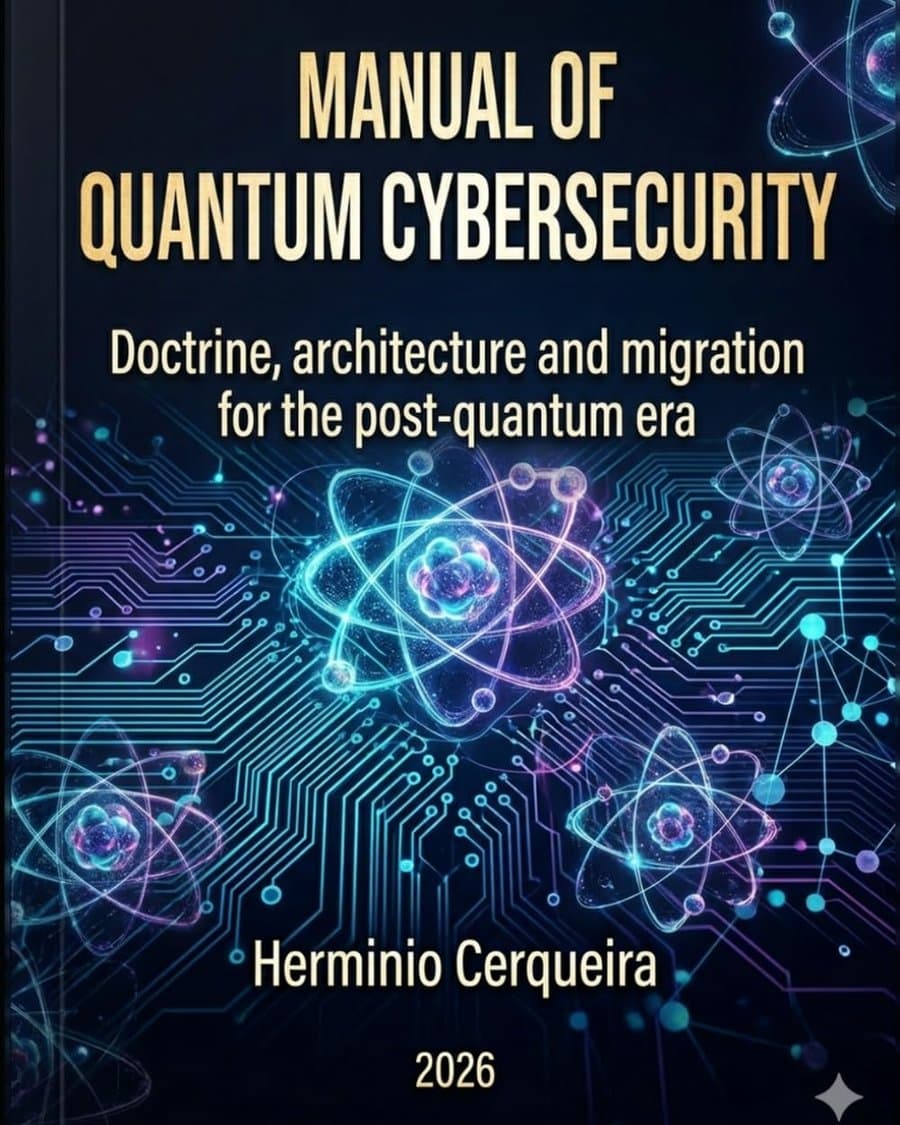
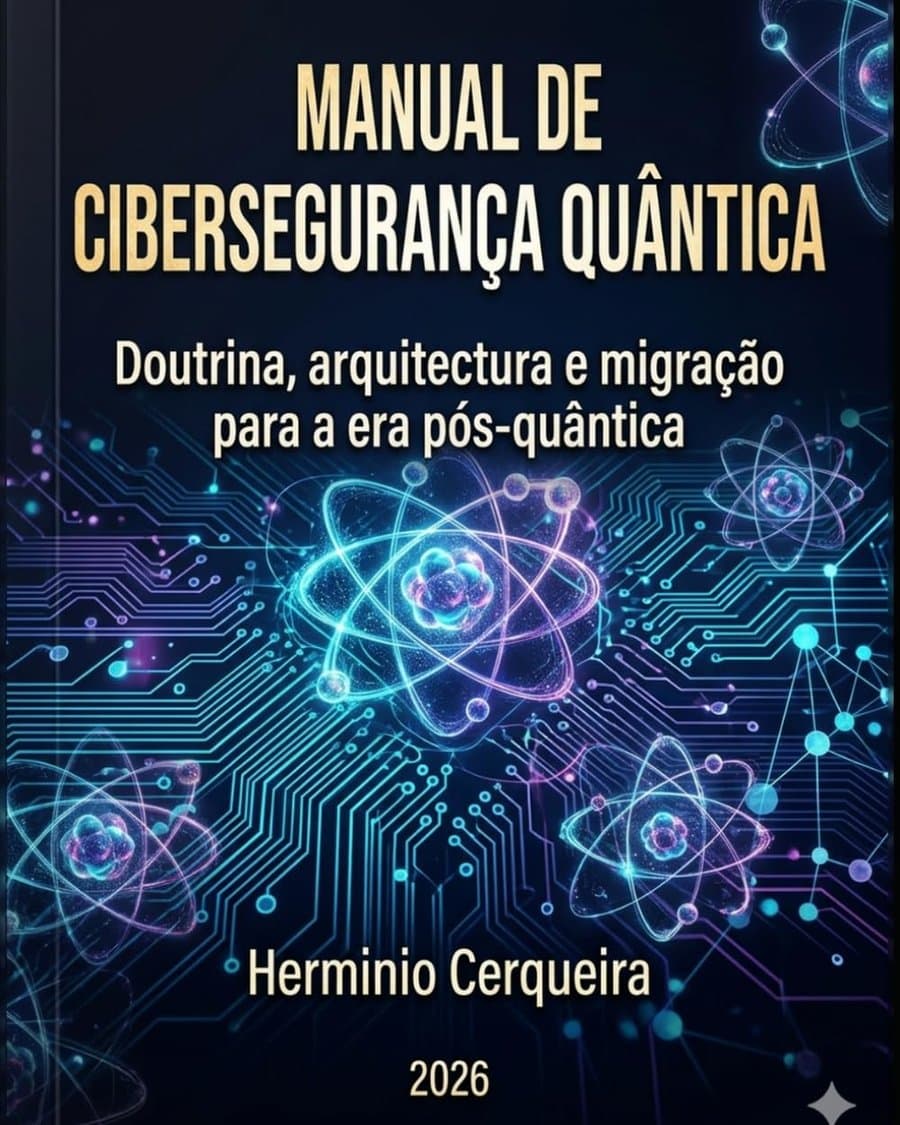
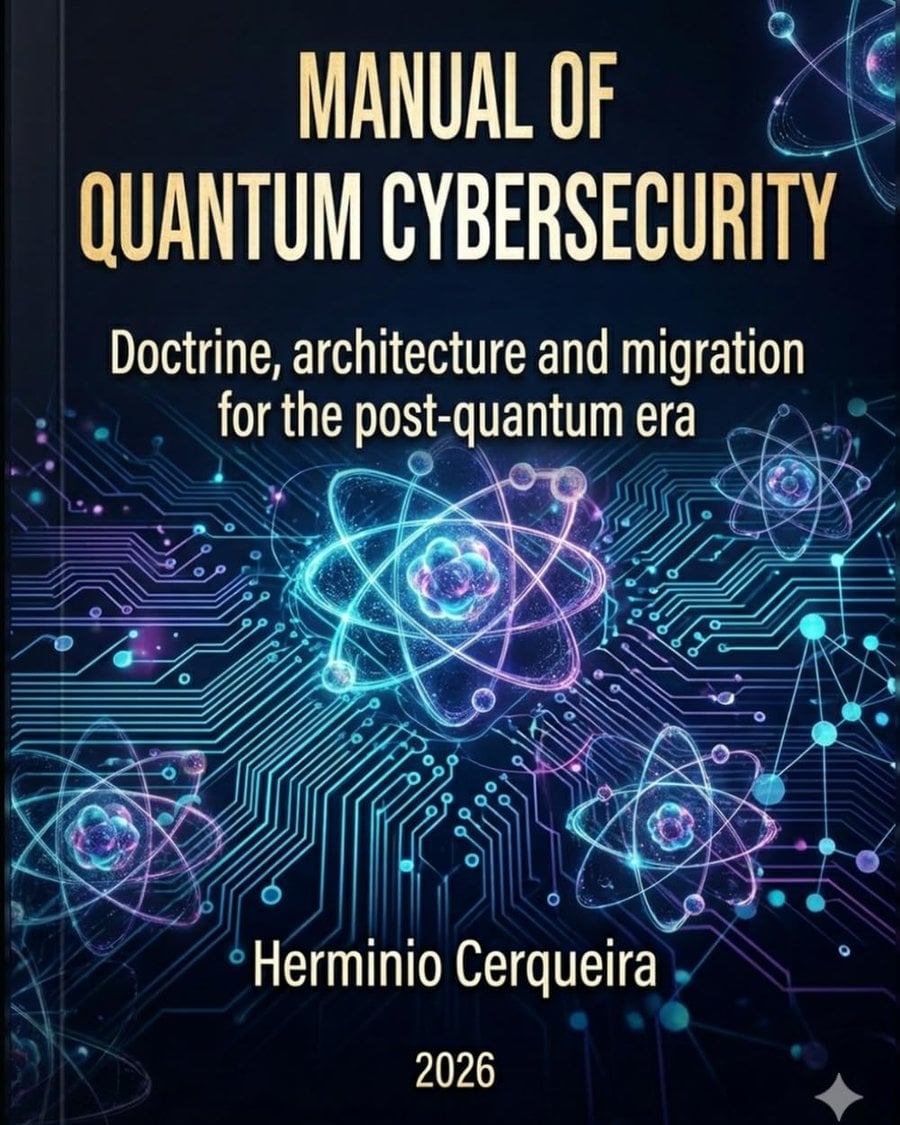
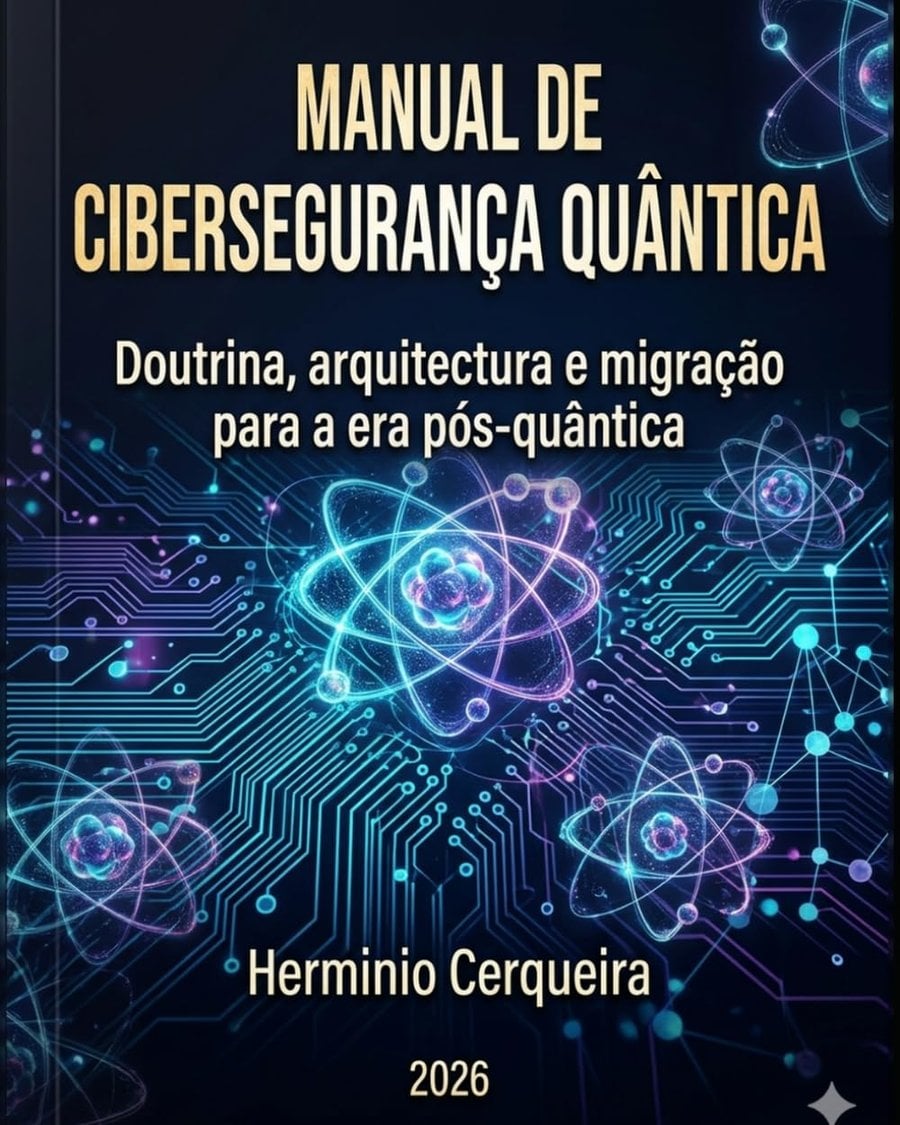
Manual of Quantum CybersecurityManual de Cibersegurança Quântica
Doctrine, architecture and migration for the post-quantum era
Available in 2 languages
“O leitor é convidado a juízo próprio, com base em informação completa, e não a obediência cega a prescrição autoral.”
- Pages
- 772 pages
- ISBN
- ISBN 979-8197410290
- Published
- Formats
- Kindle and paperback
- Pages
- 784 pages
- ISBN
- ISBN 979-8197387493
- First published
- Formats
- Kindle and paperback
About the book
Text published with the English edition (Amazon).
This manual constitutes an independent work of technical and operational doctrine. It does not replace applicable legislation or binding guidelines from competent national authorities. In case of discrepancy between this text and the current normative instruments — notably Regulation (EU) 2022/2554 (DORA), Directive (EU) 2022/2555 (NIS2), Decree-Law No. 125/2025, Regulation (EU) 2024/2847 (Cyber Resilience ) Although the guidelines of the National Cyber Security Centre (CNCS) and the European Union Agency for Cyber Security (ENISA) always prevail, the existing instruments always take precedence.
Hyperlinks and documentary references were verified on May 15, 2026. Readers who find broken links should consult the Internet Archive or equivalent primary institutional websites.
The next decade will bring about a structural transformation of global cybersecurity . This will be driven by the progressive maturation of quantum computers with significant cryptanalytic capabilities—referred to in the international technical literature as Cryptographically Intelligent Design (CIDD) computers. Relevant Quantum Computing (RCQC) — will compromise, over the 2030-2040 horizon, the mathematical integrity of public-key algorithms that currently underpin the confidentiality, authenticity, and integrity of digital communications. The threat is simultaneously technical, strategic, regulatory, and civilizational. Its effective management will determine institutional trajectories whose relevance far exceeds conventional cybersecurity planning cycles .
The most recent estimates from the international scientific community, systematized by Global Risk. Institute at the sixth edition of Quantum Threat Timeline The report , directed by Michele Mosca, places the median probability of Q- Day —the moment when an operational CRQC exists against RSA-2048—between the years 2029 and 2032, with an aggregate probability of 34% until 2030 and a pessimistic tail extending to 2040. Craig 's paper Gidney , a researcher at Google Quantum AI, published a study on arXiv in May 2025 and reviewed in July of that year. He reduced the physical qubit requirements for breaking RSA-2048 by a factor of approximately twenty, lowering the previous estimate of twenty million noisy qubits to less than one million. This algorithmic reduction is particularly significant: it demonstrates that the progress of the threat does not depend exclusively on advances in quantum hardware, but may also result from unexpected theoretical optimizations that accelerate the operational window.
The quantum threat, however, is not exclusively a future threat. The paradigm known as harvest now , decrypt later — the preventive interception of encrypted traffic for future decryption — materializes it in the present. State actors with massive signal interception capacity ( Signals) Intelligence (SIGINT) – the United States, China, Russia, the United Kingdom, Israel, France, among others – collect and store, in industrial volumes, contemporary encrypted traffic. This material becomes available for future decryption when each state has adequate quantum capability. The operational consequence is radical: all information transmitted today whose sensitivity must persist beyond five to ten years is already exposed to a threat that does not yet exist operationally but whose arrival time is known with acceptable margins of error.
The international institutional response has been organized since 2016.
Excerpt
A próxima década configurará uma transformação estrutural da cibersegurança global. A maturação progressiva dos computadores quânticos com capacidade criptanalítica relevante — designados na literatura técnica internacional como Cryptographically Relevant Quantum Computers (CRQC) — comprometerá, ao longo do horizonte 2030-2040, a integridade matemática dos algoritmos de chave pública que sustentam hoje a confidencialidade, a autenticidade e a integridade das comunicações digitais. A ameaça é simultaneamente técnica, estratégica, regulatória e civilizacional.
— Manual de Cibersegurança Quântica
Original text in Portuguese.
Editorial note
Source: publisher’s description of the Portuguese edition (Amazon).
Index of editions
One line per edition, in the language in which it was published. Choose your Amazon store once; it applies to every edition.
English edition:
Manual of Quantum Cybersecurity
772 pagesKindle and paperback
Portuguese edition:
Manual de Cibersegurança Quântica
784 pagesKindle and paperback
- In the Amazon stores, each link uses the edition’s own code (ASIN); availability in each country is managed by Amazon.
- In Portugal, buy from Amazon Spain: there is no Portuguese Amazon store.
Critical reading — “A Obra Comentada” (2026)
A third-person critical reading, reproduced from “A Obra Comentada,” the annotated catalog of the work published by the author himself. It is not a press review.
Original text in Portuguese.
A tese central deste manual monumental — mais de 780 páginas, três volumes, dezasseis capítulos e seis anexos — cabe nas duas constatações que abrem a introdução geral: «a criptografia que protege hoje a civilização digital tem prazo de validade conhecido», e a maioria das organizações não está preparada para a transição que se impõe. A distância entre o tecnicamente possível e o organizacionalmente operacional é, para o autor, «a fenda decisiva da próxima década», e o manual existe para a reduzir. Não é ensaio nem tratado: é instrumento de trabalho, dirigido a cinco públicos segmentados — militar, governamental, sector público alargado, empresarial e industrial — com a justificação de que a ameaça quântica não respeita fronteiras sectoriais.
A estrutura obedece a quatro princípios metodológicos declarados: rigor referencial (toda a afirmação substantiva é ancorada em fonte primária — publicação NIST, advisory CISA, documento ENISA, instrumento normativo europeu, paper em arXiv ou IACR ePrint), calibração prudencial, utilidade operacional e modularidade leitora. Este último princípio traduz-se numa arquitectura em três volumes — fundamentos doutrinários, migração técnica e operacional, governança e ferramentas — com percursos de leitura diferenciados para o decisor estratégico, o CISO e o engenheiro. A honestidade epistémica é assinalável: «O leitor é convidado a juízo próprio, com base em informação completa, e não a obediência cega a prescrição autoral.»
O aparelho referencial é o mais denso de toda a obra do autor. No plano técnico, o manual expõe o algoritmo de Shor (1994) e o de Grover (1996), o paradigma harvest now, decrypt later, o teorema de Mosca como ferramenta canónica de gestão do risco temporal, e as estimativas do Q-Day do Global Risk Institute (mediana 2029-2032), incluindo o paper de Craig Gidney de 2025 que reduziu por um factor de vinte os requisitos em qubits para quebrar RSA-2048. Os padrões NIST são tratados com precisão de engenheiro: FIPS 203 (ML-KEM), FIPS 204 (ML-DSA), FIPS 205 (SLH-DSA), Falcon em finalização, HQC, criptografia híbrida e o conceito de Cryptographic Bill of Materials (CBOM) alinhado com o NIST CSWP 39. No plano regulatório, o manual operacionaliza o Regulamento (UE) 2022/2554 (DORA), a Directiva (UE) 2022/2555 (NIS2) e a sua transposição pelo Decreto-Lei n.º 125/2025, o Cyber Resilience Act, a Recomendação (UE) 2024/1101 e o cronograma CNSA 2.0 da NSA, com roteiros sectoriais dedicados no Anexo F.
No conjunto da obra, este é o pilar técnico do Eixo 2 — o livro que transforma em procedimento aquilo que Cyberwar Quântica argumenta como tese. Nasceram na mesma campanha de escrita (Maio de 2026) e devem ler-se como díptico. Criticamente, há que assinalar uma desigualdade estilística: os capítulos analíticos iniciais têm prosa densa e exacta, enquanto as partes finais de síntese caem num maneirismo verbal repetitivo que uma revisão de estilo beneficiaria. Mas o essencial permanece: nenhuma outra obra em português oferece, hoje, doutrina, arquitectura e plano de migração pós-quântica com esta escala, este lastro documental e esta consciência plurigeracional — o manual dedica-se, literalmente, às gerações que herdarão as decisões criptográficas de 2026.
Quotations from the book
“a criptografia que protege hoje a civilização digital tem prazo de validade conhecido”
“a fenda decisiva da próxima década”
Source: «A Obra Comentada» (Sintra, Julho de 2026) — comentário crítico
Book details
- Genre
- Manuals and technique
- Axis of the work
- Cyber Defense and the Quantum Era
- First published
- Pages
- 772 (English edition)
- Formats
- Kindle e-book · Paperback
- Languages
- 2 — Portuguese and English
- ISBN
- 979-8197410290