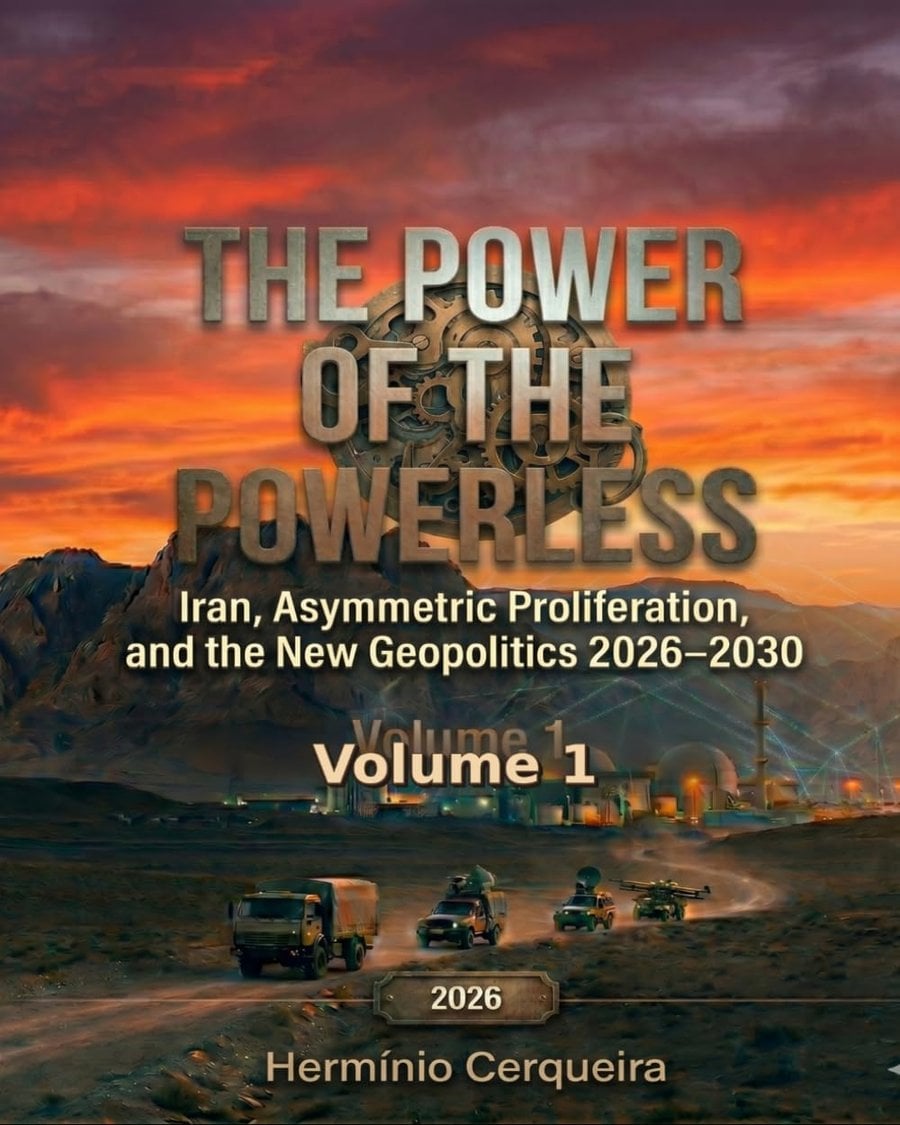
Stratégie et géopolitiqueEssaiVolume 1
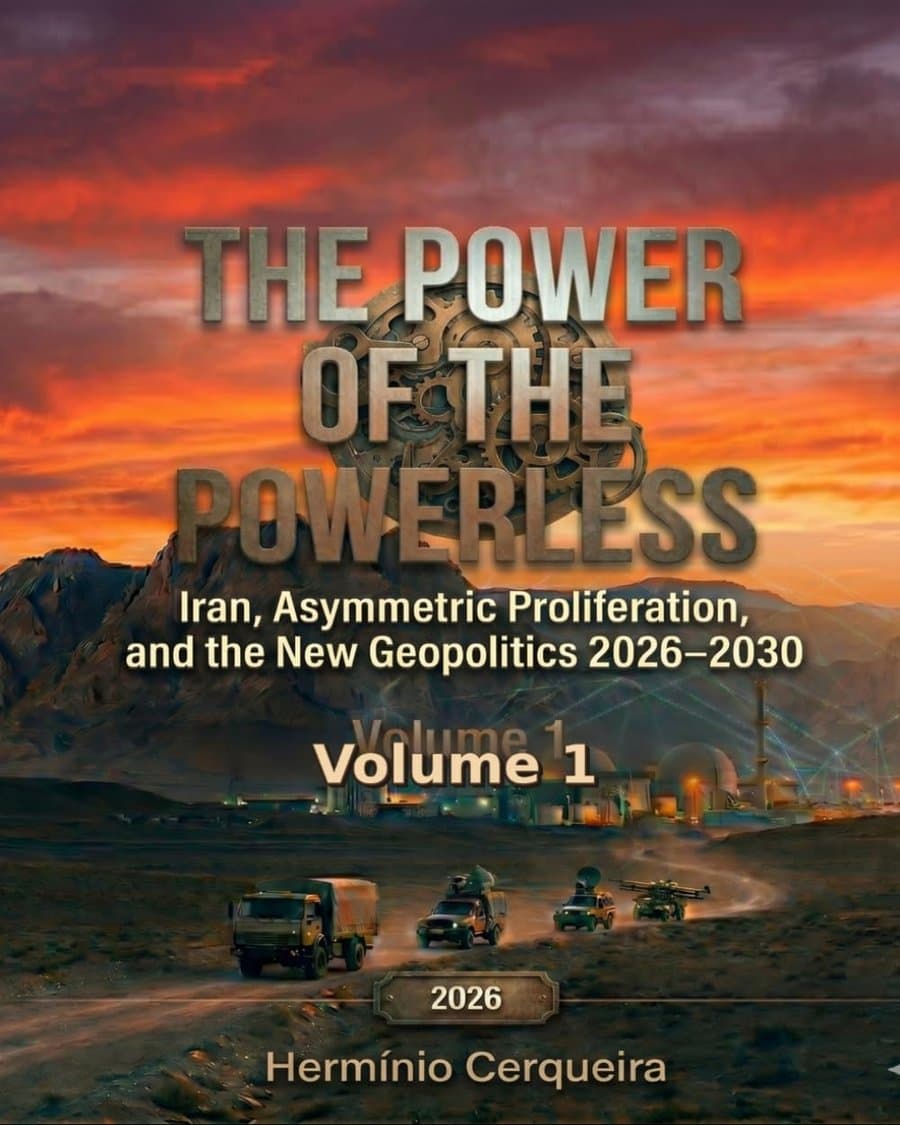
The Power of the Powerless, Volume 1
The Architecture of Asymmetry and the Global Chessboard
« o conjunto organizado de capacidades pelas quais Estados, organizações pseudo-estatais ou actores não-estatais, tecnologicamente inferiores »
- Pages
- 525 pages
- ISBN
- ISBN 979-8195205256
- Première publication
- Formats
- Kindle et broché
À propos du livre
Présentation de l’édition originale, en anglais.
“The acme of the art of war is to subdue the enemy without fighting.” »
— Sun Tzu, The Art of War, Chapter III
“Foreign policy is the continuation of domestic policy by other means.” »
— Kenneth Waltz, Theory of International Politics, 1979
“The weak suffer what they must; the strong do what they can.” »
— Thucydides, Melian Dialogue, History of the Peloponnesian War, V, 89
“No state can remain hegemonic when the costs of imposing its order outweigh the benefits of maintaining it.” »
— Robert Gilpin, War and Change in World Politics, 1981
The book's central argument
This book is built around a single, weighty thesis: that the international order that emerged from the collapse of the Soviet Union – which, for analytical convenience, we refer to as the post-Cold War liberal order – came to an end, in structural terms, in the first quarter of 2026. It should be noted that “end” does not mean “disappearance.” The post-Cold War order did not dissolve overnight, nor was it replaced by a perfectly clear new order. What effectively came to an end was its capacity for self-reproduction, that is, its ability to absorb internal and external shocks without its fundamental rules being publicly suspended or circumvented by major powers. 0F[1]
On its own, this thesis might seem trivial or, at the very least, insufficiently original. For over two decades, a broad academic current, encompassing authors as diverse as John Mearsheimer, Barry Posen, Randall Schweller, Amitav Acharya, and Hew Strachan, has been heralding the end of American unipolarity and the emergence of a multipolar order. However, what sets the analysis proposed here apart from previous interpretations is not the observation of the end; rather, it is the attempt to identify, with analytical rigor, the specific ways in which international power is exercised today—and, in particular, the systemic place that the phenomenon we refer to as the power of the powerless occupies within this new power economy.
[1]The concept of self-reproduction applied to international systems owes its most sophisticated formulation to Niklas Luhmann (1984), Soziale Systeme: Grundriß einer allgemeinen Theorie, and to the reinterpretation, from the perspective of international relations, by Mathias Albert and Lars-Erik Cederman in New Systems Theories of World Politics (2010).
This expression, which brings to mind Václav Havel's reflections on civic resistance in single-party regimes, is here redefined in the context of strategic theory. We define the power of the powerless as the organized set of capabilities through which states, pseudo-state organizations, or non-state actors, technologically inferior to a conventional superpower, are able to: (i) reliably prevent the effective use of that superpower's conventional superiority; (ii) impose unacceptable economic, political, or reputational costs on it during politically relevant periods; and (iii) thereby extract political outcomes that are disproportionate to the material power differential.
This definition, which will be refined in Chapter 1 and operationalized in the empirical chapters, contains three points that require immediate attention. First, the power of the powerless is not to be confused with the mere ability to inflict harm: a terrorist group can kill many innocent people and yet not reshape the international order. What characterizes it is the structured capacity to shape the strategic decisions of superior actors. Second, it is an essentially relational power: it exists only in relation to a symmetrical adversary, with a conventional apparatus and cost-sensitive public opinion. Third, it is fundamentally a paralyzing, non-productive power: it paralyzes the adversary without itself producing a stable alternative order. From this paralyzing nature stems, as will be seen below, the very fragility of the interregnum.
Index des éditions
Une ligne par édition, dans la langue de publication. La boutique Amazon se choisit une fois et vaut pour toutes.
Sur Amazon
Édition en anglais:
The Power of the Powerless
525 pagesKindle et broché
Éditions d’éditeur
En vente dans la boutique de l’éditeur et, lorsque c’est indiqué, dans d’autres librairies — pas sur Amazon.
Édition en anglais:
The Power of the PowerlessÉdition Chiado Books
529 pagesBroché
- Dans les boutiques Amazon, chaque lien utilise le code propre à l’édition (ASIN) ; la disponibilité dans chaque pays dépend d’Amazon.
- Pour les éditions d’éditeur sans page propre confirmée, le lien ouvre la boutique de l’auteur chez l’éditeur.
Lecture critique — « A Obra Comentada » (2026)
Lecture critique à la troisième personne, reproduite de « A Obra Comentada », le catalogue commenté de l’œuvre publié par l’auteur lui-même. Il ne s’agit pas d’une critique de presse.
Texte original en portugais.
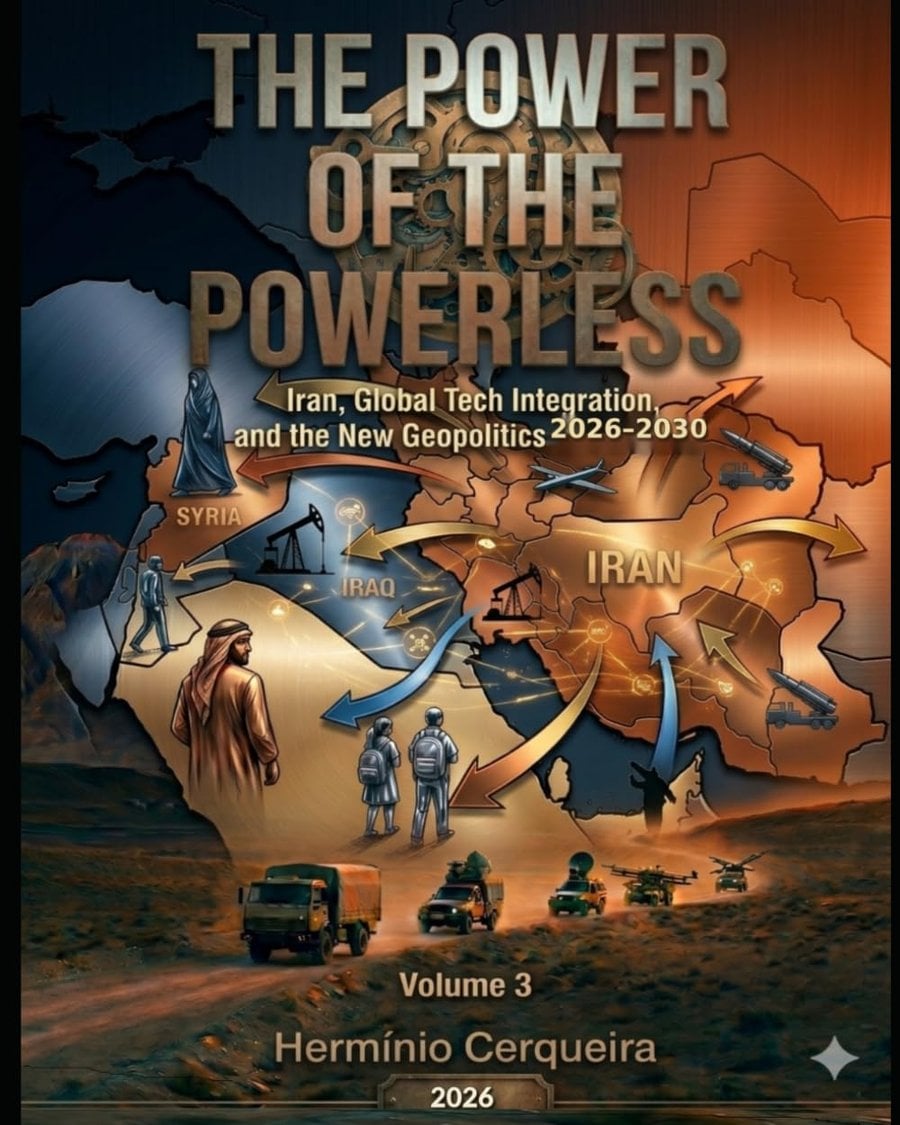
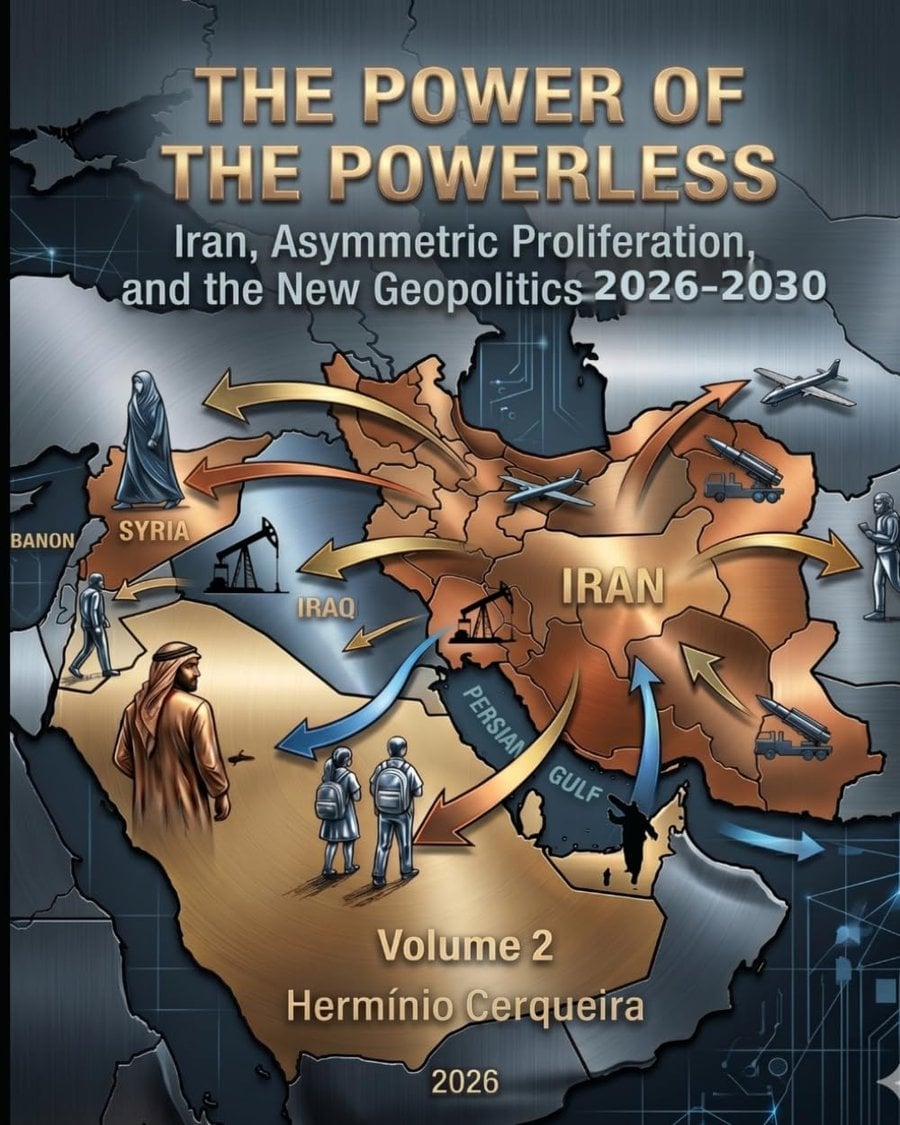
O Poder dos que Não Têm Poder — Irão, Proliferação Assimétrica e a Nova Geopolítica 2026-2030 é o projecto de maior fôlego académico do eixo: o Volume II apresenta-se expressamente como «ensaio doutoral sobre dissuasão assimétrica, reengenharia institucional e teatros emergentes da competição entre grandes potências», e todo o conjunto — concebido como trilogia, de que se conhecem os dois primeiros volumes — adopta o aparato correspondente: nota metodológica preliminar, hipóteses de trabalho, desenho de investigação misto, tabelas quantitativas, glossário e bibliografia de fontes primárias da AIEA, do BIS, do CSIS e do Congressional Research Service.
A relação com Václav Havel, inscrita no título, é assumida e trabalhada, não meramente decorativa. O autor reconhece que Havel escrevia «sobre um contexto muito distinto: a dissidência cívica dos súbditos dos regimes pós-totalitários da Europa Central», e opera um deslocamento deliberado da expressão para a teoria estratégica: o poder dos que não têm poder passa a designar «o conjunto organizado de capacidades pelas quais Estados, organizações pseudo-estatais ou actores não-estatais, tecnologicamente inferiores», impõem custos proibitivos a potências muito superiores. Mas o fio havelinao regressa no fecho, agora em registo moral, quando o autor parafraseia o ensaio de 1978: «o poder dos que não têm poder reside em viver na verdade, em recusar a mentira institucionalizada». Entre estes dois pólos — o operacional e o ético — joga-se a originalidade do livro: a assimetria é estudada como técnica e interrogada como condição.
A tese central assenta numa tríade conceptual operatória — latência nuclear, negação assimétrica, ambiguidade estratégica — aplicada ao caso iraniano no interregno 2026-2030, sobre uma ontologia do poder em quatro estratos (produtivo, coercitivo, de negação, cognitivo) que dialoga criticamente com Morgenthau, Kissinger e Aron, com o soft power de Nye e Keohane e com o poder relacional-estrutural de Michael Mann e Susan Strange. O Volume I («A Arquitetura da Assimetria e o Tabuleiro Global») constrói os fundamentos e a genealogia da estratégia dos «fracos» — da Indochina ao Afeganistão soviético, do modelo Hezbollah ao laboratório ucraniano —, analisa o Eixo da Resistência, a economia iraniana sob sanções e a aritmética do breakout nuclear depois da operação Epic Fury, e alarga o foco às superpotências fatigadas e ao bloco BRICS+. O Volume II («A Execução Estratégica e a Ordem 2026-2030») desce ao terreno mais espinhoso: a arma radiológica e a arte do limiar psicológico — com estudos de caso de Goiânia a Litvinenko e Skripal —, a infra-estrutura da desdolarização (mBridge, «The Unit») e as projecções institucionais para 2030. As epígrafes fixam a linhagem: Sun Tzu, Tucídides no Diálogo de Melos, Waltz e Gilpin.
No conjunto da obra, este é o livro que dá profundidade teórica ao actor que os volumes narrativos do ciclo de Ormuz tratam como beligerante: onde O Atlântico em Chamas conta a guerra e a Crise Energética Mundial mede as suas ondas de choque, O Poder dos que Não Têm Poder pergunta porque é que um Estado cercado, sancionado e tecnologicamente inferior continua a ser capaz de negar a vitória ao mais poderoso exército da história. A resposta — paciente, documentada, por vezes desconfortável — é o contributo mais duradouro do díptico, e a dedicatória diz o resto: aos «que estudam a guerra na esperança de a evitar».
Citations du livre
« ensaio doutoral sobre dissuasão assimétrica, reengenharia institucional e teatros emergentes da competição entre grandes potências »
« sobre um contexto muito distinto: a dissidência cívica dos súbditos dos regimes pós-totalitários da Europa Central »
« o poder dos que não têm poder reside em viver na verdade, em recusar a mentira institucionalizada »
« A Arquitetura da Assimetria e o Tabuleiro Global »
« A Execução Estratégica e a Ordem 2026-2030 »
« que estudam a guerra na esperança de a evitar »
Autres expressions du livre citées
« fracos »« The Unit »
Source : «A Obra Comentada» (Sintra, Julho de 2026) — comentário crítico
Fiche technique
- Genre
- Essai
- Axe de l’œuvre
- Stratégie et géopolitique
- Première publication
- Pages
- 525 (édition en anglais)
- Formats
- Livre numérique Kindle · Broché
- Langues
- 1 — anglais
- ISBN
- 979-8195205256