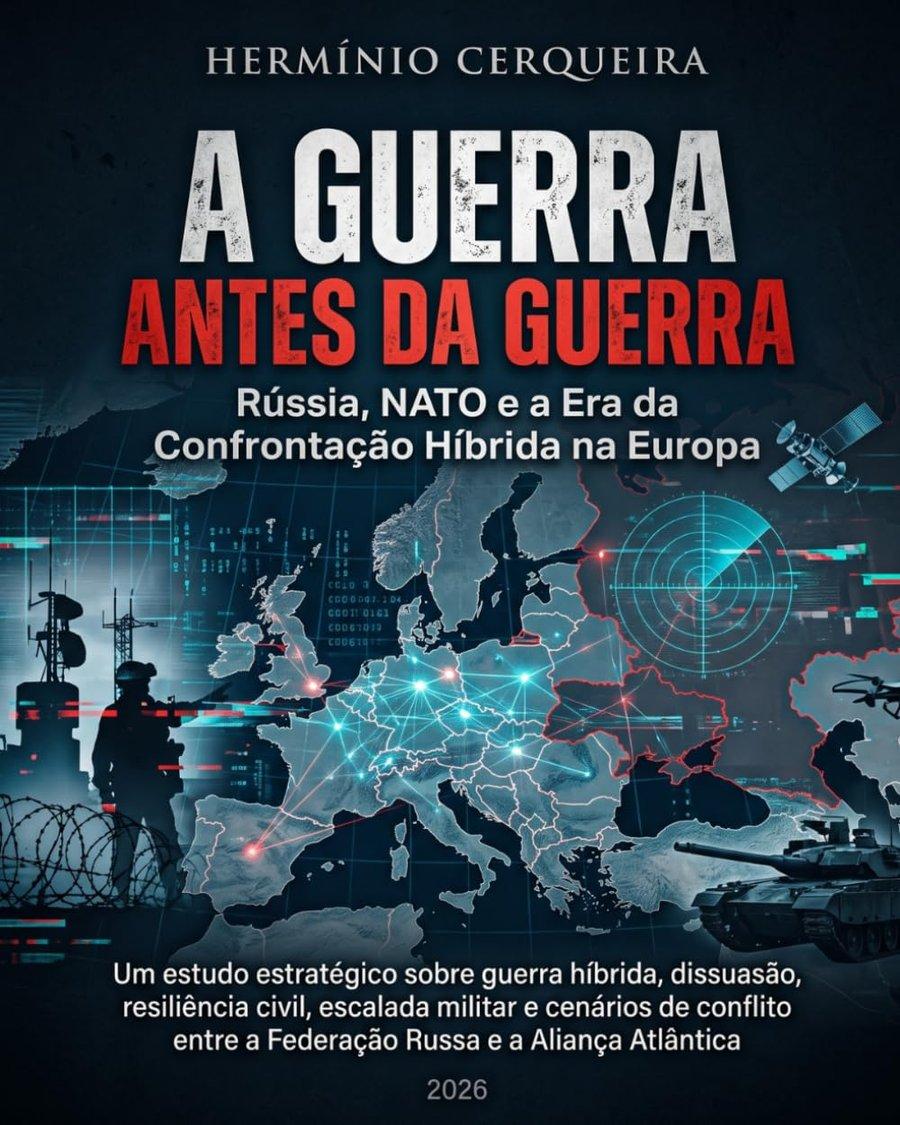
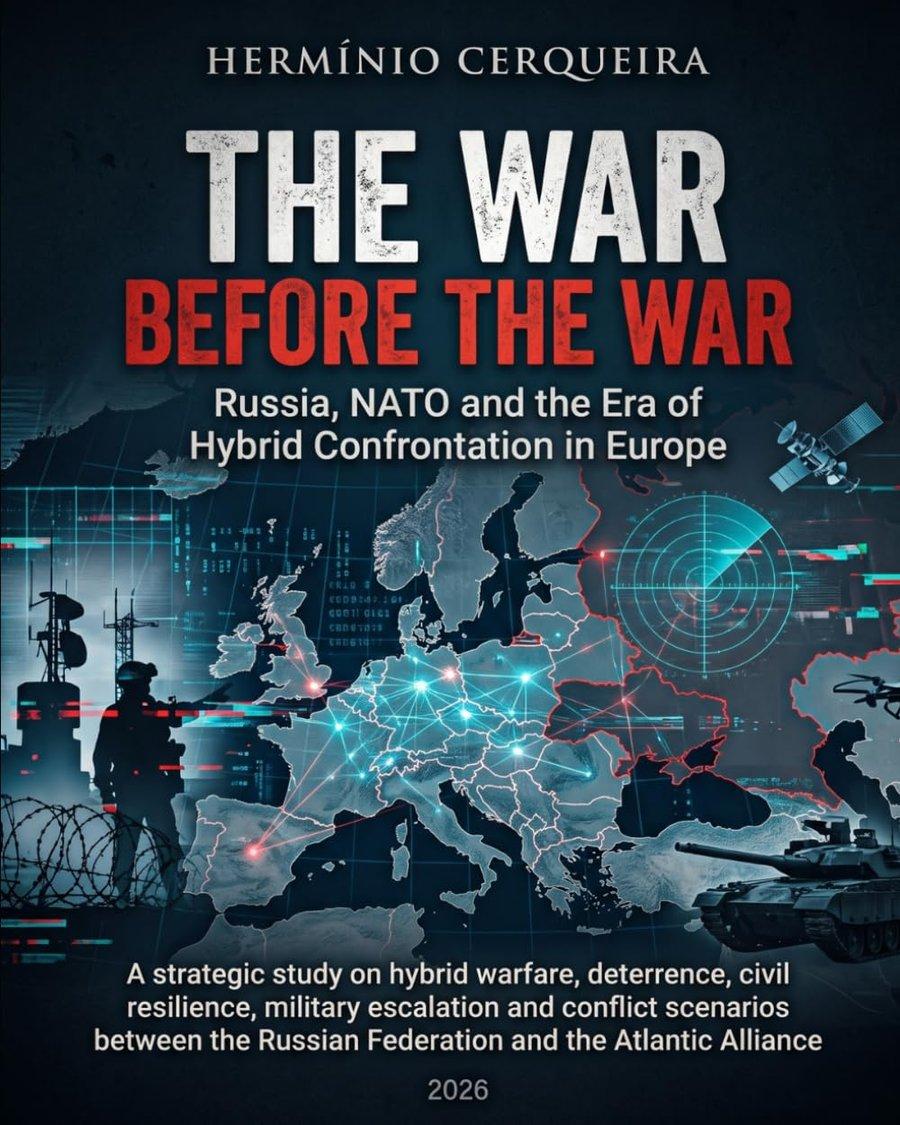

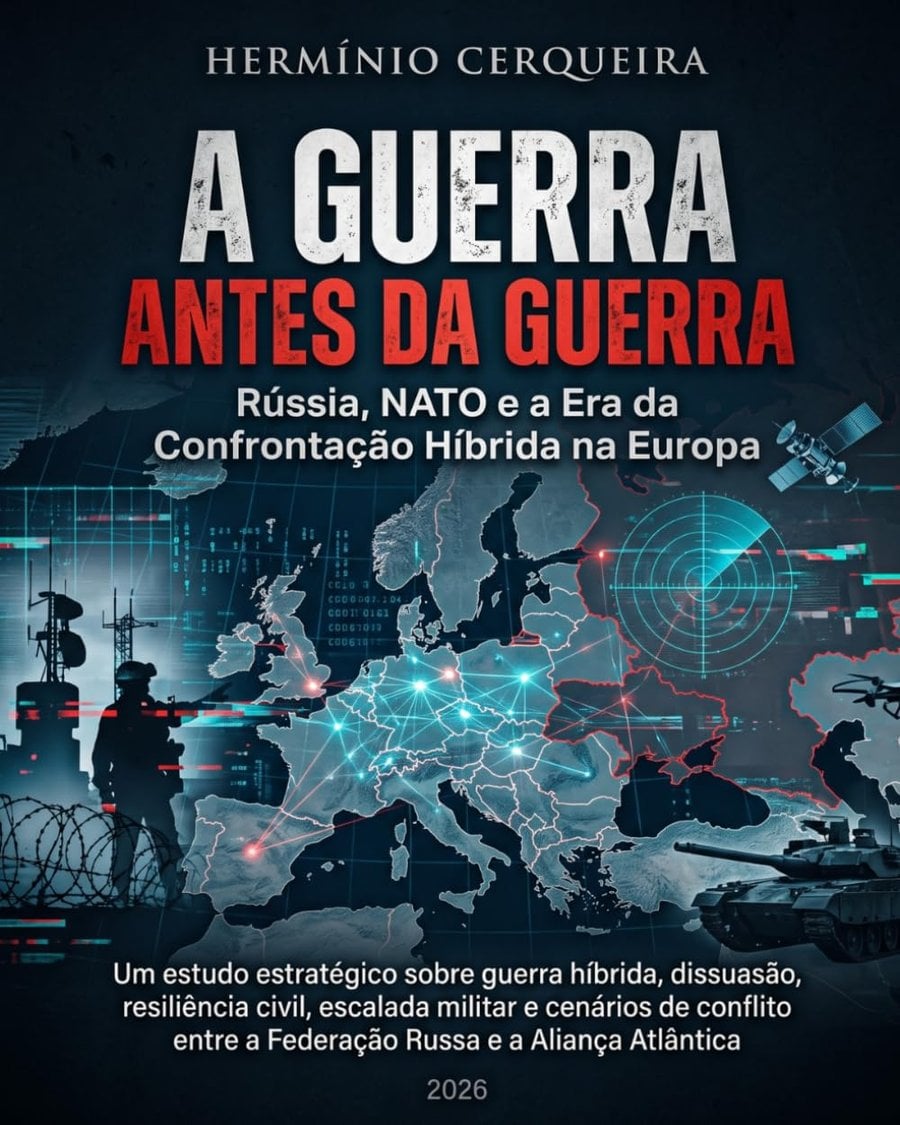
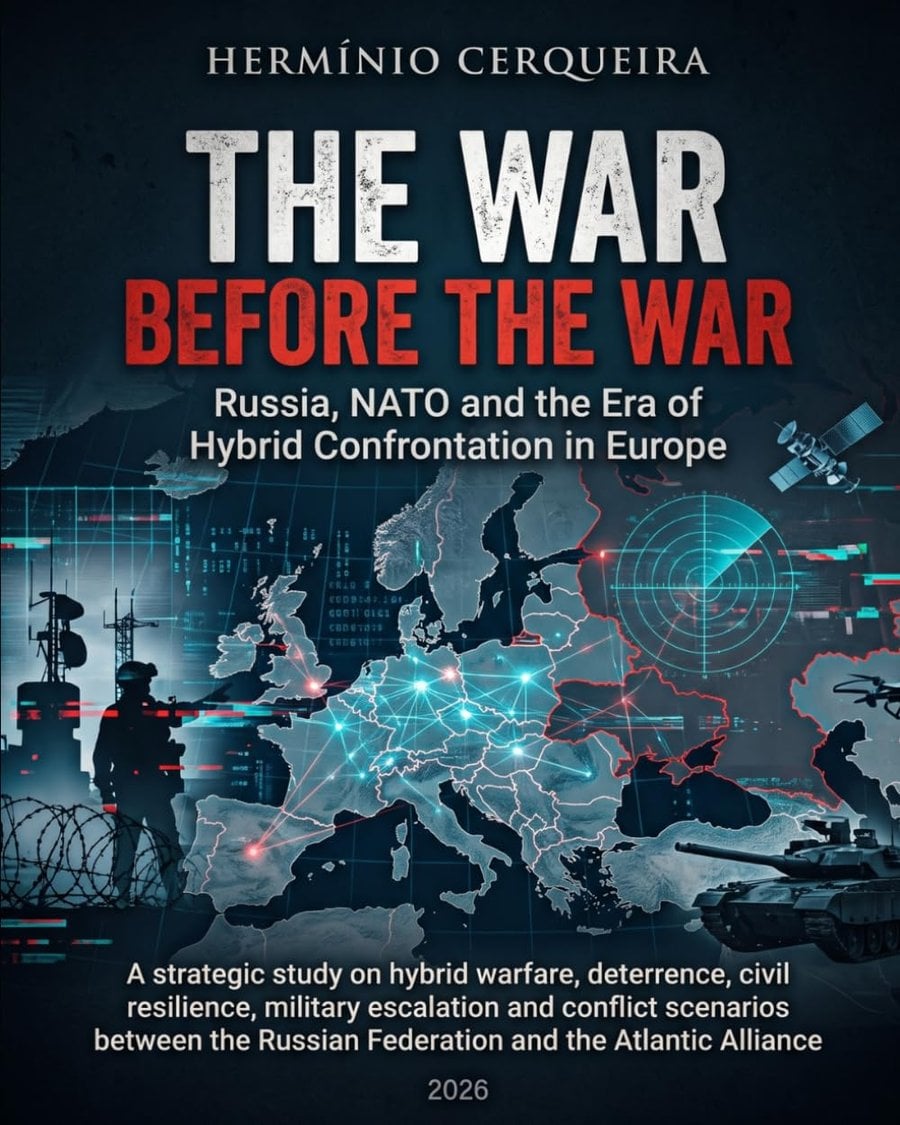
A Guerra Antes da GuerraThe War Before the War
Rússia, NATO e a Era da Confrontação Híbrida na Europa
Russia, NATO and the Era of Hybrid Confrontation in Europe
Verkrijgbaar in 2 talen
- Pagina’s
- 762 pagina’s
- ISBN
- ISBN 979-8176060102
- Eerste publicatie
- Uitvoeringen
- Paperback en Kindle
- Pagina’s
- 752 pagina’s
- ISBN
- ISBN 979-8176188561
- Verschenen
- Uitvoeringen
- Paperback en Kindle
Beschrijving
Beschrijving uit de oorspronkelijke editie, in het Portugees.
Tekst gepubliceerd bij de editie in het Engels (Amazon).
Meer tonenMinder tonen — Beschrijving
Este livro nasceu de uma pergunta que durante muito tempo não consegui responder de modo que me satisfizesse, e que me foi feita, em versões diferentes, por pessoas sem qualquer relação profissional com a defesa: estamos, ou não estamos, em guerra? Quem a formula desconfia da própria pergunta. Suspeita que é exagerada e suspeita, ao mesmo tempo, que é tardia. Essa hesitação não é ignorância. É uma percepção correcta de que a linguagem disponível deixou de servir. Temos palavras para a paz e temos palavras para a guerra, e aquilo que a Europa atravessa desde 2014, com intensidade crescente depois de Fevereiro de 2022, não cabe confortavelmente em nenhuma delas.
A resposta honesta é que a pergunta está mal construída, e que a sua má construção é, ela própria, um dos resultados que o adversário procura. Enquanto a discussão pública se organizar em torno de uma alternativa binária, cada acontecimento concreto — um cabo cortado, um aeroporto encerrado por avistamento de aparelhos não identificados, uma campanha coordenada nas redes sociais durante uma eleição, um incêndio num entreposto logístico — será classificado por defeito na categoria da paz, porque não se parece com uma guerra. E a acumulação de acontecimentos que individualmente não se parecem com uma guerra produz, ao fim de alguns anos, uma situação que também já não se parece com a paz. Foi para descrever com rigor esse intervalo, e não para o dramatizar, que decidi escrever.
Escrevi-o, em segundo lugar, porque me convenci de que existe em Portugal um desnível perigoso entre a exposição real do país e a atenção pública que essa exposição recebe. A posição atlântica portuguesa, a extensão da zona económica exclusiva, a presença de estações de amarração de sistemas de cabos submarinos, a dependência energética e a função de charneira entre o Atlântico Norte e o Mediterrâneo conferem a Portugal um perfil de exposição que não é o de um Estado periférico distraído do problema europeu. É o de um Estado situado num dos pontos de convergência da infra-estrutura de que depende o funcionamento quotidiano do continente. O debate português sobre defesa, quando existe, organiza-se quase sempre em torno de percentagens de despesa, e muito raramente em torno da pergunta anterior: despesa para proteger o quê, de que ameaça, com que prioridade e em que prazo.[1]
Existe uma terceira razão, e é a que me parece hoje mais forte. A confrontação híbrida é, antes de ser um problema de meios, um problema de compreensão. Uma operação de sabotagem produz um efeito material limitado e um efeito político que pode ser muito grande; a diferença entre os dois é determinada pela forma como a sociedade visada interpreta o que lhe aconteceu. Uma sociedade que reconhece o padrão, que sabe distinguir o acidente frequente do acto raro, que não confunde avaria com ataque nem ataque com avaria, e que não converte cada incidente em pânico nem em indiferença, é substancialmente mais difícil de coagir do que uma sociedade com os mesmos recursos materiais e sem essa capacidade interpretativa. Escrevi este livro na convicção de que a leitura atenta é, neste domínio preciso, uma forma modesta mas real de defesa.
Há ainda uma razão negativa, que registo porque determinou a forma do resultado. Ao reunir a bibliografia disponível, encontrei dois corpos de texto igualmente insatisfatórios. De um lado, a literatura institucional, rigorosa nas fontes e quase sempre ilegível para quem não pertence ao meio, redigida numa linguagem de compromisso que evita conclusões. Do outro, a literatura de alarme, legível, rápida, indiferente à distinção entre o que está documentado e o que é plausível, e sistematicamente incapaz de reconhecer que a maior parte dos cabos submarinos que falham no mundo falha por causas acidentais bem conhecidas.[2] O espaço entre os dois estava vazio. Este livro procura ocupá-lo: prosa legível com disciplina de prova....
Meer tonenMinder tonen — Beschrijving
Why This Book Was Written ?
This book was born of a question that for a long time I was unable to answer in a way that satisfied me, and that was put to me, in different versions, by people with no professional connection whatsoever to defense: are we, or are we not, at war? Those who ask it distrust their own question. They suspect that it is exaggerated and suspect, at the same time, that it comes too late. That hesitation is not ignorance. It is a correct perception that the available language has ceased to serve. We have words for peace and we have words for war, and what Europe has been going through since 2014, with growing intensity after February 2022, does not fit comfortably into either of them.
The honest answer is that the question is badly framed, and that its poor framing is, in itself, one of the outcomes the adversary seeks. As long as public discussion is organized around a binary alternative, every concrete event — a severed cable, an airport closed after sightings of unidentified aircraft, a coordinated social media campaign during an election, a fire at a logistics warehouse — will be classified by default in the category of peace, because it does not look like a war. And the accumulation of events that individually do not look like a war produces, after a few years, a situation that no longer looks like peace either. It was to describe that interval with rigor, and not to dramatize it, that I decided to write.
I wrote it, second, because I became convinced that there is in Portugal a dangerous gap between the country’s real exposure and the public attention that exposure receives. Portugal’s Atlantic position, the extent of its exclusive economic zone, the presence of landing stations for submarine cable systems, its energy dependence, and its role as a hinge between the North Atlantic and the Mediterranean give the country an exposure profile that is not that of a peripheral state distracted from the European problem. It is that of a state located at one of the points of convergence of the infrastructure on which the day-to-day functioning of the continent depends. The Portuguese debate on defense, when it exists, is almost always organized around spending percentages and very rarely around the prior question: spending to protect what, against what threat, with what priority, and within what time frame. [1]
There is a third reason, and it is the one that seems to me the strongest today. Hybrid confrontation is, before it is a problem of means, a problem of understanding. A sabotage operation produces a limited material effect and a political effect that can be very large; the difference between the two is determined by the way the targeted society interprets what has happened to it. A society that recognizes the pattern, that knows how to distinguish the frequent accident from the rare act, that mistakes neither malfunction for attack nor attack for malfunction, and that turns each incident into neither panic nor indifference, is substantially harder to coerce than a society with the same material resources and without that interpretive capacity. I wrote this book in the conviction that attentive reading is, in this precise domain, a modest but real form of defense...
Overzicht van de edities
Eén regel per editie, in de taal waarin ze is verschenen. U kiest uw Amazon-winkel één keer; die keuze geldt voor alle edities.
Editie in het Portugees:
A Guerra Antes da Guerra
762 pagina’sPaperback en Kindle
Editie in het Engels:
The War Before the War
752 pagina’sPaperback en Kindle
- In de Amazon-winkels gebruikt elke link de eigen code van de editie (ASIN); de beschikbaarheid per land wordt door Amazon beheerd.
- Koop in Portugal bij Amazon Spanje: er bestaat geen Portugese Amazon-winkel.
Boekgegevens
- Genre
- Essay
- As van het werk
- Strategie en geopolitiek
- Eerste publicatie
- Pagina’s
- 762 (editie in het Portugees)
- Uitvoeringen
- Gedrukt boek (paperback) · Kindle-editie
- Talen
- 2 — Portugees en Engels
- ISBN
- 979-8176060102