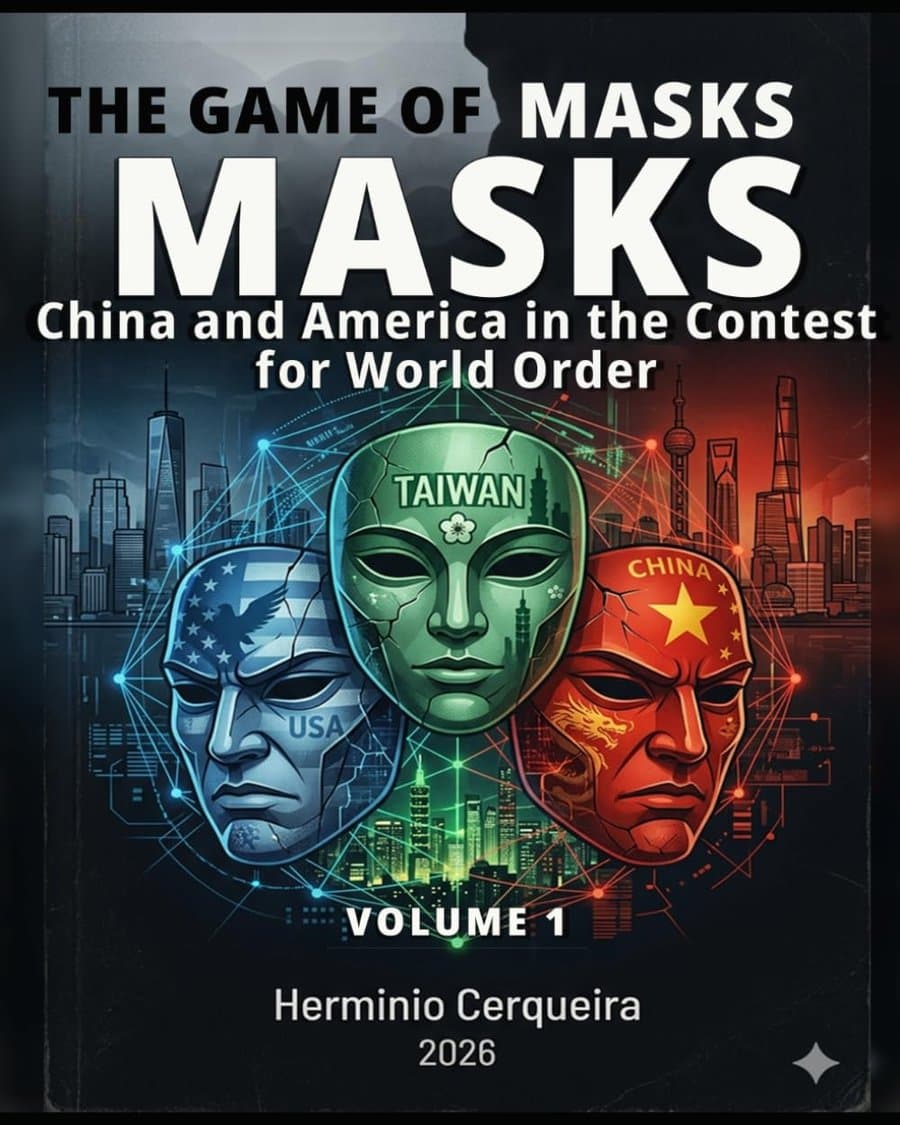
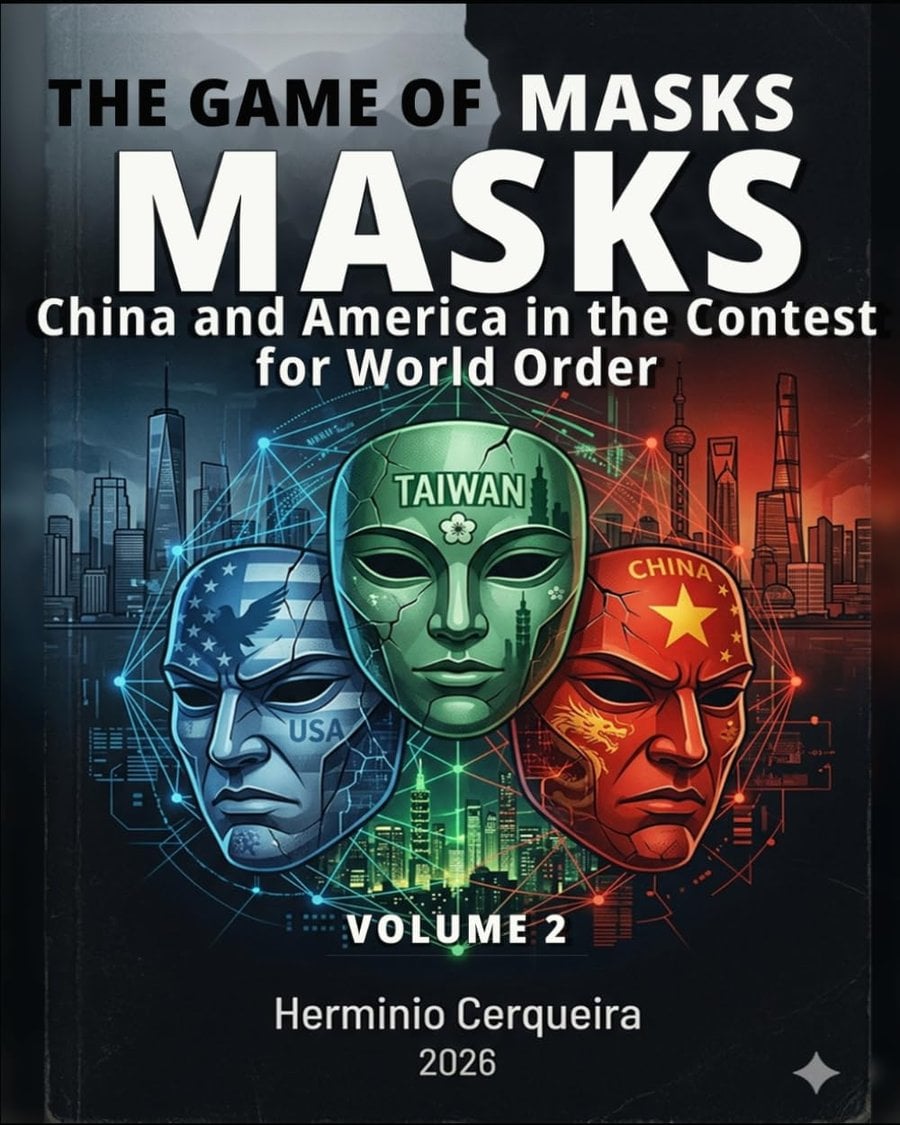
Strategy and Geopolitics
China, Taiwan, America, and the Destiny of the 21st Century · Volume 2
2026 · 450 pages
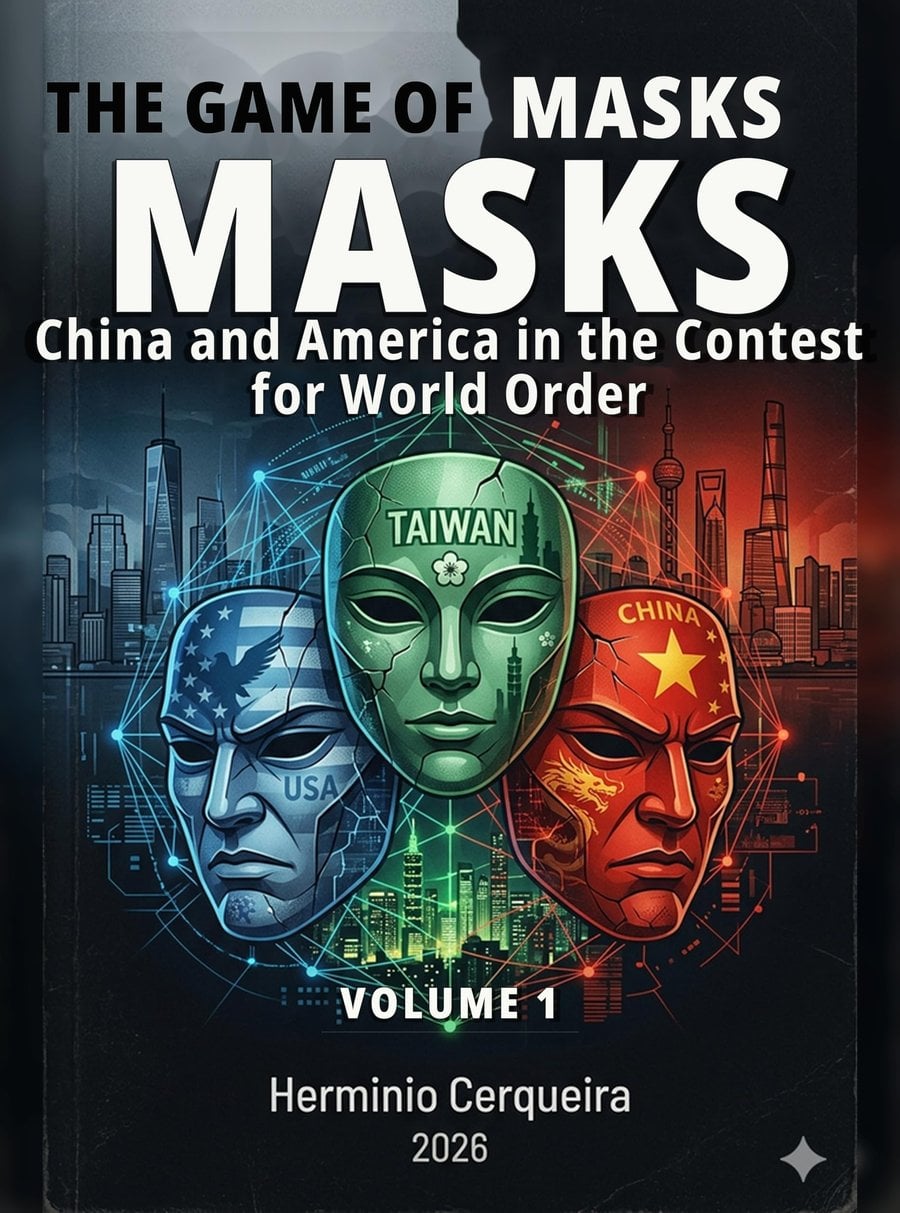
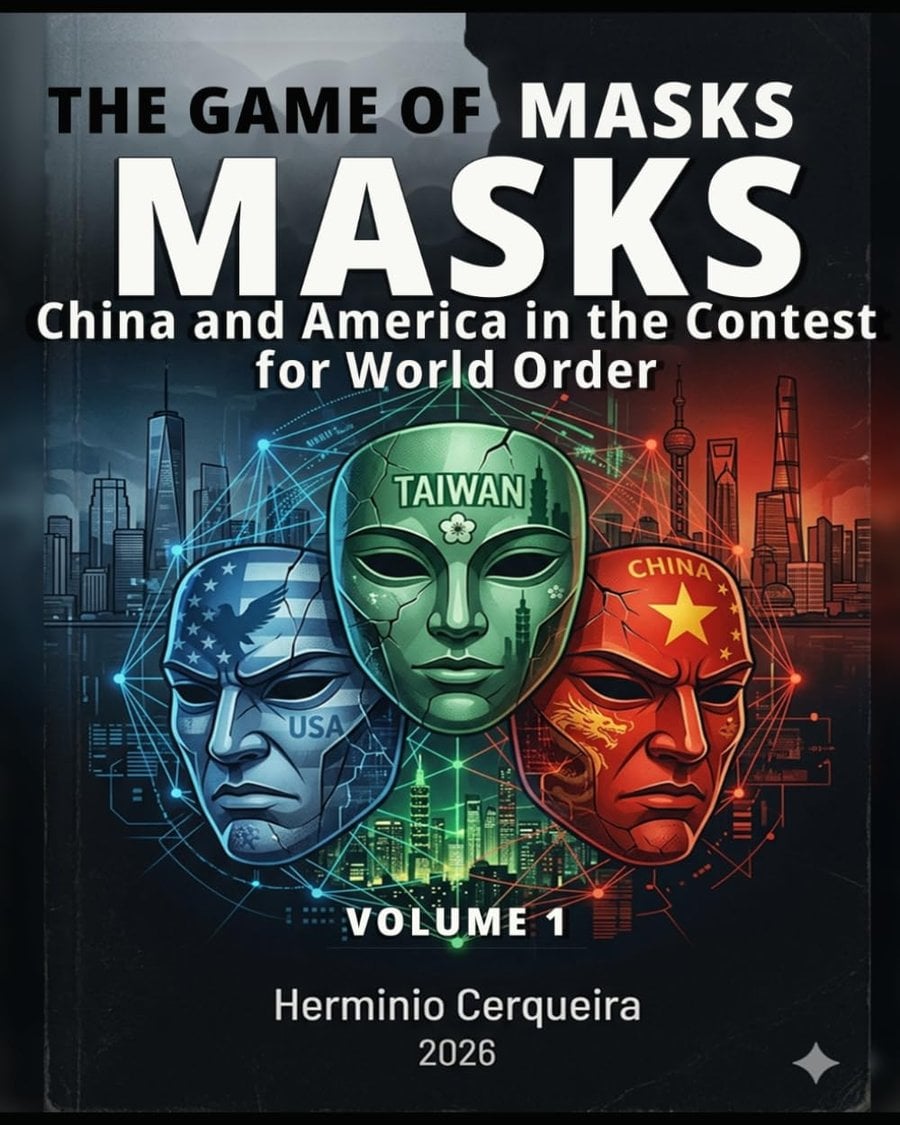
China, Taiwan, America, and the Destiny of the 21st Century
China, Taiwan, América e o Destino do Século XXI
Available in 2 languages
“um teatro em que a coerção precede o disparo, em que a propaganda antecipa a tropa, em que a credibilidade vale mais do que o aço”
Text published with the English edition (Amazon).
We are living through the most dangerous phase of the international system since the fall of the Berlin Wall. The comfort of a unipolar world no longer exists, nor does the hope of a peaceful globalization stitching together differences. What has returned is competition between great powers, armed with technology, finance, narrative, and military calculation. At the center of this competition is an island of twenty-three million inhabitants that produces most of the advanced semiconductors on which the world depends. Taiwan has ceased to be a bilateral problem between Beijing and Taipei and has become the decisive node in the global power architecture.
This book proposes an interpretation of this game. It is not a prophetic exercise, but a mapping exercise. It shows how Sino-American rivalry unfolds in layers—geography, industry, money, symbols—how each of these can produce war or stability, and how diplomatic masks function to hide intentions, simulate strength, or disguise weakness. The title is not literary by choice: it is methodological. Contemporary international politics is a theater where coercion precedes the shot, where propaganda anticipates the troops, where credibility is worth more than steel.
The method is the only one compatible with a topic of this gravity: disciplined strategic analysis, use of verifiable official and academic sources, attention to signs of military modernization and to the Pentagon's annual reports on Chinese military power, cross-reading of American and Chinese doctrinal documents, and systematic comparison with the work of the RAND Corporation , CSIS, IISS, SIPRI, CNAS, and the Atlantic. Council , INDSR, Japan's NIDS, Australia's ASPI, and the network of European centers that continue to seriously investigate the Indo-Pacific. Nothing stated here stands without a robust body of documentation, and each chapter ends with its respective list of verifiable notes and references.
The reader will therefore find three overlapping layers: the factual, which brings together verifiable data on military capabilities, technological dependencies, trade flows, and official doctrines; the interpretative, which discusses the strategic significance of this data; and the prospective, which explores scenarios without succumbing to the easy temptation of catastrophe or the comfort of stability. The combination of these three layers requires writing in a controlled manner, with firm judgments, but acknowledging the contingency of history.
There is also a choice of tone. This book is not neutral because the international order is not neutral. The defense of freedom of navigation in the Indo-Pacific, the political integrity of Asian democracies, respect for minorities, and informational pluralism are not technical details: they are values that give meaning to deterrence. But recognizing this does not authorize the caricature of the adversary. China is a millennial civilization with legitimate aspirations for prosperity and security, and any serious analysis must understand its anxieties, its demographic and financial vulnerabilities, and its historical understanding of the world. Without this analytical empathy, we become propagandists, and propaganda has gained too much ground in contemporary research.
Finally, this book is deliberately long. It was conceived in two volumes to reflect the complexity of the subject. The first volume establishes the setting—the transformation of the world order, the geometry of the Indo-Pacific, the centrality of Taiwan—and the power machine—Chinese military modernization, American defense architecture, the asymmetric defense of Taipei. The second volume delves into the invisible conflict—hybrid warfare, crisis scenarios in the Strait, Russia's position—and the global clash—economics, semiconductors, international law, strategic narrative, and the future of the world order.
Vivemos a fase mais perigosa do sistema internacional desde a queda do Muro de Berlim. Já não existe o conforto do mundo unipolar, nem a esperança de uma globalização tranquila a coser as diferenças. O que regressou foi a competição entre grandes potências, e regressou armada de tecnologia, finanças, narrativa e cálculo militar. No centro dessa competição está uma ilha de vinte e três milhões de habitantes que produz a maioria dos semicondutores avançados de que o mundo depende. Taiwan deixou de ser um problema bilateral entre Pequim e Taipé para se transformar no nó decisivo da arquitectura global de poder.
Este livro propõe uma leitura desse jogo.
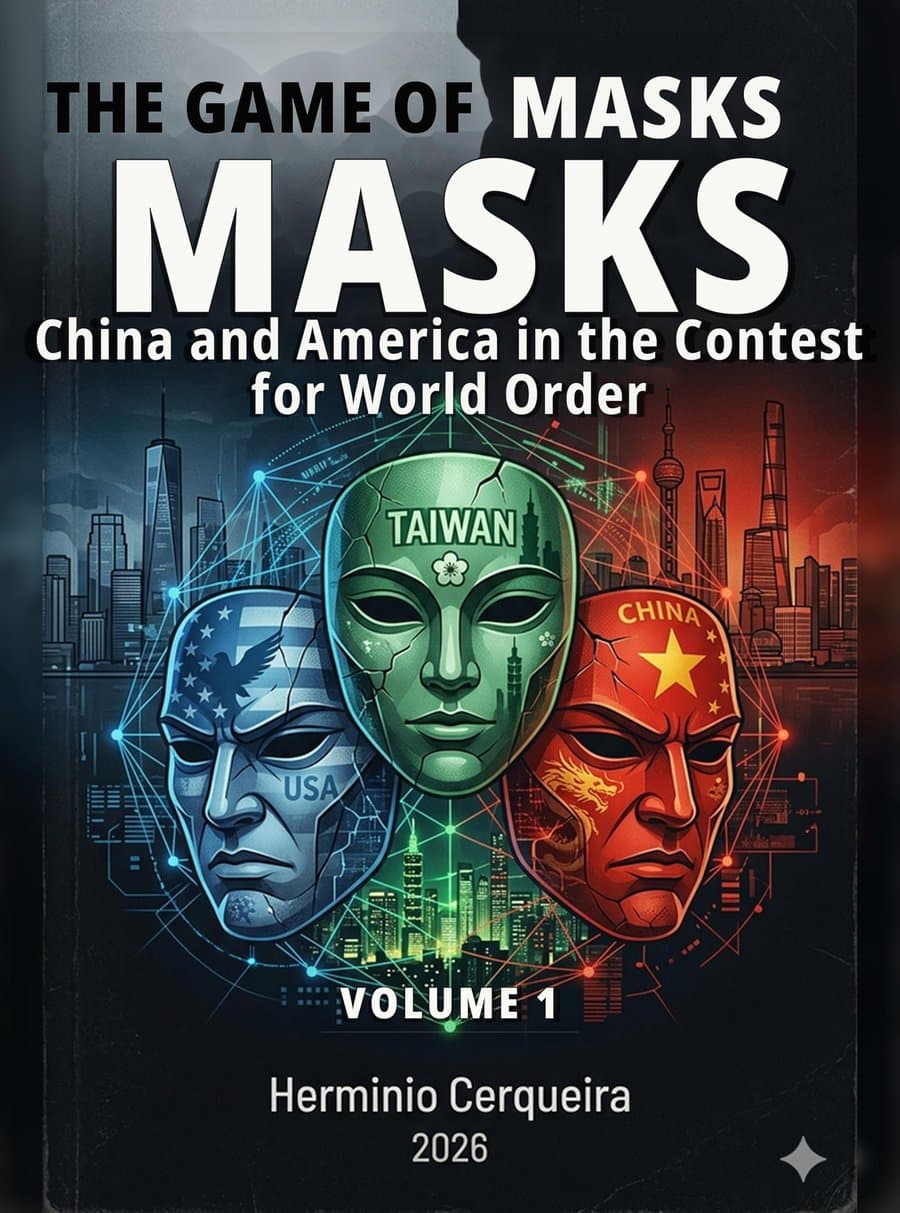
— O Jogo das Máscaras — Volume 1
Original text in Portuguese.
Source: publisher’s description of the Portuguese edition (Amazon).
English edition:
The Game of Masks
669 pagesKindle
Portuguese edition:
O Jogo das Máscaras
434 pagesKindle and paperback
Original text in Portuguese.
O Jogo das Máscaras é o livro em que Hermínio Cerqueira concentra sobre um único ponto do globo — o Estreito de Taiwan — toda a artilharia analítica do seu eixo geopolítico. A tese central é enunciada no prefácio com uma clareza que dispensa glosa: «o Estreito de Taiwan é hoje o teste decisivo da capacidade do sistema internacional para gerir uma transição de poder sem catástrofe; se a dissuasão funcionar, entraremos numa fase prolongada de competição controlada; se falhar, o século XXI será reescrito a partir das cinzas de uma guerra que ninguém quer e que, por isso mesmo, pode acontecer». O título, adverte o autor, «não é literário por gosto: é metodológico» — a política internacional contemporânea é lida como «um teatro em que a coerção precede o disparo, em que a propaganda antecipa a tropa, em que a credibilidade vale mais do que o aço». As máscaras são as camadas de simulação e dissimulação com que as potências escondem intenções, exibem forças que não têm e disfarçam fraquezas que têm.
A obra foi «deliberadamente» pensada em dois volumes. O primeiro estabelece o teatro e a máquina de poder: o regresso da competição entre grandes potências, a geometria do Indo-Pacífico e a primeira cadeia de ilhas (com genealogia que recua a Spykman e MacArthur), o dilema de Malaca, o Mar do Sul da China como laboratório de coerção cinzenta, e Taiwan como centro de gravidade — geoestratégico, tecnológico e simbólico, com o «escudo de silício» da TSMC e a corrida aos semicondutores tratados como questão de sobrevivência sistémica. O segundo volume entra no conflito invisível — guerra híbrida, cenários de crise no Estreito, posição da Rússia — e no choque global: a arquitectura financeira como campo de batalha, o yuan digital, os BRICS e a desdolarização, a América Latina entre duas potências. Uma particularidade editorial merece registo crítico: o texto incorpora estratos sucessivos de actualização — secções de «expansão» e capítulos de «dados actualizados 2026», com números do ONI e do CRS sobre a marinha chinesa, o orçamento especial de defesa taiwanês e o sistema T-Dome —, o que dá ao conjunto a textura de um organismo em crescimento, ao preço de alguma repetição estrutural entre camadas.
Os diálogos intelectuais são explícitos e criteriosos: a ficha técnica e a bibliografia convocam a RAND, o CSIS, o IISS, o SIPRI, o ASPI e os institutos japonês e taiwanês de estudos de defesa, e, entre os autores, Mearsheimer e a tragédia das grandes potências, Rush Doshi e a grande estratégia chinesa, Chris Miller e a guerra dos chips, Brands e Beckley e a «zona de perigo», Graham Allison implícito no capítulo sobre a armadilha de Tucídides. Digno de nota é o equilíbrio de tom: o livro assume que «não é neutro porque a ordem internacional não é neutra», mas exige de si próprio «empatia analítica» para com a China — «sem essa empatia analítica, transformamo-nos em propagandistas». No conjunto da obra, O Jogo das Máscaras é o pilar oriental que equilibra o pilar de Ormuz: onde o ciclo iraniano estuda a guerra que deflagrou, este estuda a guerra que ainda pode ser evitada — e é nessa assimetria que reside a sua tensão mais produtiva.
“o Estreito de Taiwan é hoje o teste decisivo da capacidade do sistema internacional para gerir uma transição de poder sem catástrofe; se a dissuasão funcionar, entraremos numa fase prolongada de competição controlada; se falhar, o século XXI será reescrito a partir das cinzas de uma guerra que ninguém quer e que, por isso mesmo, pode acontecer”
“não é literário por gosto: é metodológico”
“não é neutro porque a ordem internacional não é neutra”
“sem essa empatia analítica, transformamo-nos em propagandistas”
“deliberadamente”“escudo de silício”“expansão”“dados actualizados 2026”“zona de perigo”“empatia analítica”
Source: «A Obra Comentada» (Sintra, Julho de 2026) — comentário crítico
2026 · 450 pages