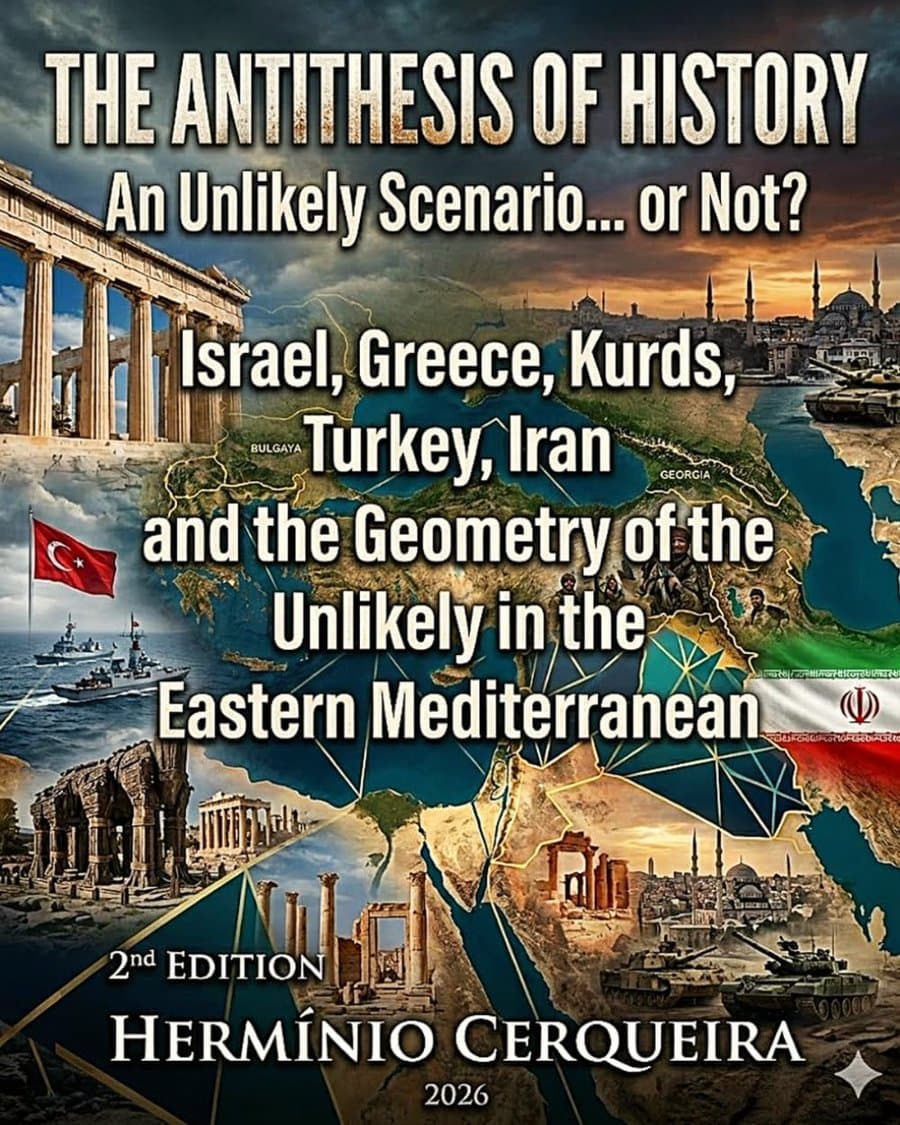
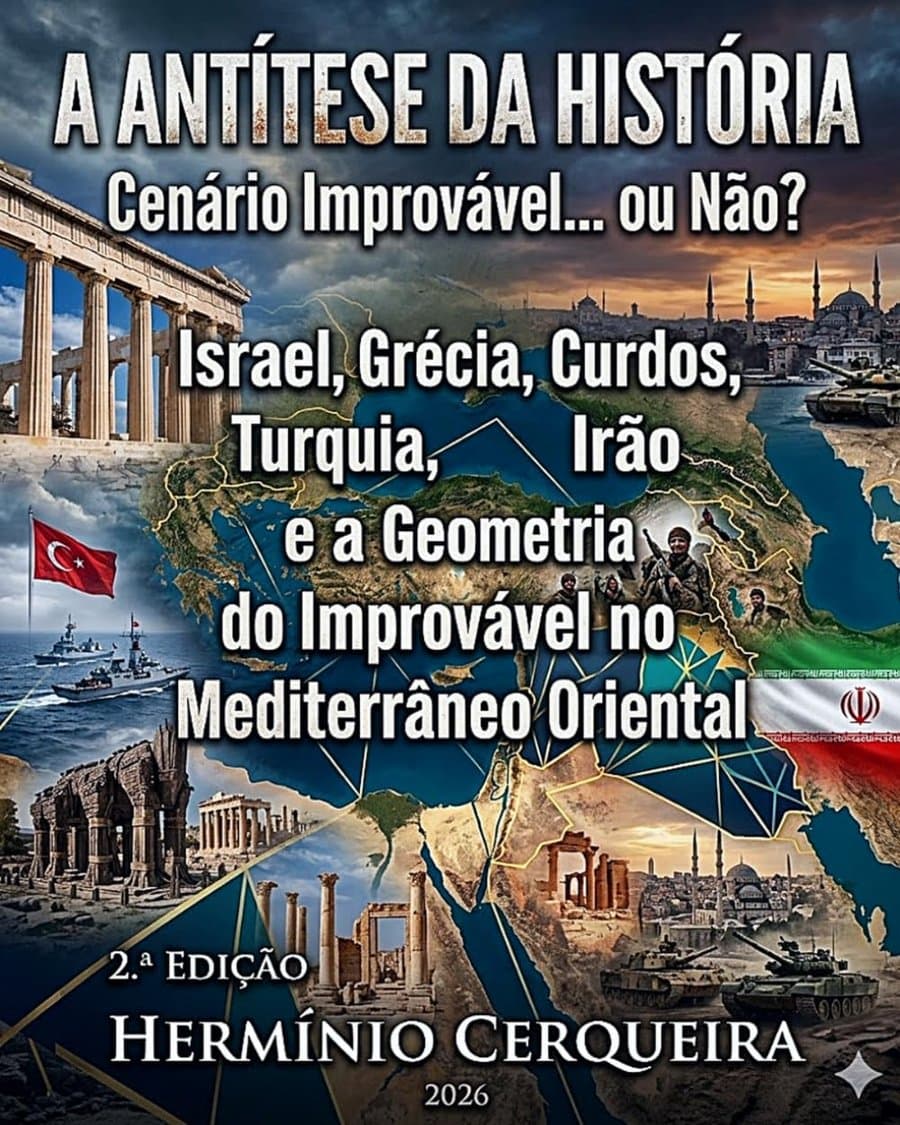
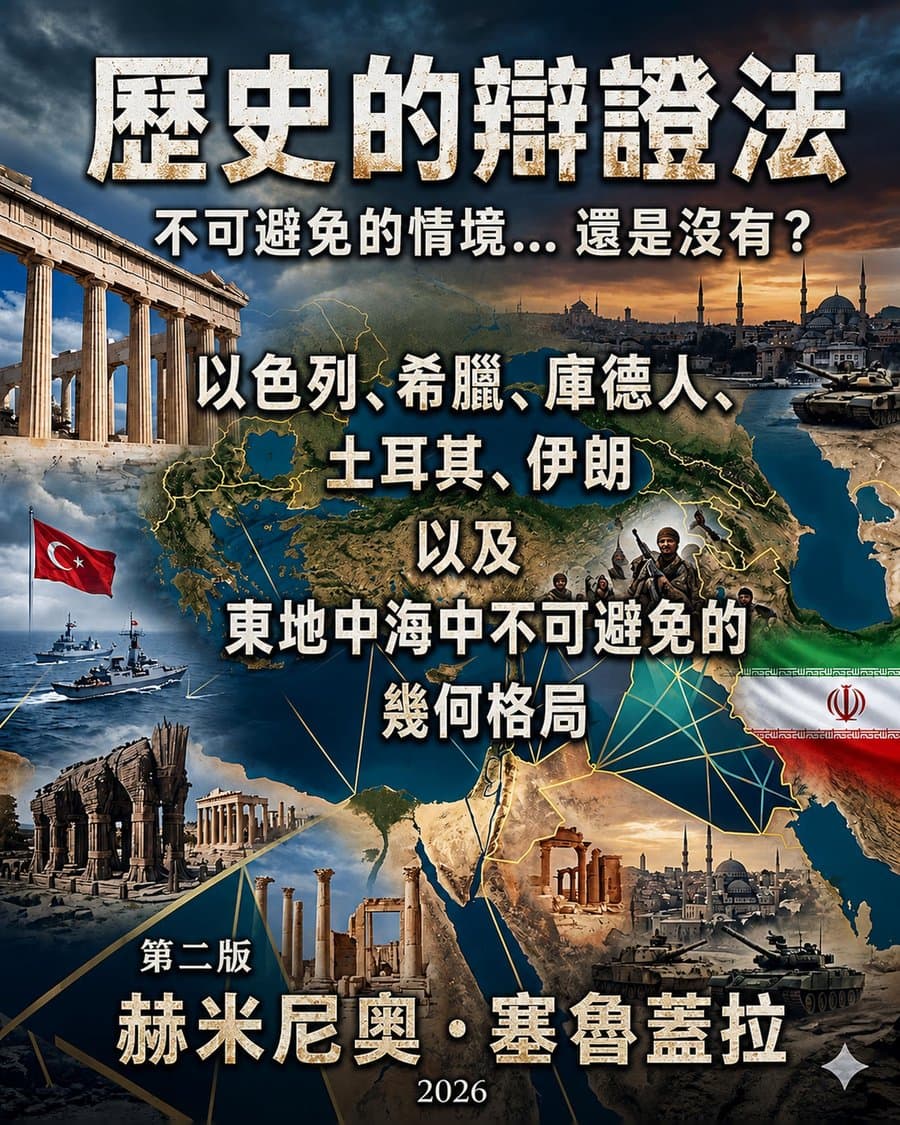
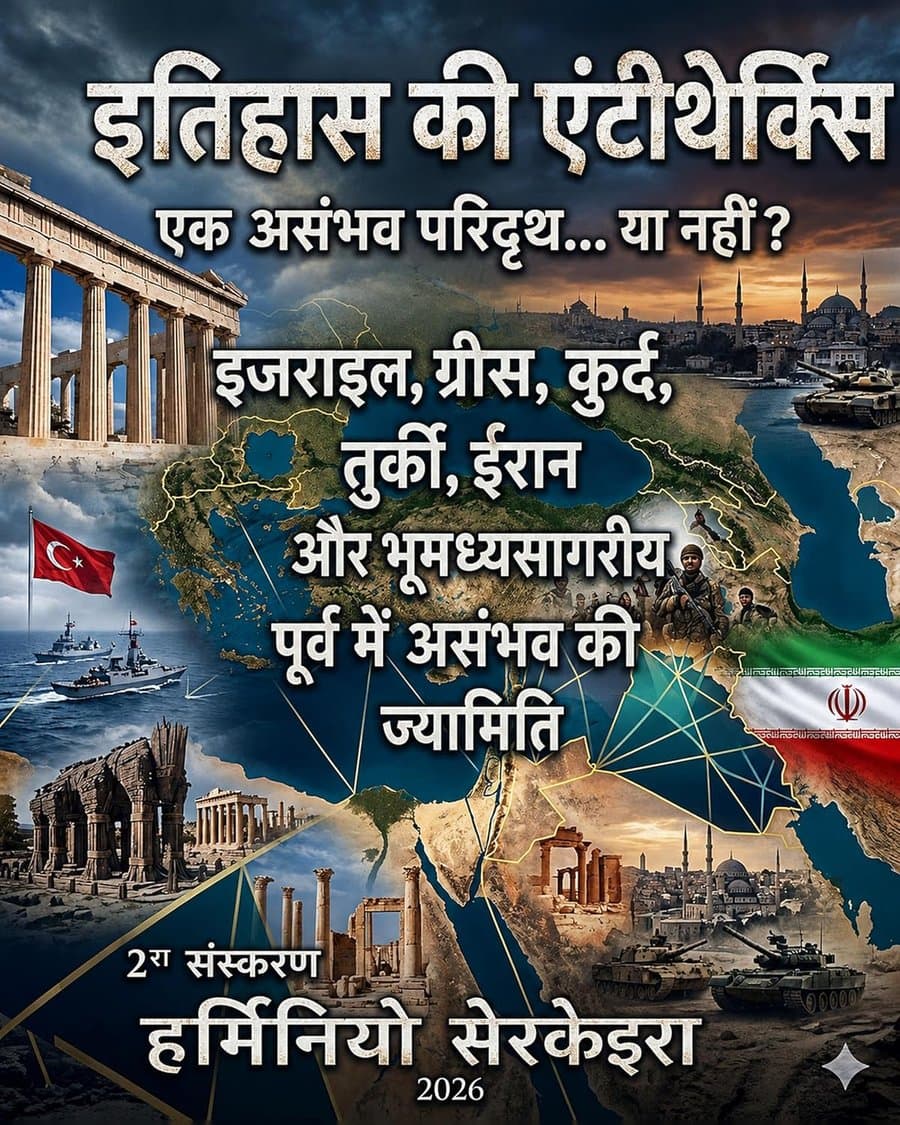
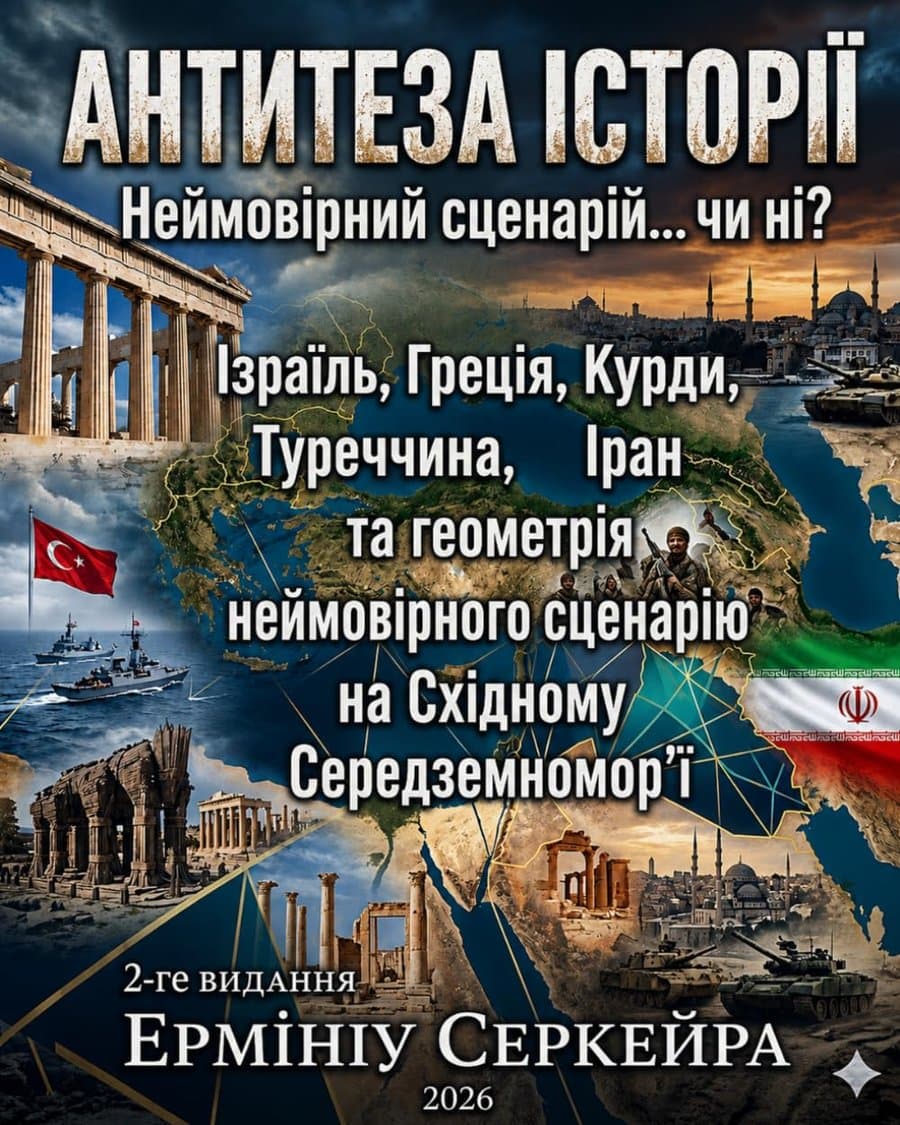

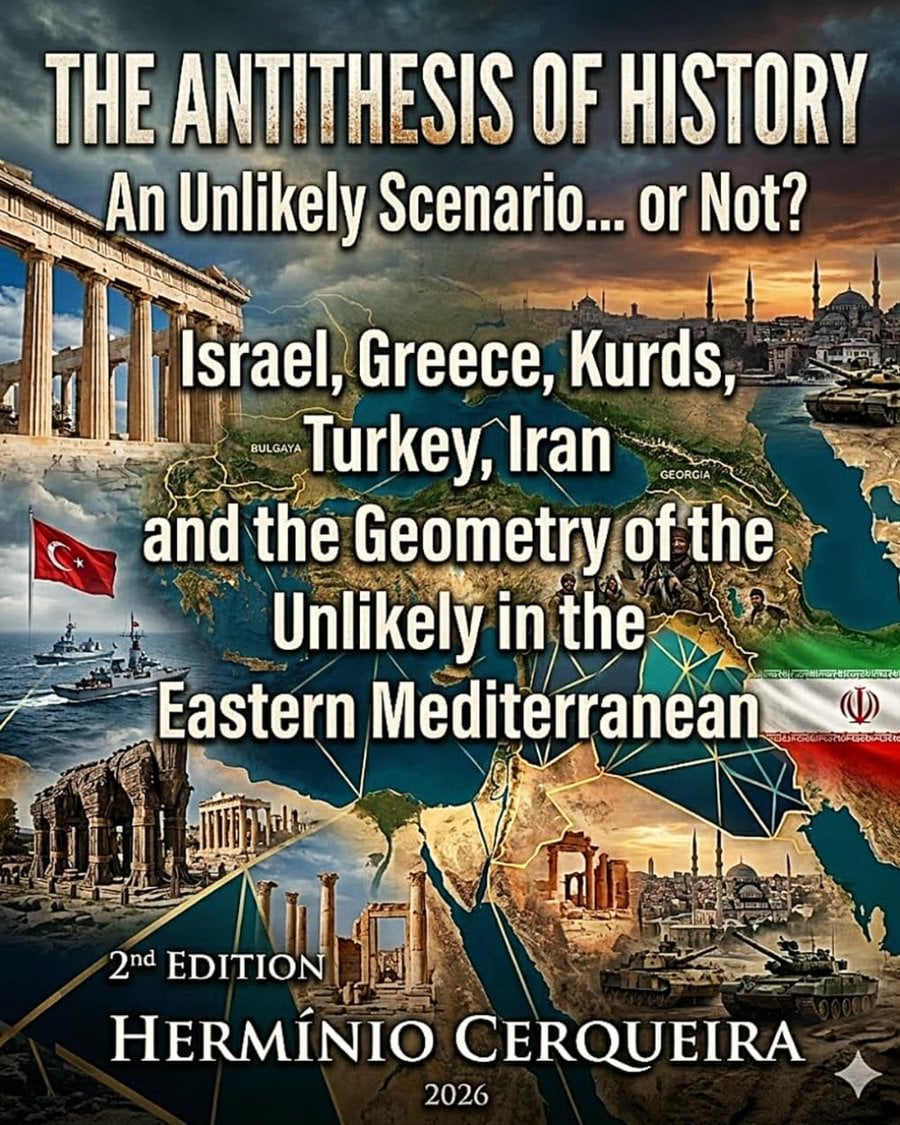
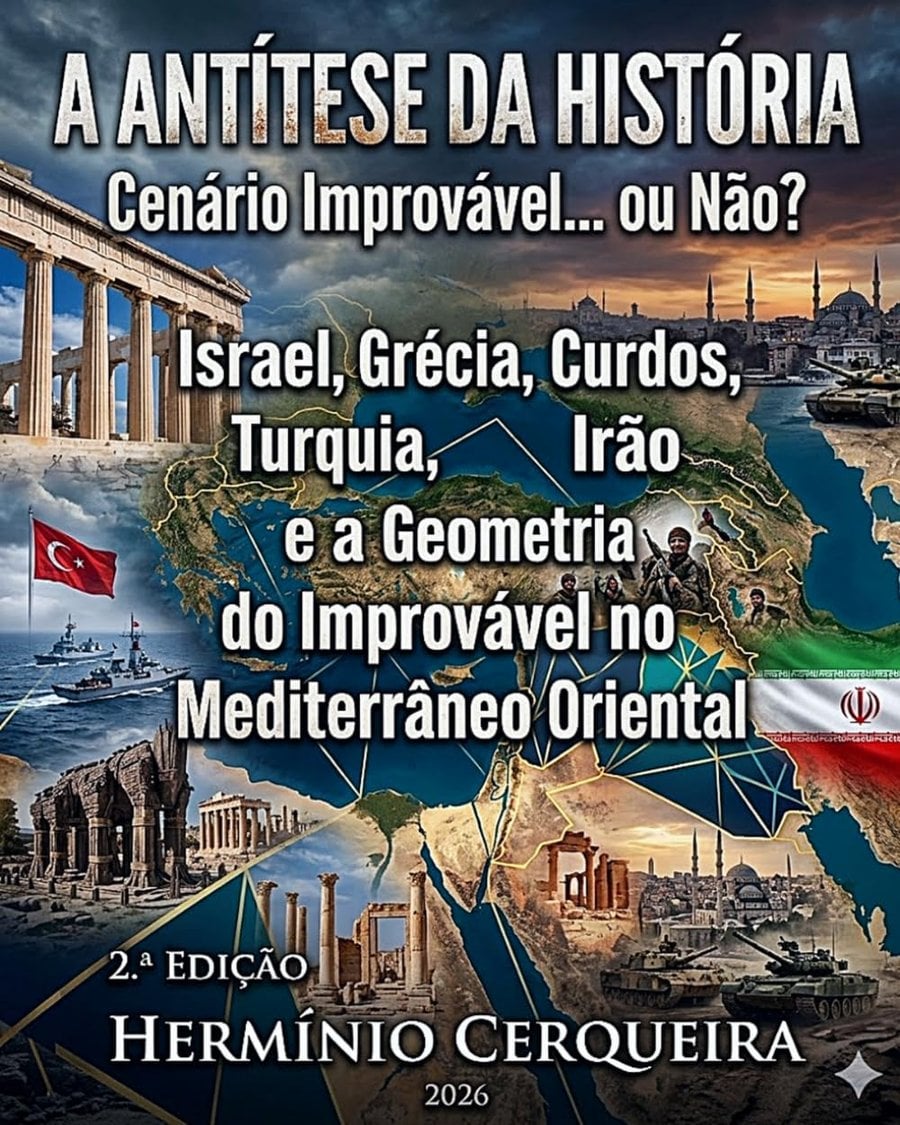
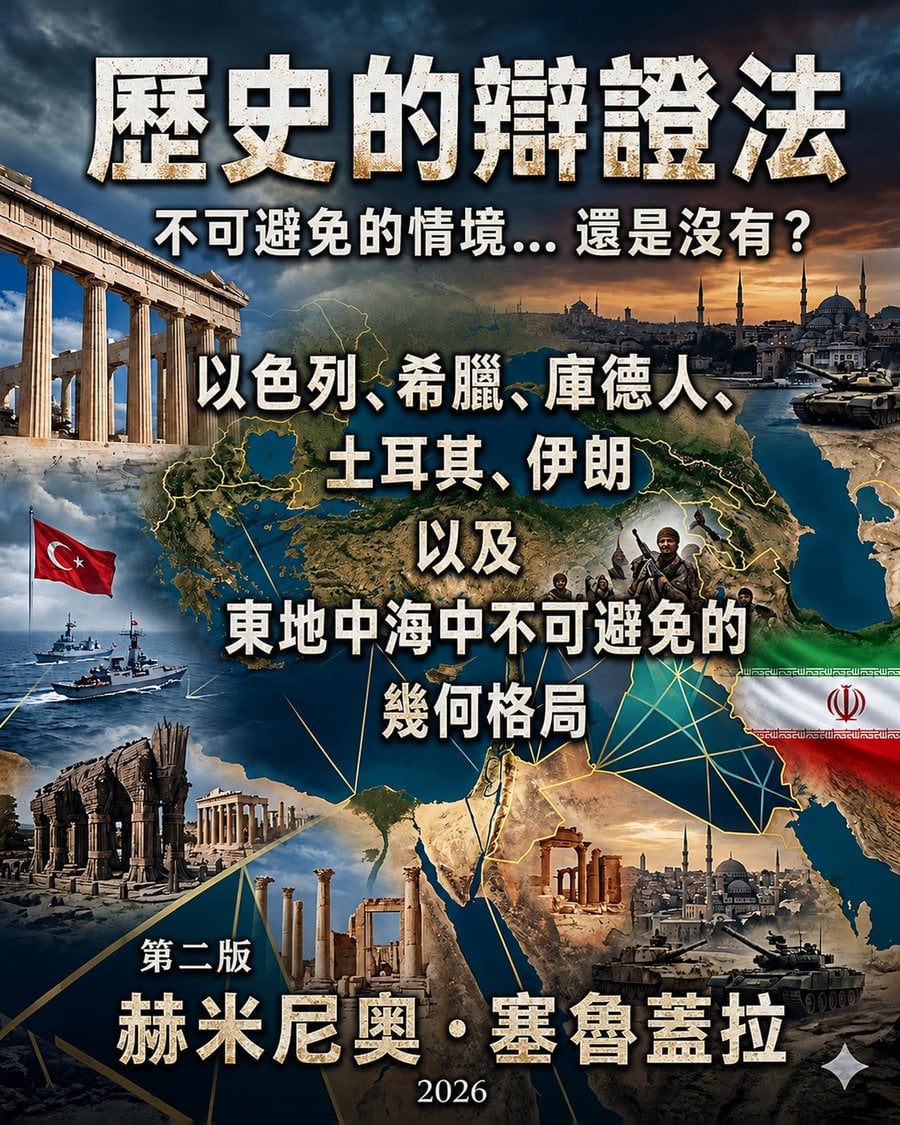
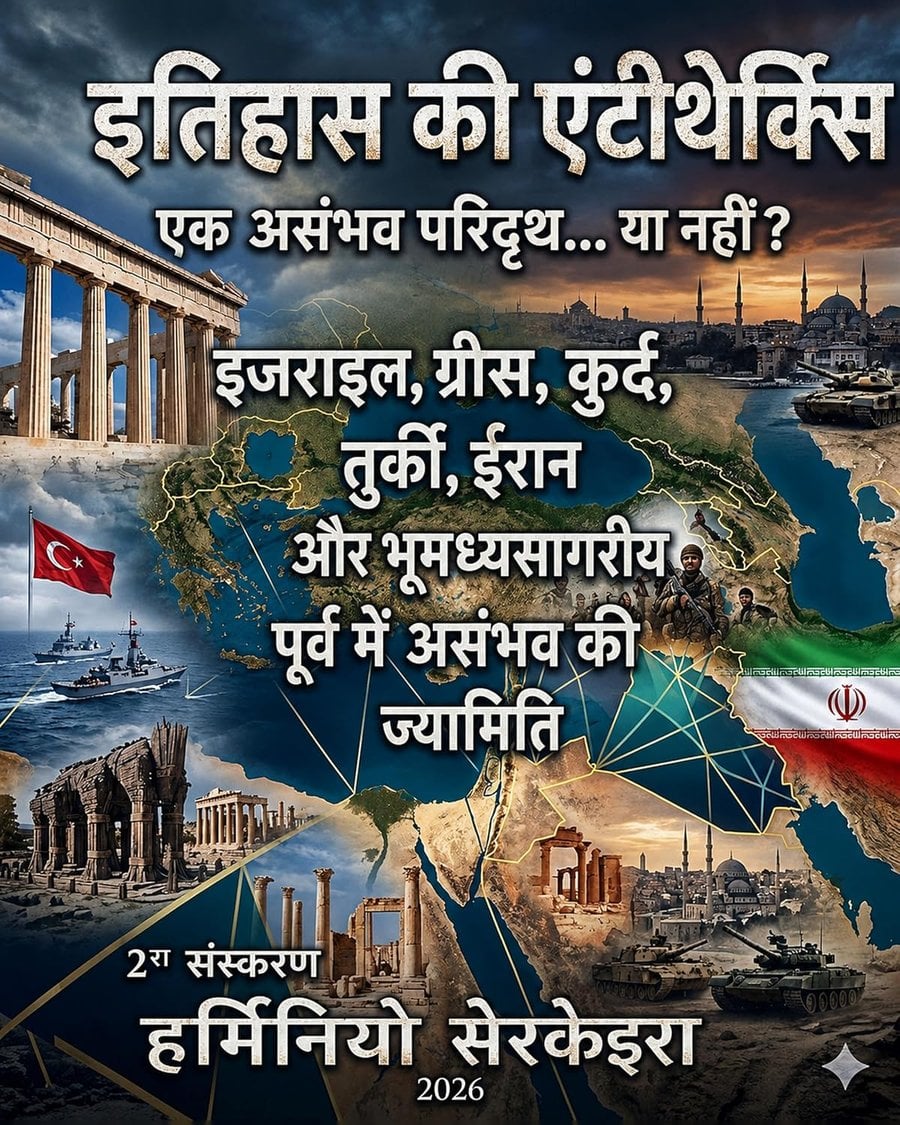
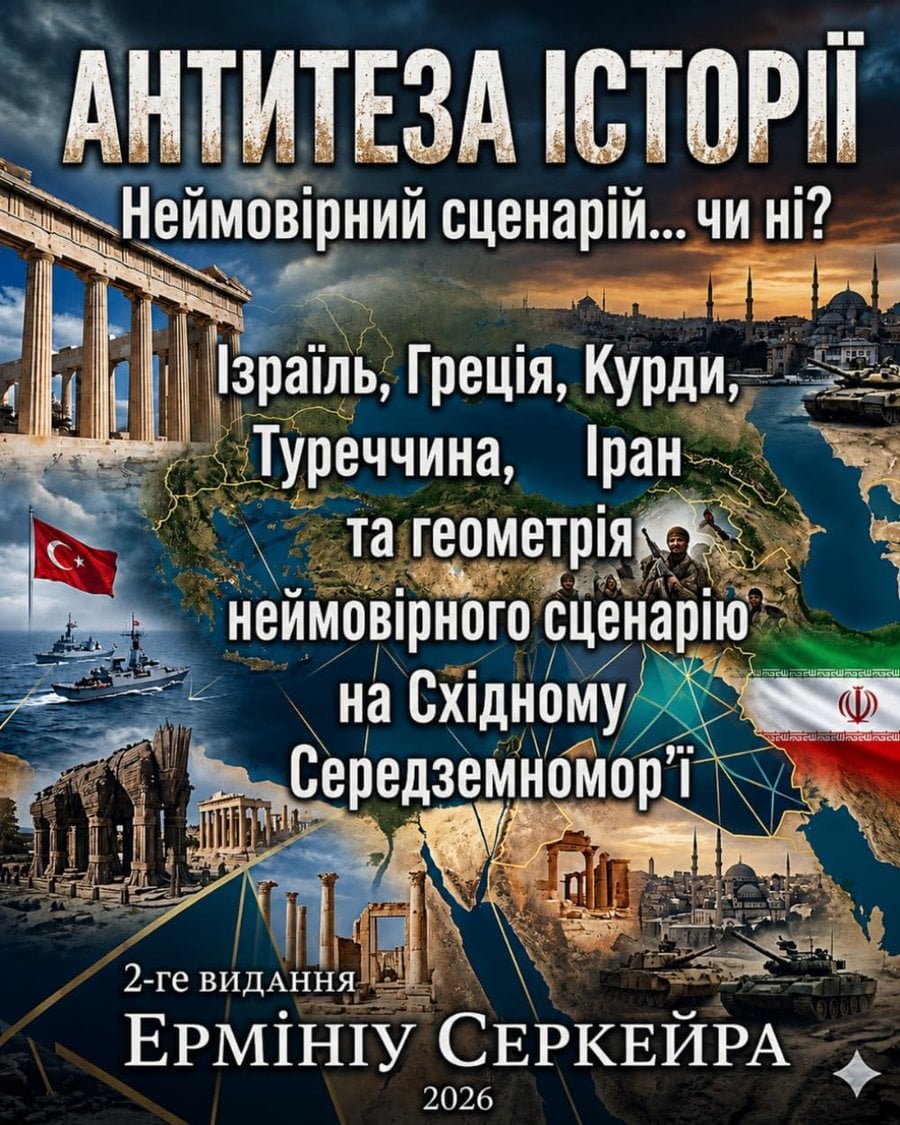
The Antithesis of HistoryA Antítese da História歷史的反面इतिहास का विरोधाभासАнтитеза історії
An unlikely scenario... or not?
Cenário Improvável… ou Não?
不太可能發生的情況……或者並非如此?
एक अजीब सिनेरियो... या नहीं? इज़राइल, ग्रीस, कुर्द, तुर्की, ईरान और पूर्वी भूमध्य सागर में असंभव की ज्यामिति
Малоймовірний сценарій... чи ні?
“a face visível de uma constelação”
- Pages
- 557 pages
- ISBN
- ISBN 979-8199405232
- Published
- Formats
- Kindle and paperback
- Pages
- 562 pages
- ISBN
- ISBN 979-8199384049
- First published
- Formats
- Kindle and paperback
- Pages
- 428 pages
- Published
- Formats
- Kindle
- Published
- Formats
- Kindle
- Pages
- 607 pages
- ISBN
- ISBN 979-8189661136
- Published
- Formats
- Paperback
About the book
Text published with the English edition (Amazon).
To those who reject easy thinking,
and to those who know that history
It doesn't follow history textbooks.
— Hermínio Cerqueira
"History is a prophecy turned backward."
— Friedrich Schlegel
"In the Levant, nothing ever begins: everything continues."
—Amin Maalouf
There are books written to answer a question. Others, to confess that the original question was the wrong one. This one, in its second life, belongs to the second family.
When the first edition of The Antithesis of History arrived in bookstores, the Eastern Mediterranean chessboard seemed, to many, a mere conjunctural arrangement: Israel had drawn closer to Greece and Cyprus for reasons of gas and deterrence, Turkey oscillated between NATO and its own imaginary neo-Ottoman kingdom, Iran accumulated sanctions and missiles, and the Kurds—eternal patients of history—awaited a window of opportunity that, it was assumed, might never come. The work proposed a simple and uncomfortable intuition: what was called a conjunctural arrangement was, in fact, the visible face of a structural constellation. Israel, Greece, Cyprus, and the Kurds were not merely coinciding; they were each occupying their place in a geometry that long historical duration had drawn in the background.
The years that followed did not disprove the intuition. They deepened it. The tripartite summit of December 2025, the internal collapse of Iran between 2024 and 2026, the decapitation operation that opened the year 2026, and the dizzying recomposition of the Iranian Kurdish space transformed what could be read as a prospective essay into something more serious: a cartography of a present that was no longer a hypothesis. Hence this second edition.
I confess that, in this second volume, I changed much more than I expected to. Not in terms of the conclusions—which remain essentially intact—but in terms of the structure. The first edition was, strictly speaking, a long geopolitical-literary essay. This one, without losing its literary quality, has transformed into a scientific-political treatise. Each chapter opens with an explicit research problem, engages with primary, secondary, and tertiary sources, distinguishes fact from interpretation and both from foresight, and ends with the humility of someone who recognizes the limits of the exercise. The reader familiar with the first edition will find here a slower-paced, more documented, and, I hope, more time-resistant book.
The guiding principle remains the same: to read the present in the light of the long term. There is no serious understanding of the Eastern Mediterranean without comprehending the Ottoman collapse, the Treaties of Sèvres and Lausanne, the forced population exchange between Greece and Turkey in 1923, the Kemalist project and its late mutation, the Iranian Revolution of 1979, and the long Kurdish silence that covers the 20th century. But there is also no honest reading of the long term without the courage to descend to the short term—to the gas discovered in the Levant, to the joint military exercises, to the Mahsa Amini protests, to the plane that changed course one January night. This edition remains faithful to this ebb and flow between historical tides and the froth of the weeks: it accepts the paradox, lives within it, rejects the comfort of pure abstraction and the sterile noise of journalistic news.
Excerpt
Israel, Grécia, Curdos, Turquia, Irão
e a Geometria do Improvável no Mediterrâneo Oriental
Há livros que se escrevem para responder a uma pergunta. Outros, para confessar que a pergunta original era a errada. Este, na sua segunda vida, pertence à segunda família.
— A Antítese da História
Original text in Portuguese.
Editorial note
Source: publisher’s description of the Portuguese edition (Amazon).
Index of editions
One line per edition, in the language in which it was published. Choose your Amazon store once; it applies to every edition.
On Amazon
English edition:
The Antithesis of History
557 pagesKindle and paperback
Portuguese edition:
A Antítese da História
562 pagesKindle and paperback
Traditional Chinese edition:
歷史的反面
428 pagesKindle
Hindi edition:
इतिहास का विरोधाभास
Kindle
Ukrainian edition:
Антитеза історії
607 pagesPaperback
Publisher editions
Sold in the publisher’s own store and, where indicated, in other bookstores — not on Amazon.
Portuguese edition:
A Antítese da HistóriaChiado Books edition
290 pagesPaperback
- In the Amazon stores, each link uses the edition’s own code (ASIN); availability in each country is managed by Amazon.
- In Portugal, buy from Amazon Spain: there is no Portuguese Amazon store.
- For publisher editions without a confirmed page of their own, the link opens the author’s store at the publisher.
Critical reading — “A Obra Comentada” (2026)
A third-person critical reading, reproduced from “A Obra Comentada,” the annotated catalog of the work published by the author himself. It is not a press review.
Original text in Portuguese.
A Antítese da História, aqui comentada na sua segunda edição — «reescrita, documentada e cientifizada», como anuncia a própria folha de rosto —, é o livro mais singular do eixo: o único cujo objecto não é um teatro consagrado da rivalidade entre grandes potências, mas uma constelação lateral e improvável — Israel, Grécia, curdos, Turquia e Irão na «geometria do improvável» do Mediterrâneo Oriental. O prefácio à segunda edição abre com uma das frases mais memoráveis de toda a obra do autor: «Há livros que se escrevem para responder a uma pergunta. Outros, para confessar que a pergunta original era a errada. Este, na sua segunda vida, pertence à segunda família». A tese da primeira edição — a de que a aproximação entre Israel, a Grécia e Chipre, o isolamento turco e o despertar curdo não eram arranjo conjuntural mas «a face visível de uma constelação» estrutural — foi, segundo o autor, confirmada e aprofundada pelos acontecimentos de 2024-2026, transformando «um ensaio prospectivo» numa «cartografia de um presente que já não era hipótese».
A metamorfose entre edições é assumida como mudança de género literário: «A primeira edição era, em rigor, um longo ensaio geopolítico-literário. Esta, sem perder a literatura, transformou-se num tratado científico-político». E a estrutura confirma-o: nota metodológica com critérios de selecção de fontes, triangulação documental e distinção entre facto, interpretação e prospectiva; capítulos que abrem com um problema de investigação explícito e fecham com síntese parcial e ponte para o seguinte. O percurso é o da longa duração braudeliana aplicada ao Levante: o legado otomano e o sistema millet, Sèvres e Lausanne, a disputa do Egeu e Chipre como ferida geopolítica; a nação curda sem Estado, de Mahabad a Rojava e ao referendo de 2017; a doutrina israelita da aliança periférica; e a anatomia da crise existencial da República Islâmica. As epígrafes — Schlegel («a história é uma profecia voltada para trás») e Amin Maalouf («no Levante, nada começa nunca: tudo continua») — fixam o registo: erudição ao serviço da prospectiva.
Merece registo a defesa, rara em livro de geopolítica, da própria grafia: o autor conservou a norma anterior ao Acordo Ortográfico «não por nostalgia nem por militância», mas porque «cada autor tem o direito, e talvez o dever, de escrever na língua em que pensa». No conjunto da obra, A Antítese da História é o contraponto metodológico dos grandes volumes sistémicos: onde estes partem da estrutura para os casos, este parte de um cenário aparentemente marginal para demonstrar que as recomposições mais profundas do sistema podem nascer precisamente onde ninguém olha. É também, dos livros do eixo, o de maior ambição literária — e o que melhor comprova que, neste autor, a análise estratégica e a escrita ensaística não são vocações rivais, mas a mesma vocação com dois instrumentos.
Quotations from the book
“Há livros que se escrevem para responder a uma pergunta. Outros, para confessar que a pergunta original era a errada. Este, na sua segunda vida, pertence à segunda família”
“cartografia de um presente que já não era hipótese”
“A primeira edição era, em rigor, um longo ensaio geopolítico-literário. Esta, sem perder a literatura, transformou-se num tratado científico-político”
“a história é uma profecia voltada para trás”
“no Levante, nada começa nunca: tudo continua”
“não por nostalgia nem por militância”
“cada autor tem o direito, e talvez o dever, de escrever na língua em que pensa”
Other expressions quoted from the book
“reescrita, documentada e cientifizada”“geometria do improvável”“um ensaio prospectivo”
Source: «A Obra Comentada» (Sintra, Julho de 2026) — comentário crítico
Book details
- Genre
- Essay
- Axis of the work
- Strategy and Geopolitics
- First published
- Pages
- 557 (English edition)
- Formats
- Kindle e-book · Paperback
- Languages
- 5 — Portuguese, English, Traditional Chinese, Hindi, and Ukrainian
- ISBN
- 979-8199405232