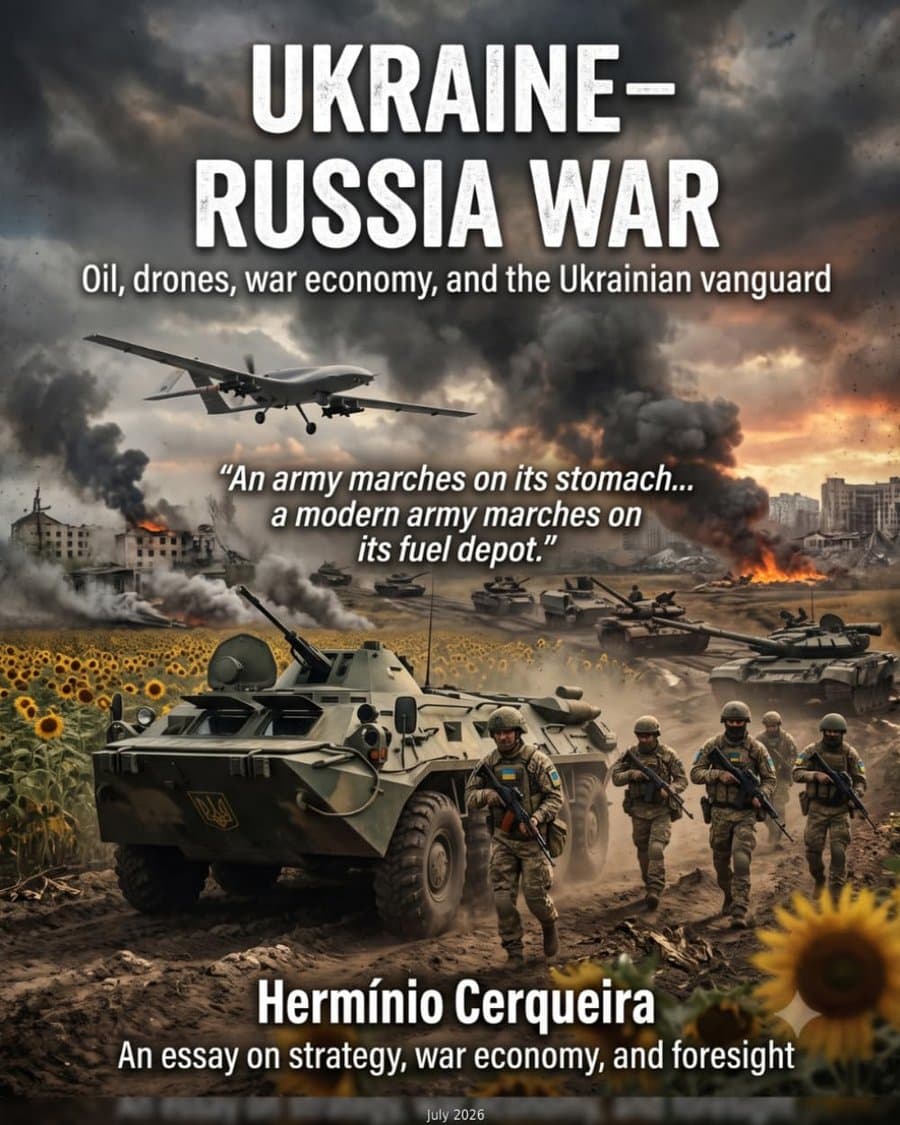
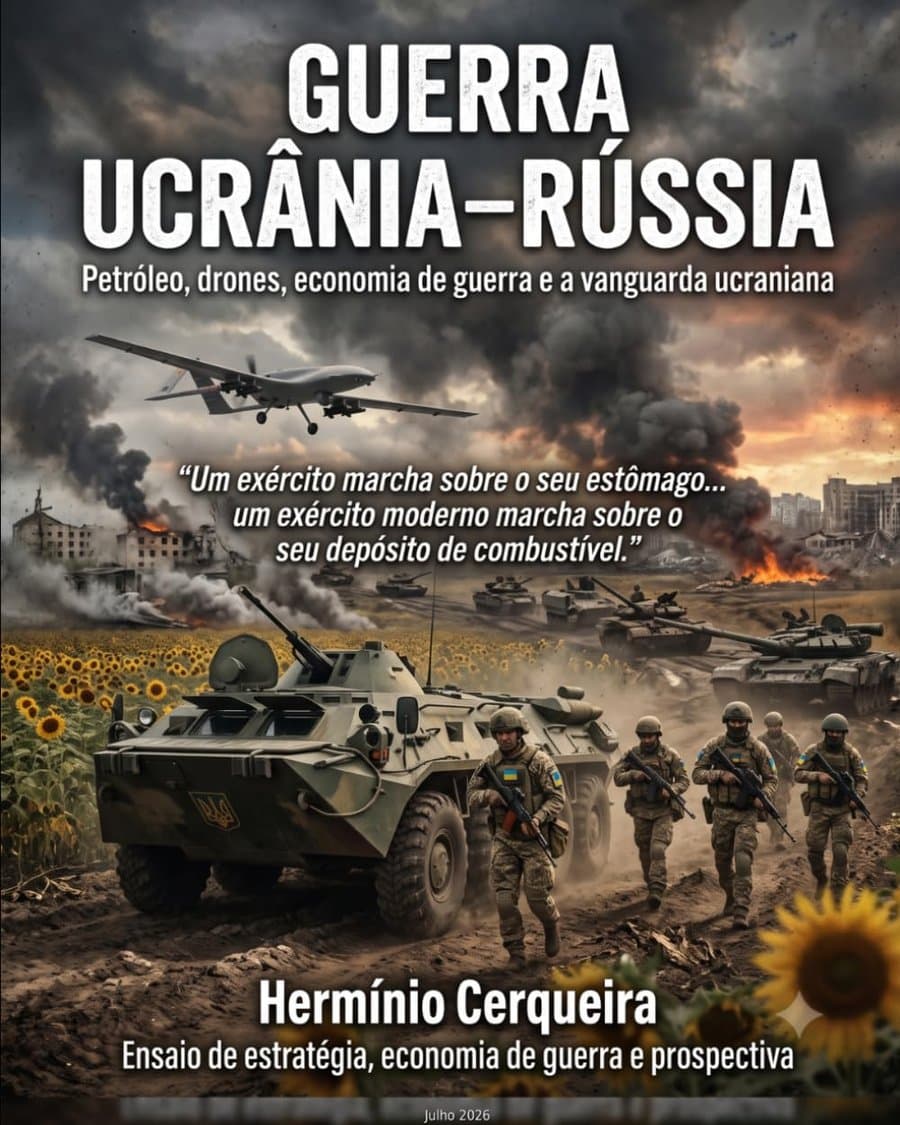
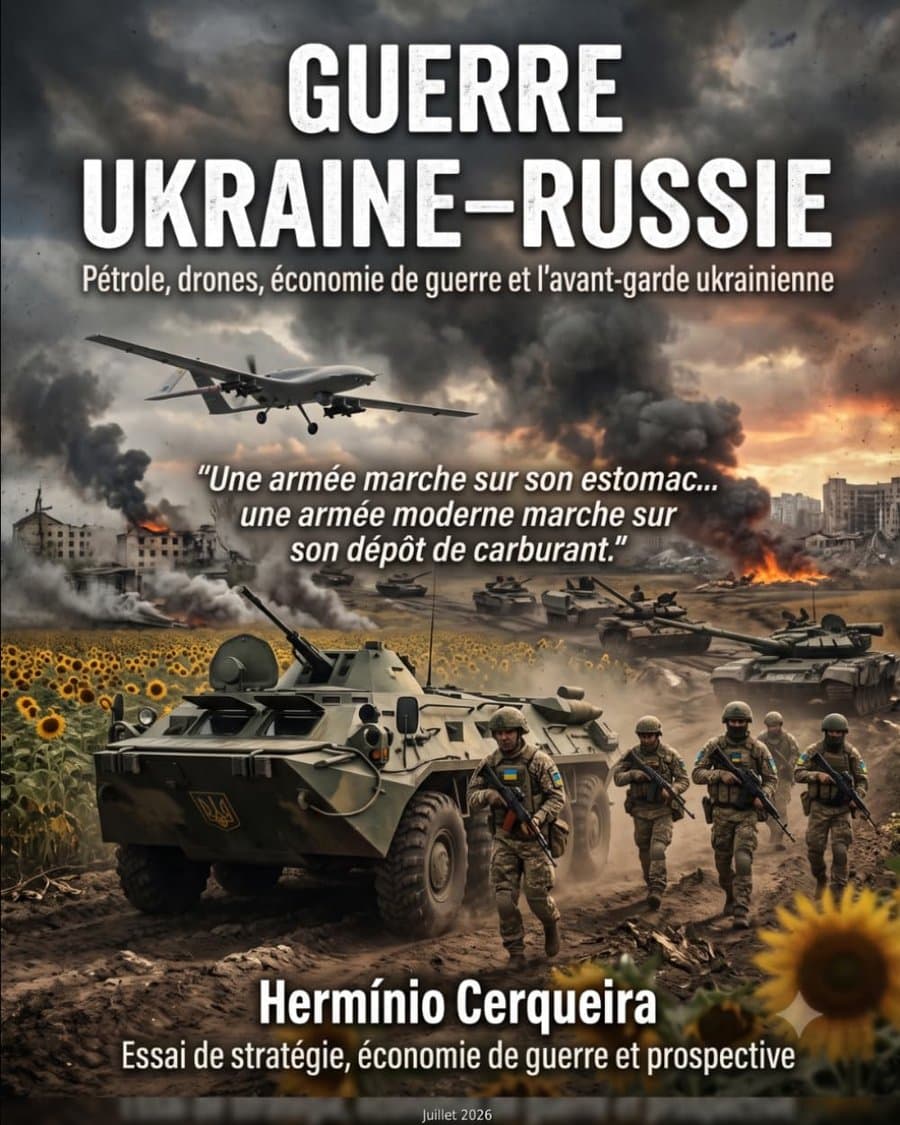
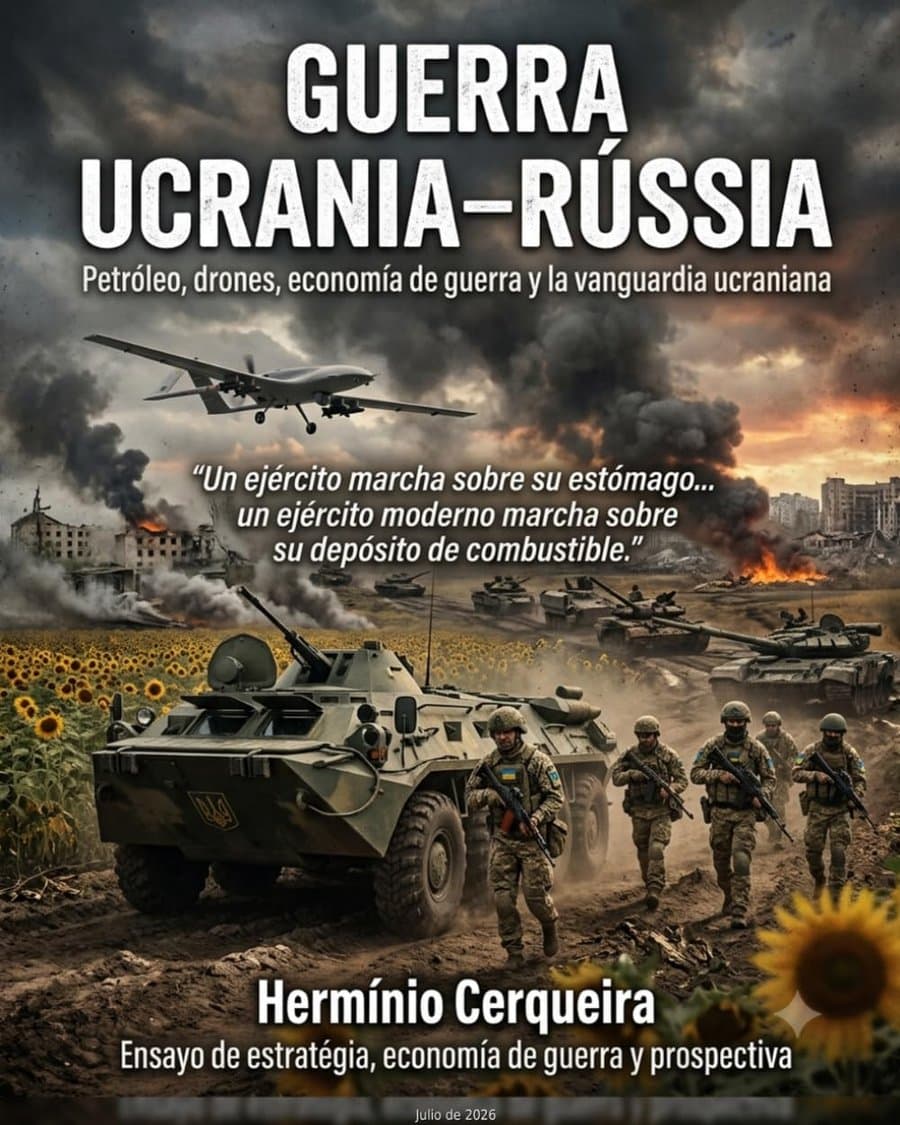
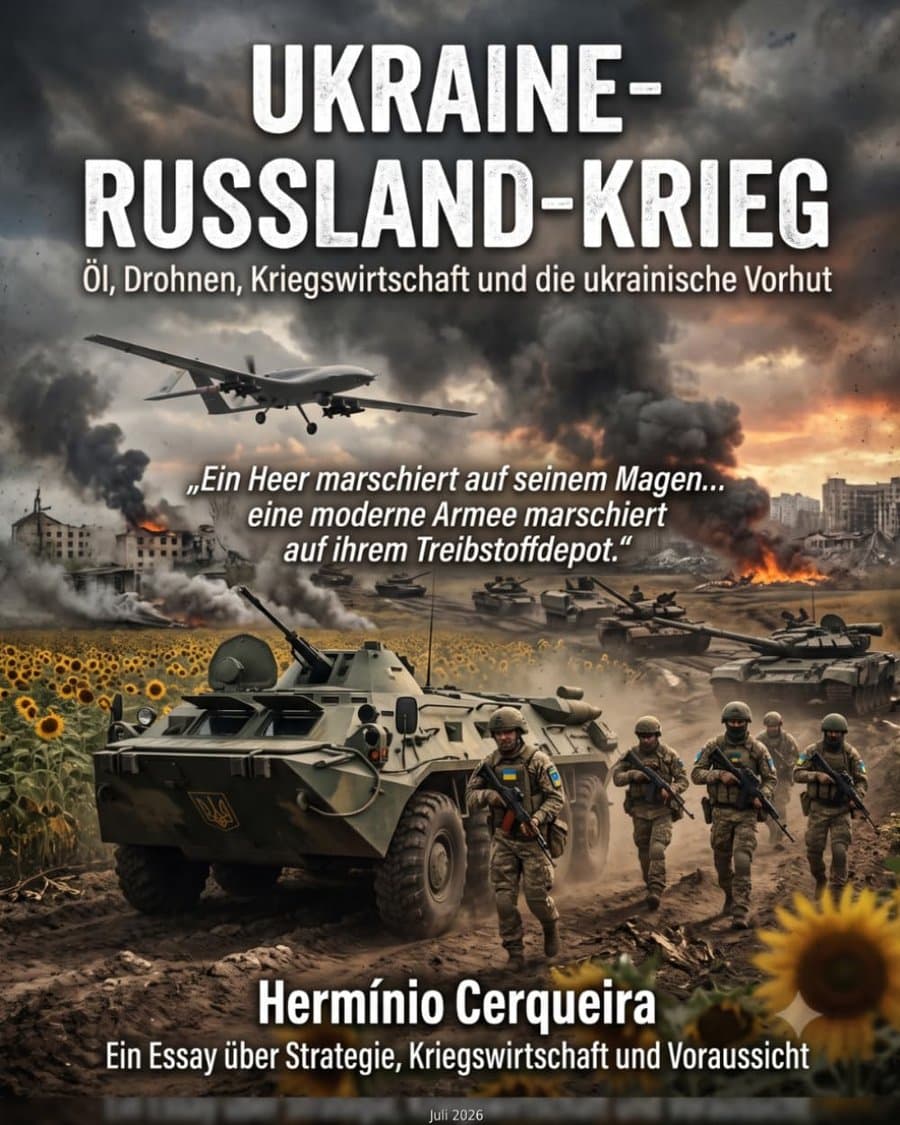
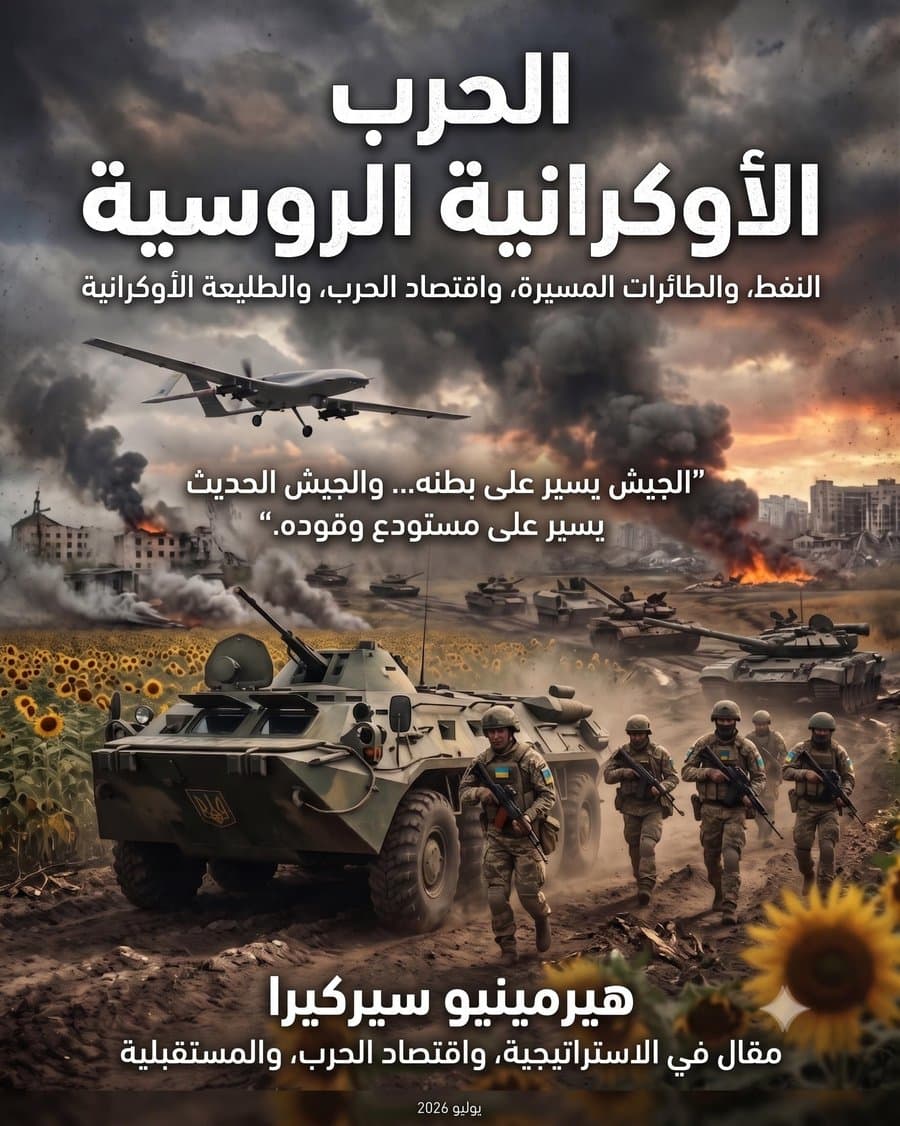
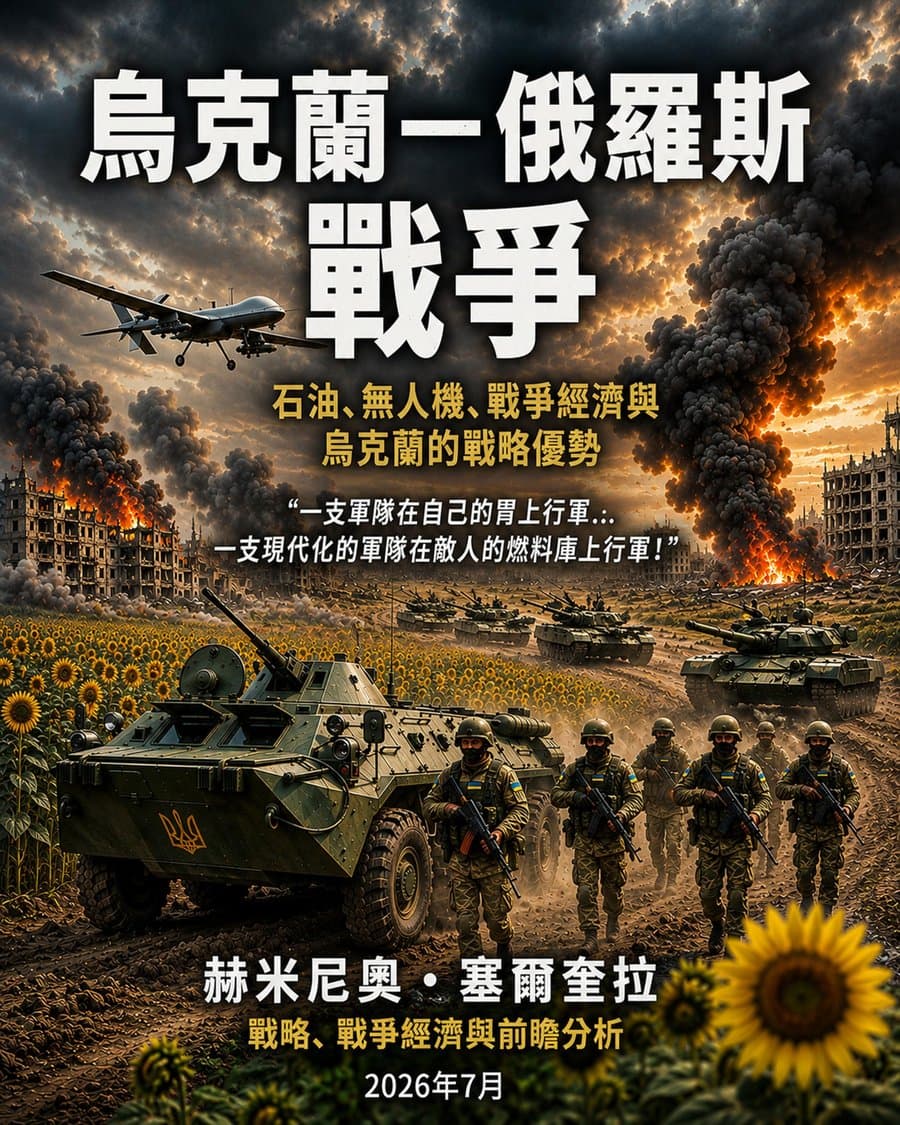
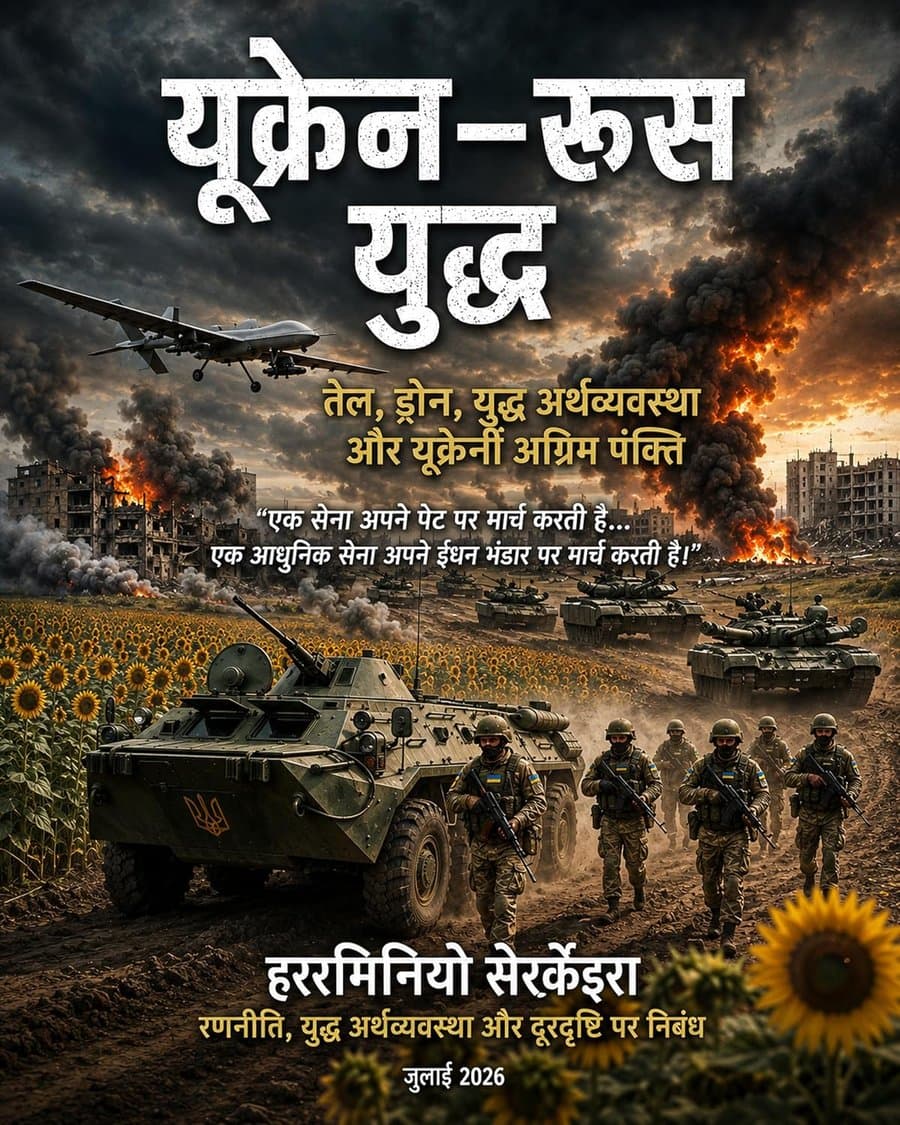
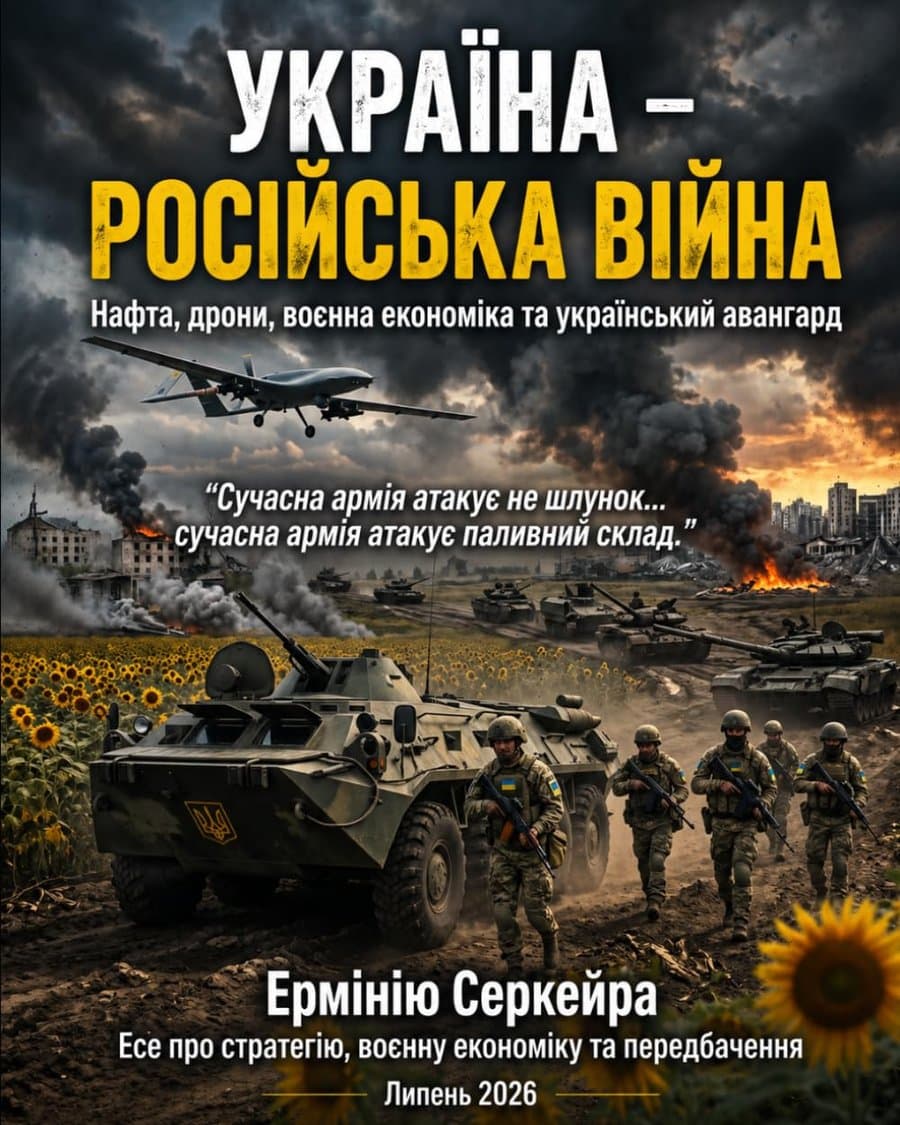

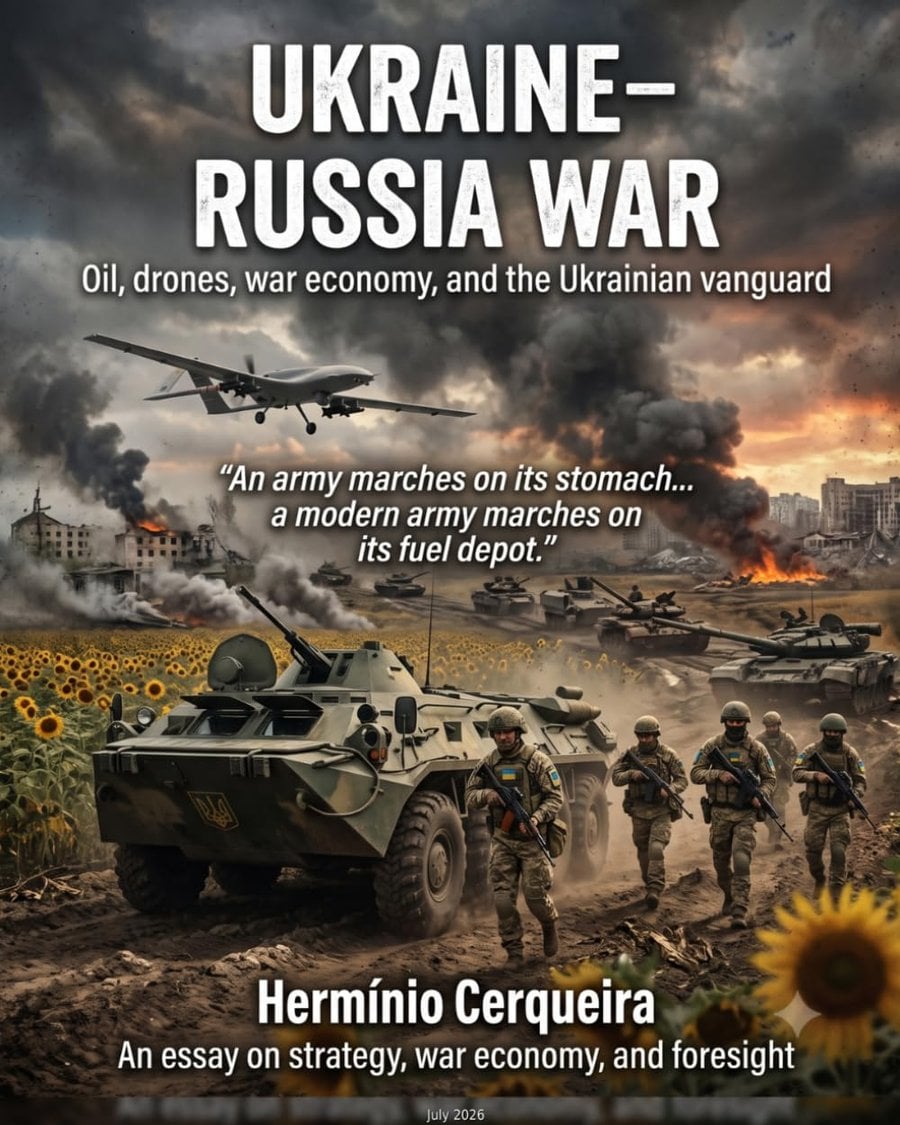
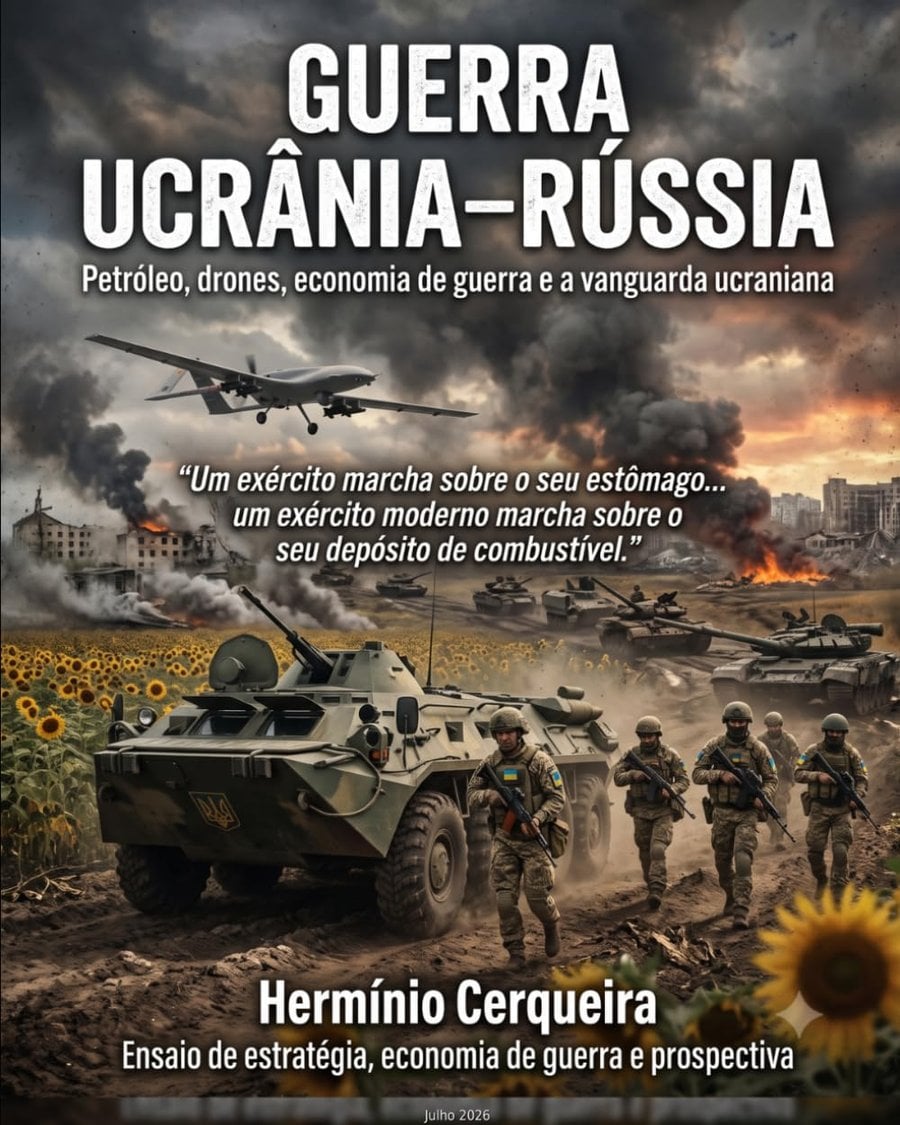
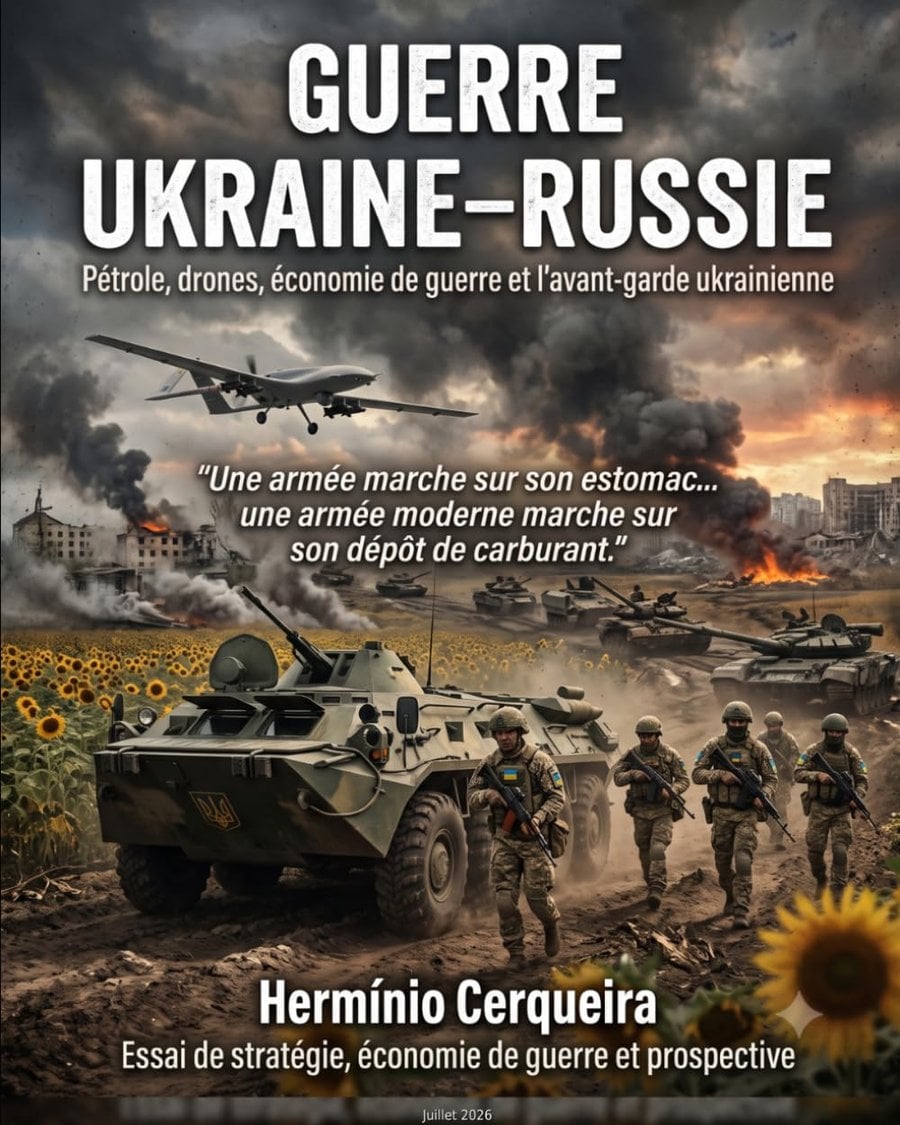
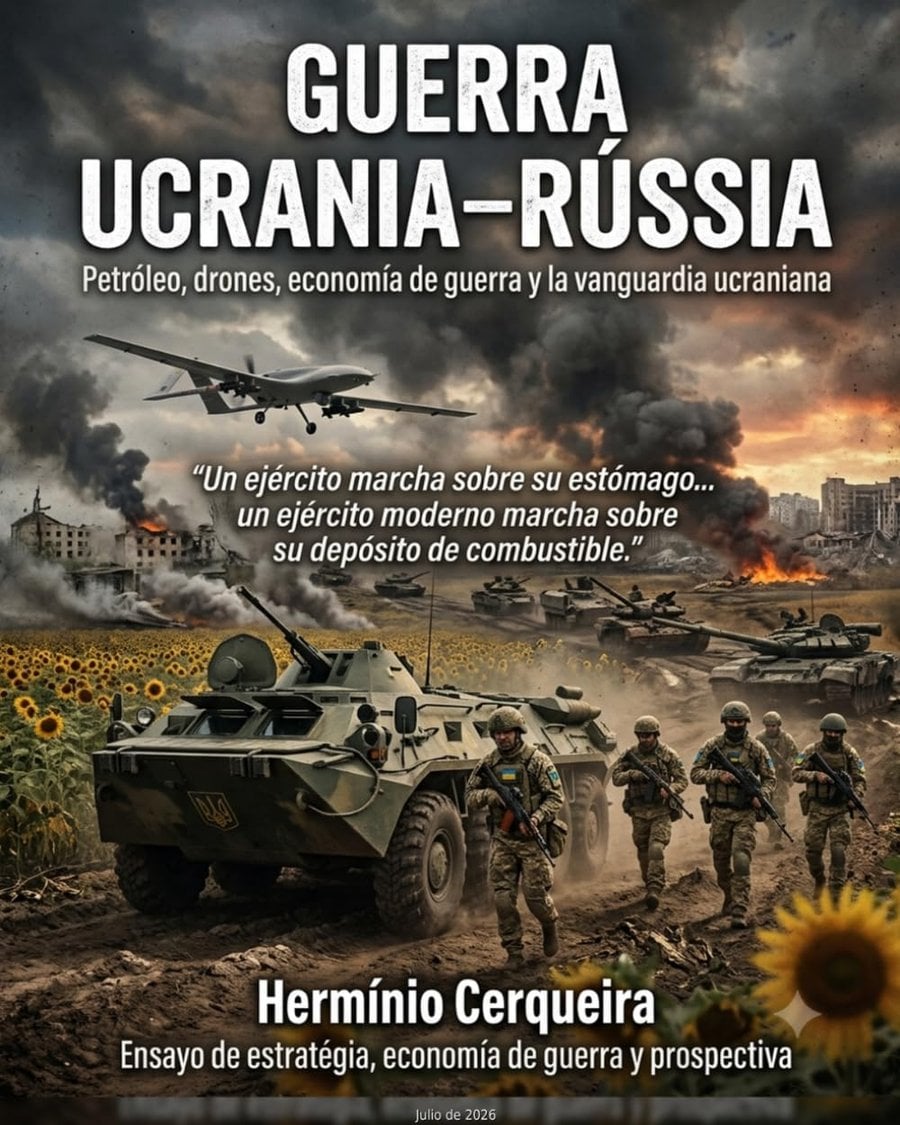
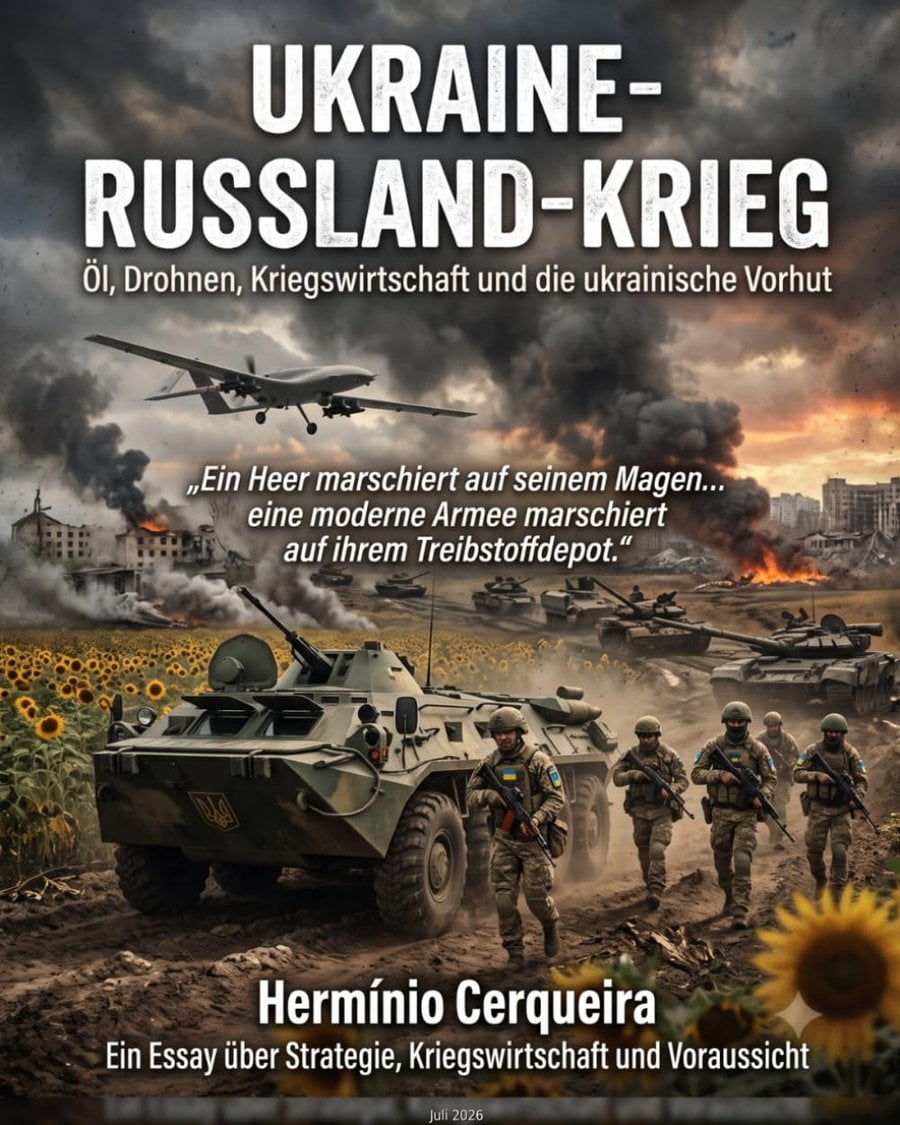
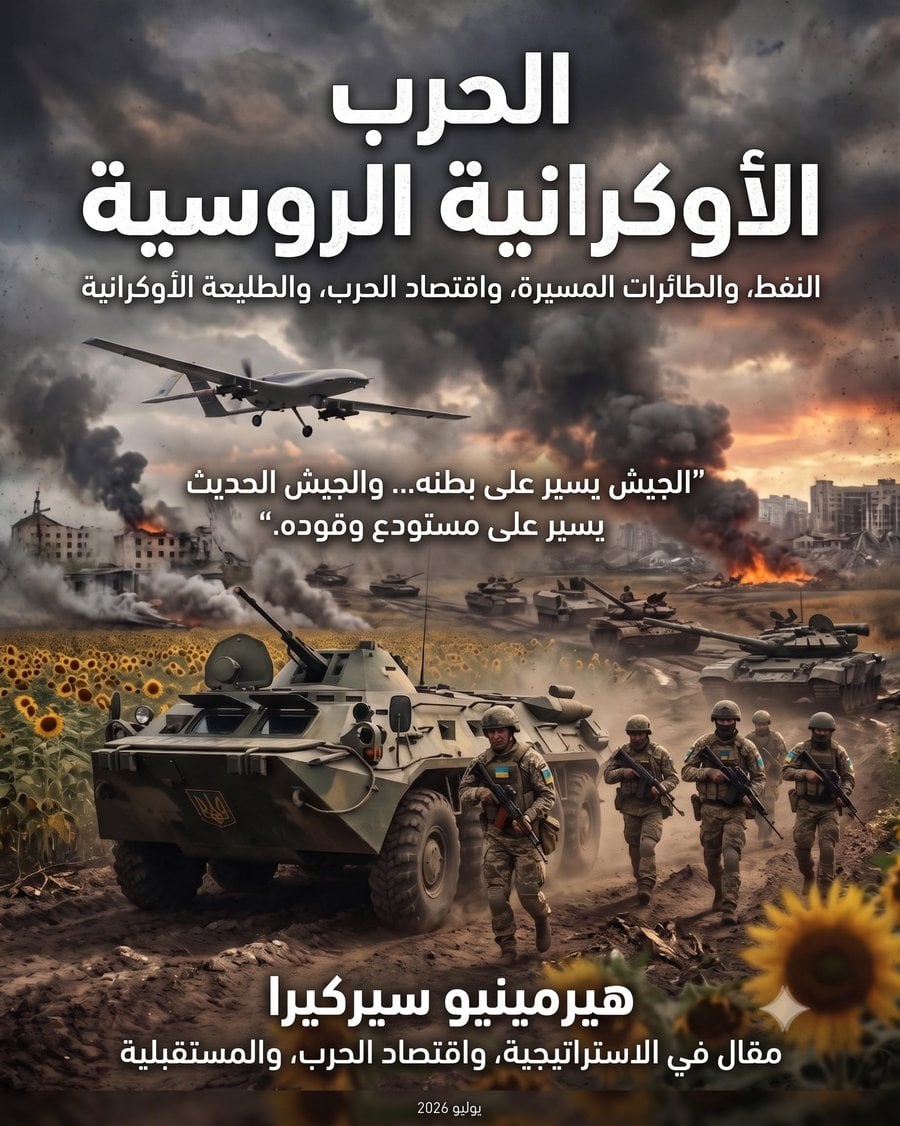
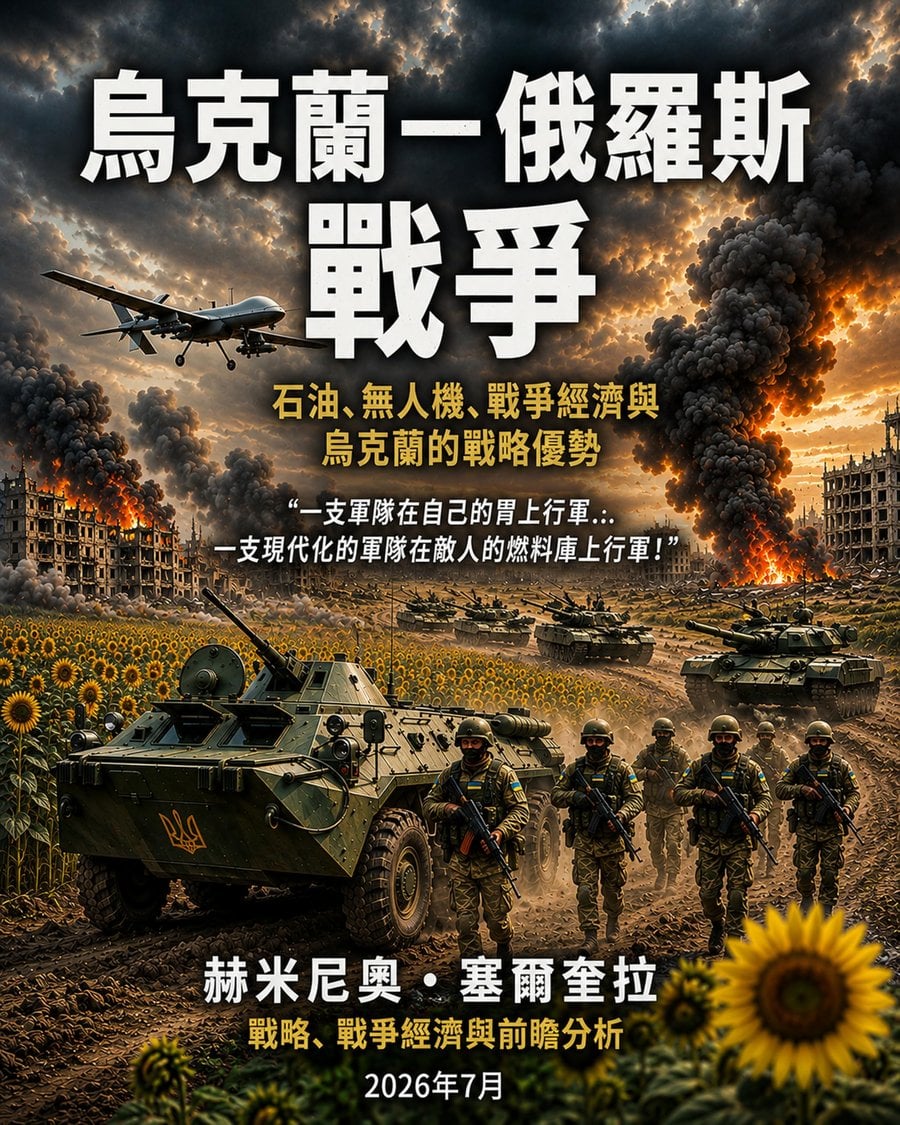
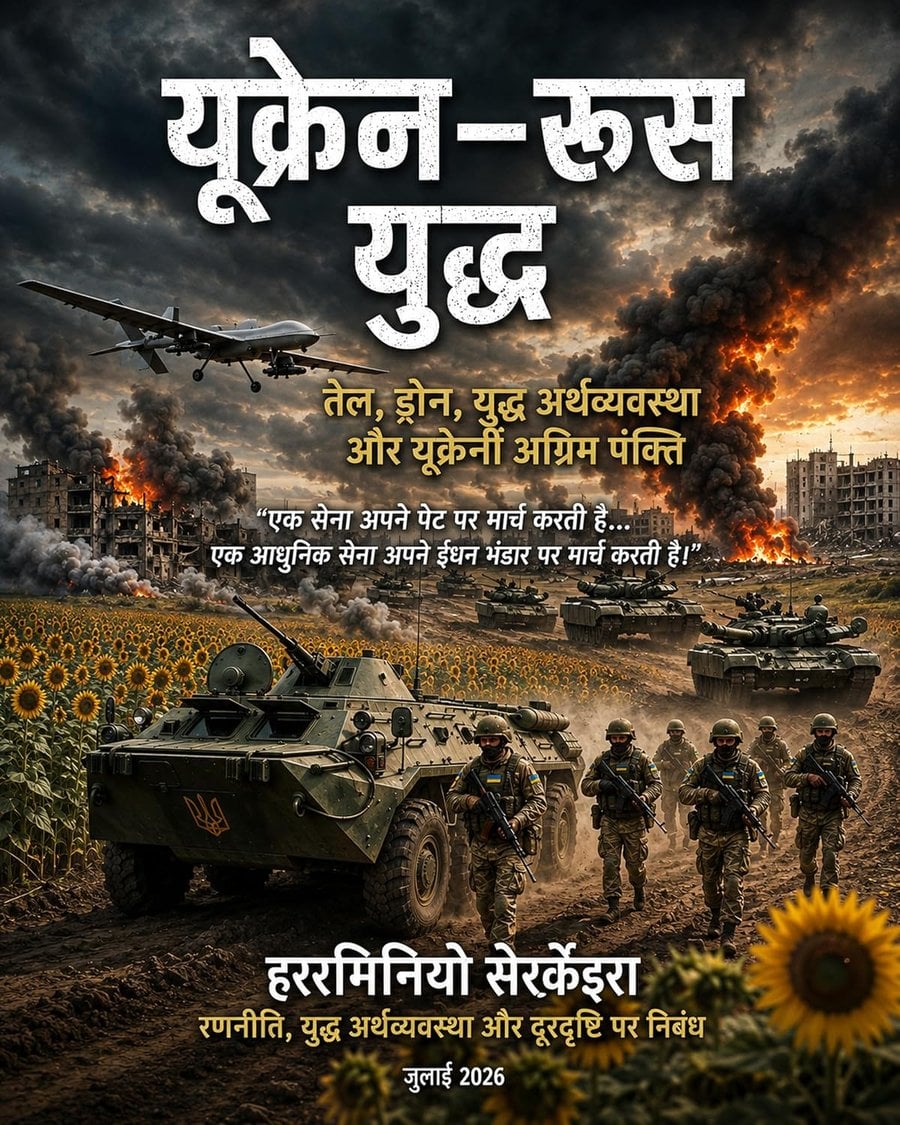
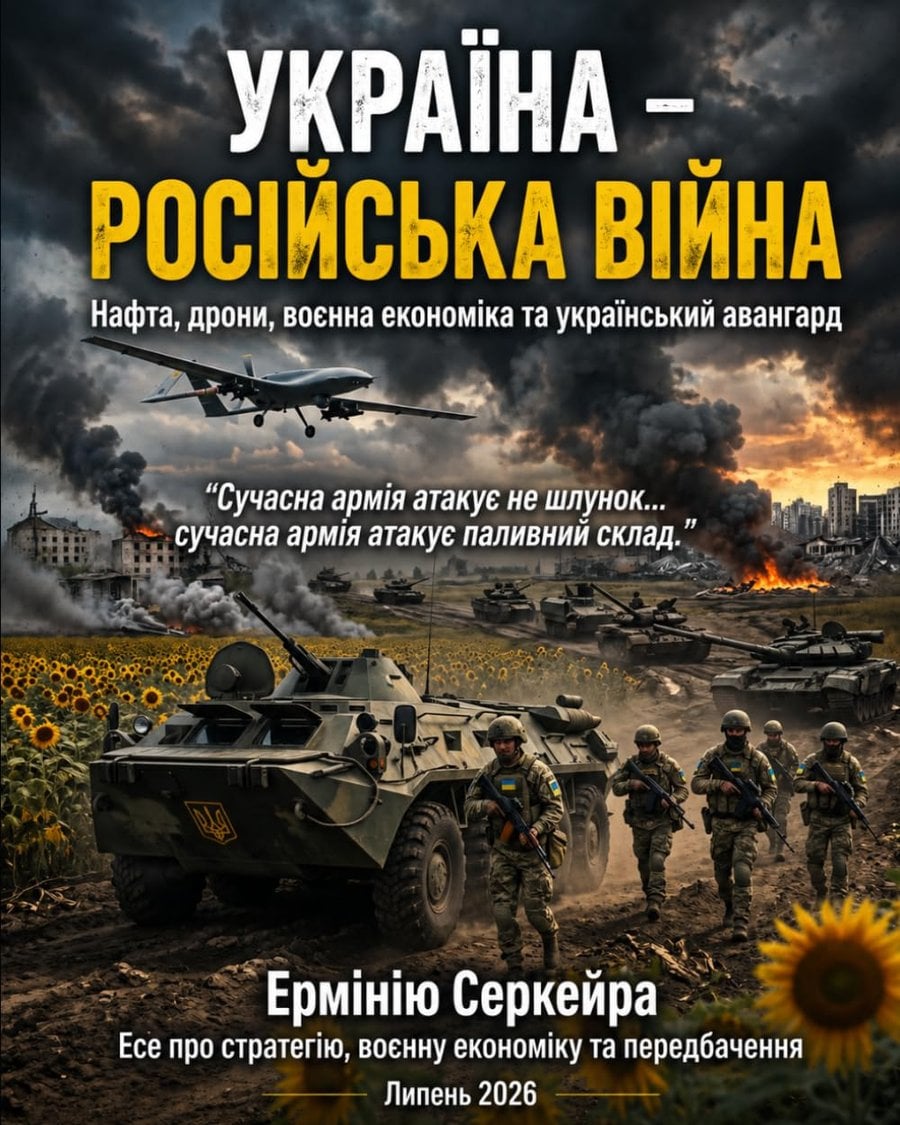
Ukraine–Russia WarGuerra Ucrânia–RússiaGuerre Ukraine-RussieGuerra entre Ucrania y RusiaUkraine-Russland-Kriegحرب أوكرانيا وروسيا烏克蘭-俄羅斯戰爭यूक्रेेन-रूस युद्धВійна між Україною та Росією
Oil, drones, war economy and the Ukrainian vanguard
Petróleo, drones, economia de guerra e a vanguarda ucraniana
Pétrole, drones, économie de guerre et avant-garde ukrainienne
Petróleo, drones, economía de guerra y la vanguardia ucraniana
Öl, Drohnen, Kriegswirtschaft und die ukrainische Avantgarde
النفط، الطائرات بدون طيار، اقتصاد الحرب والطليعة الأوكرانية
石油、無人機、戰爭經濟和烏克蘭先鋒隊 — 論戰略、戰爭經濟學與遠見
तेल, ड्रोन, युद्ध अर्थव्यवस्था और यूक्रेेनी मोहरा।
Нафта, дрони, воєнна економіка та український авангард
Available in 9 languages
- Pages
- 441 pages
- ISBN
- ISBN 979-8188174415
- Published
- Formats
- Kindle and paperback
- Pages
- 455 pages
- ISBN
- ISBN 979-8188160203
- First published
- Formats
- Kindle and paperback
- Pages
- 485 pages
- ISBN
- ISBN 979-8188195618
- Published
- Formats
- Kindle and paperback
- Pages
- 476 pages
- ISBN
- ISBN 979-8188199609
- Published
- Formats
- Kindle and paperback
- Pages
- 508 pages
- ISBN
- ISBN 979-8188190057
- Published
- Formats
- Kindle and paperback
- Pages
- 604 pages
- Published
- Formats
- Kindle
- Pages
- 253 pages
- Published
- Formats
- Kindle
- Published
- Formats
- Kindle
- Pages
- 493 pages
- ISBN
- ISBN 979-8189131677
- Published
- Formats
- Paperback
About the book
Text published with the English edition (Amazon).
There are images that encapsulate a historical transformation better than any treatise. The column of black smoke that rose from the Moscow Refinery in the Kapotnya district, sixteen kilometers from the Kremlin, on the morning of June 18, 2026, is one of those images. Not because of the material damage—considerable, but repairable—but because of what it announced: a state without air superiority, without bomber fleets, and without tactical nuclear weapons managed to project destructive power over the symbolic and industrial heart of its continental adversary, using machines that cost less than a mid-range car.
This book uses this specific event as a starting point to develop a broader thesis and pose a question about the future. The thesis: the Ukrainian campaign against Russian refining ceased to be a series of media-driven incursions and became the most successful long-range strategic economic interdiction operation since the Allied Oil Campaign of 1944-45—and, by achieving this through cheap, distributed, and deniable means, inaugurated an era in which strategic reach ceased to be the monopoly of the great powers. The question: what does this transformation tell us about the course of the war in the next three to four years?
To answer this, the book rejects two shortcuts. The first is triumphalism, which interprets each burning refinery as proof of Russia's imminent collapse—when energy revenues represent little more than a fifth of the federal budget and the Russian economy, although stagnant, is not on the brink of collapse. The second is defeatism, which dismisses the campaign as inconsequential fireworks—when it has already forced export bans, rationing in dozens of regions, and the reversal of Russia from a fuel exporter to an importer. The truth, as is almost always the case in war, lies in the middle ground and requires patience with the numbers.
The work is organized into nine parts. Part I reconstructs the war from the 2022 invasion to 2026, so that the non-specialist reader has the context without which nothing else is understood. Parts II to VI dissect the refinery campaign—the event, the instrument, the target, the effects, and its historical, doctrinal, and legal aspects. Parts VII and VIII shift the focus to the entirety of the war and its probable future, with scenarios and warning indicators. Part IX draws out the implications for NATO, Europe, and Portugal, and concludes. Three appendices—a glossary, a general chronology, and a panel of indicators—serve as a compass.
A word about ambition. I don't intend to prophesy; prophecy is charlatanism. I intend to engage in disciplined foresight: to read the dominant trends and possible bifurcations, always anchored in verifiable data and always distinguishing what I know from what I suppose. If the reader closes the book able to distinguish, in the daily torrent of news, the noise from the signal—and to recognize, behind each burning refinery, the epochal shift it heralds—then it will have been worthwhile to write it.
Index of editions
One line per edition, in the language in which it was published. Choose your Amazon store once; it applies to every edition.
English edition:
Ukraine–Russia War
441 pagesKindle and paperback
Portuguese edition:
Guerra Ucrânia–Rússia
455 pagesKindle and paperback
French edition:
Guerre Ukraine-Russie
485 pagesKindle and paperback
Spanish edition:
Guerra entre Ucrania y Rusia
476 pagesKindle and paperback
German edition:
Ukraine-Russland-Krieg
508 pagesKindle and paperback
Arabic edition:
حرب أوكرانيا وروسيا
604 pagesKindle
Traditional Chinese edition:
烏克蘭-俄羅斯戰爭
253 pagesKindle
Hindi edition:
यूक्रेेन-रूस युद्ध
Kindle
Ukrainian edition:
Війна між Україною та Росією
493 pagesPaperback
- In the Amazon stores, each link uses the edition’s own code (ASIN); availability in each country is managed by Amazon.
- In Portugal, buy from Amazon Spain: there is no Portuguese Amazon store.
Book details
- Genre
- Essay
- Axis of the work
- Strategy and Geopolitics
- First published
- Pages
- 441 (English edition)
- Formats
- Kindle e-book · Paperback
- Languages
- 9 — Portuguese, English, French, Spanish, German, Arabic, Traditional Chinese, Hindi, and Ukrainian
- ISBN
- 979-8188174415