
Strategy and GeopoliticsManuals and technique
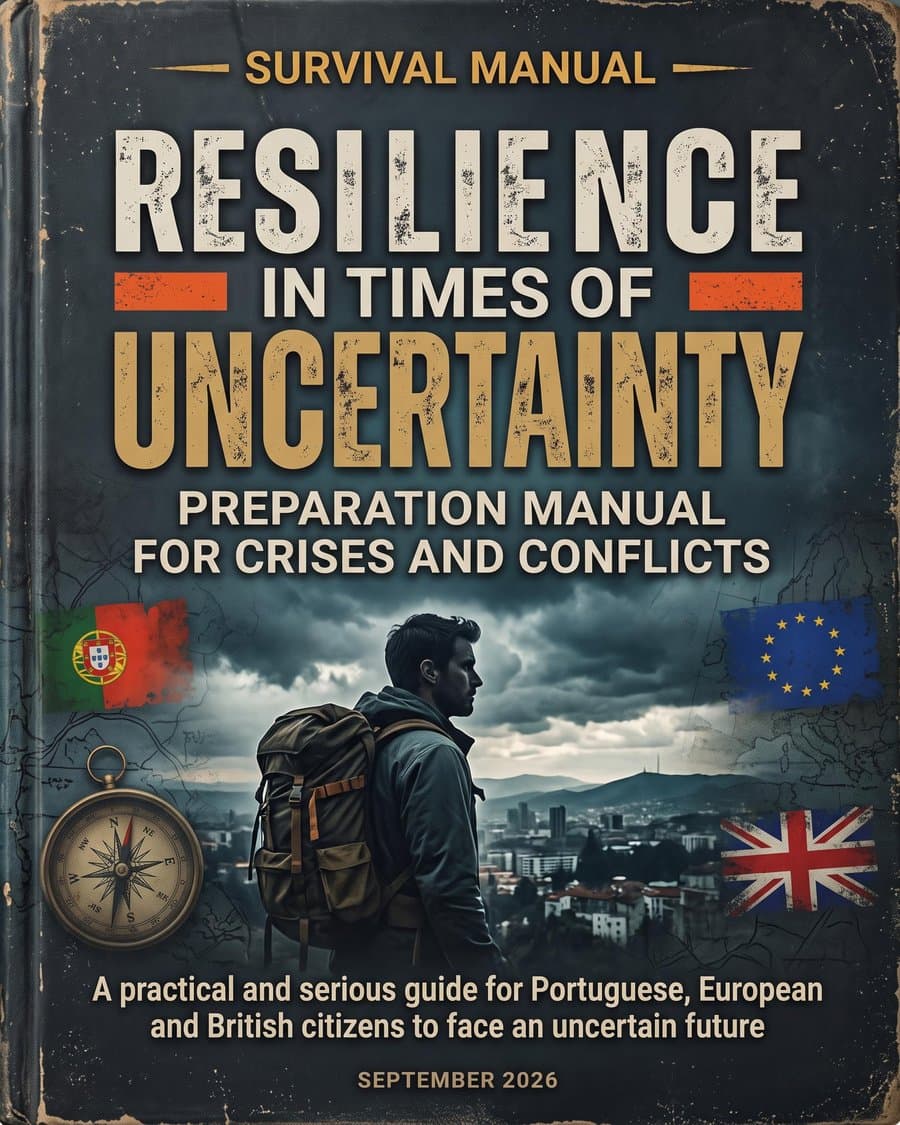
Resilience in Times of UncertaintyResiliência em Tempos de Incerteza
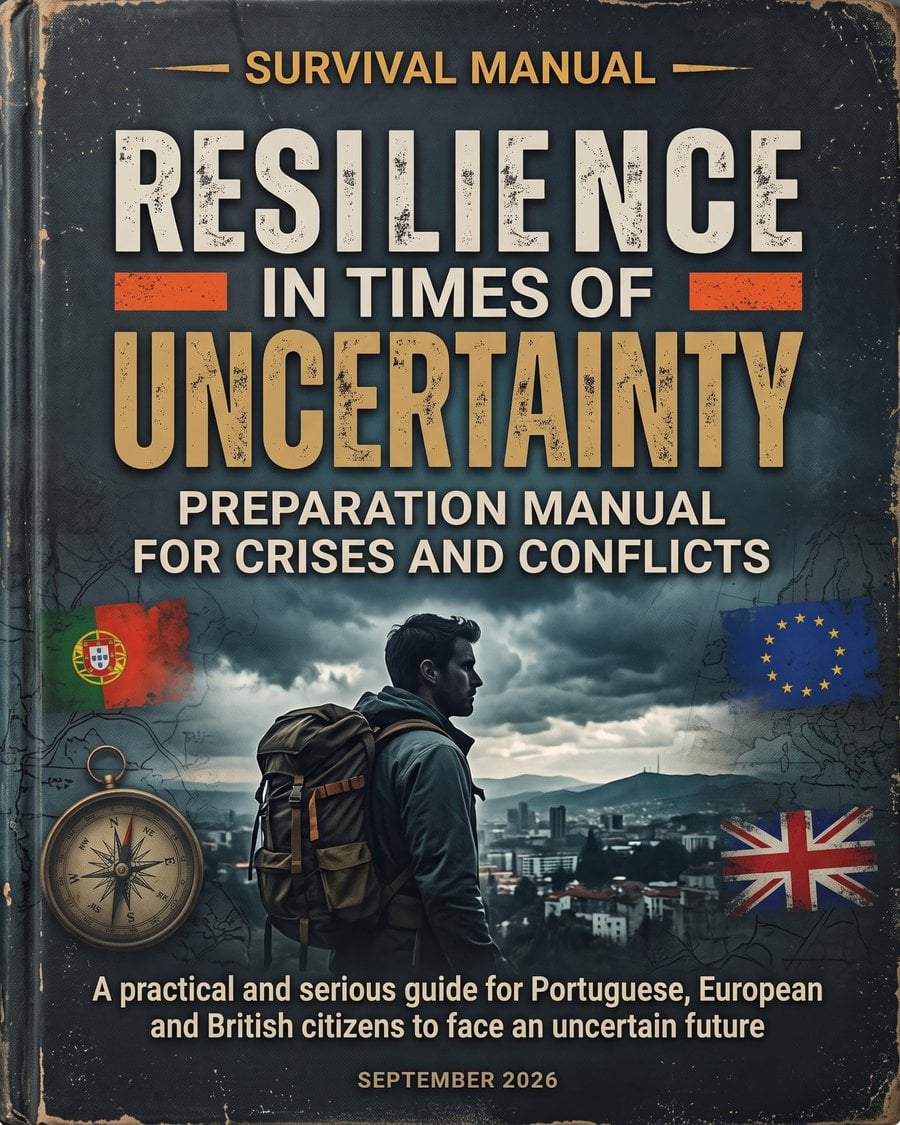
Crisis and Conflict Preparedness Manual
Manual de Preparação para Crises e Conflitos
Available in 2 languages
- Pages
- 1,356 pages
- Published
- Formats
- Kindle
- Pages
- 759 pages
- ISBN
- ISBN 979-8177156743
- First published
- Formats
- Paperback and Kindle
Description
Text published with the English edition (Amazon).
Description from the original edition, in Portuguese.
Show moreShow less — Description
.Why this book?
On a spring Monday, April 28, 2025, at 11:33 AM (12:33 PM in Spain), the entire electrical system of the Iberian Peninsula collapsed in a matter of seconds. More than 50 million people were left without electricity; in Portugal, the blackout affected 6,395,815 customers. [1]The São Paulo Metro stopped, with passengers evacuated from trains inside tunnels; traffic lights went out throughout the country; departures were suspended at airports. [2]Card purchases at payment terminals fell by 36% compared to the average of the previous two weeks, according to the Bank of Portugal. [3]The electricity transmission network—the large high-voltage lines that carry energy from power plants to local networks—was only fully restored at 11:22 PM, about twelve hours after the outage; by midnight, 95% of consumers had power restored, and local distribution networks needed a few more hours.[4] It wasn't a war, nor an attack. The panel of experts from ENTSO-E — the European network that brings together electricity transmission network operators — concluded in its final report in March 2026 that there was no single cause, but a combination of technical factors, including failures in network voltage control, and the National Cyber Security Centre stated on the same day that it had not identified any evidence of a cyberattack . [5]Even so, those hours were a collective lesson. Millions of people suddenly. discovered how much of their daily lives depends on an electrical outlet: their cell phones and the internet, ATMs, elevators, gas stations, and hospital equipment. The parliamentary working group's report on the blackout pointed to "serious" communication failures and acknowledged the crucial role of radio as a backup. [1]On that day, a battery-powered radio , a flashlight, and a few banknotes in your wallet were worth far more than they cost.
This book stems from that realization—and from everything that happened around it. In just over four years, Europe experienced a succession of shocks that many considered things of the past or from other places. None of them, in isolation, justifies fear; all together they justify preparation.Four years that changed Europe. Russia's large-scale invasion of Ukraine brought high-intensity warfare back to the continent. Between that day and July 31, 2026, the UN human rights monitoring mission in Ukraine recorded 16,874 civilian deaths, 820 of whom were children, and 51,273 injuries. [2]As of the closing date of this book, September 23, 2026, there was no general ceasefire in effect: according to the Institute for the Study of War, Vladimir Putin had repeatedly rejected proposals for a mutual moratorium on attacks against energy infrastructure . The day before, September 22, Donald Trump and Volodymyr Zelensky held a joint press conference on the sidelines of the United Nations General Assembly, in which they expressed a willingness to end the war—without resulting in a ceasefire, peace agreement, or timetable for formal negotiations. The only pause in September 2026 was a unilateral Ukrainian order, from September 5th to 8th, approximately 96 hours, intended to guarantee the safety of the American envoys; Russia responded with waves of drones. [3]These attacks show, better than any theory, what modern warfare does to the lives of civilians. In the winter of 2025-2026, the electricity went out almost all day, and with it the heating and running water in the upper floors, which depend on pumps (see Chapter 1, section 1.1). [4]"Basic survival becomes a daily struggle," summarized the head of that UN mission, Danielle Bell, in February 2026.[5]
The shockwaves of the war were not confined to Ukraine. At the Hague Summit in June 2025, NATO Allies pledged to achieve, by 2035, an annual investment of 5% of GDP—3.5% in essential defense and up to 1.5% in areas such as the protection of critical infrastructure,..
Show moreShow less — Description
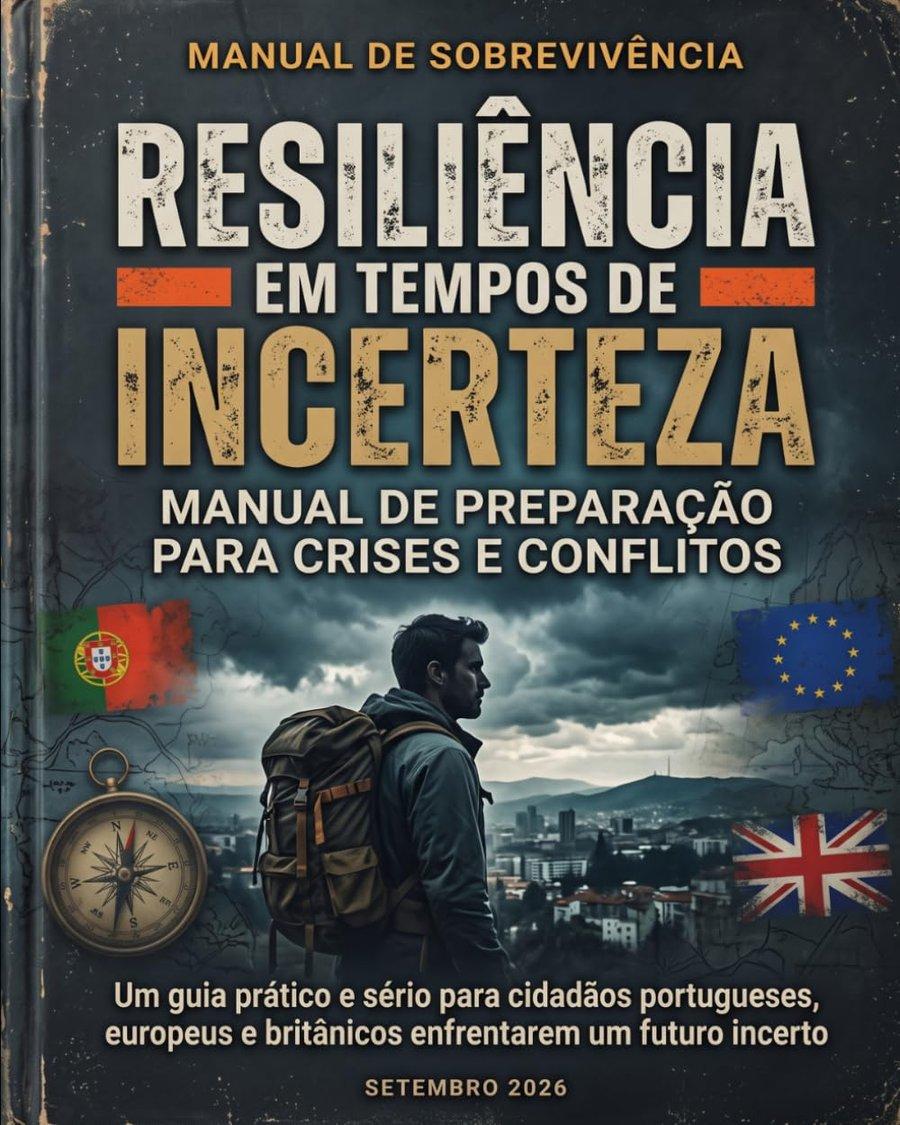
Manual de Preparação para Crises e Conflitos - Um guia prático e sério para cidadãos portugueses, europeus e britânicos enfrentarem um futuro incerto.
Porquê este livro?
Numa segunda-feira de Primavera, 28 de Abril de 2025, às 11h33 (12h33 em Espanha), todo o sistema eléctrico da Península Ibérica foi abaixo em poucos segundos. Mais de 50 milhões de pessoas ficaram sem eletricidade; em Portugal, o apagão afectou 6 395 815 clientes.[1] O Metro de Lisboa parou, com passageiros retirados das composições dentro dos túneis; os semáforos apagaram-se por todo o território; nos aeroportos, deixou de haver partidas.[2] As compras com cartão nos terminais de pagamento caíram 36% em relação à média das duas semanas anteriores, segundo o Banco de Portugal.[3] A rede de transporte de eletricidade — as grandes linhas de alta tensão que levam a energia das centrais até às redes locais — só ficou totalmente reposta às 23h22, cerca de doze horas depois do corte; à meia-noite, 95% dos consumidores tinham de novo luz, e as redes locais de distribuição precisaram de mais algumas horas.[4]
Não foi uma guerra, nem um ataque. O painel de peritos da ENTSO-E — a rede europeia que reúne os operadores das redes de transporte de eletricidade — concluiu, no relatório final de março de 2026, que não houve uma causa única, mas uma combinação de fatores técnicos, entre os quais falhas no controlo da tensão da rede; e o Centro Nacional de Cibersegurança afirmou, no próprio dia, não ter identificado indícios de um ataque informático.[5] Ainda assim, aquelas horas foram uma lição coletiva. Milhões de pessoas descobriram de repente quanto do seu dia-a-dia depende de uma tomada elétrica: o telemóvel e a internet, o multibanco, os elevadores, as bombas de gasolina, os equipamentos dos hospitais. O relatório do grupo de trabalho parlamentar sobre o apagão apontou falhas «graves» de comunicação e reconheceu o papel crucial da rádio como meio de recurso.[1] Nesse dia, um rádio a pilhas, uma lanterna e algumas notas na carteira valeram muito mais do que custam. Este livro nasce dessa constatação — e de tudo o que aconteceu à sua volta. Em pouco mais de quatro anos, a Europa viveu uma sucessão de choques que muitos julgavam coisa do passado ou de outras paragens. Nenhum deles, isoladamente, justifica o medo; todos juntos justificam a preparação.. Quatro anos que mudaram a Europa . A 24 de fevereiro de 2022, a invasão da Ucrânia em grande escala pela Rússia trouxe de volta ao continente uma guerra de alta intensidade. Entre esse dia e 31 de julho de 2026, a missão de monitorização dos direitos humanos da ONU na Ucrânia registou 16 874 civis mortos, 820 dos quais crianças, e 51 273 feridos.[2] À data de fecho deste livro, a 23 de setembro de 2026, não havia um cessar-fogo geral em vigor: segundo o Institute for the Study of War, Vladimir Putin rejeitara repetidamente as propostas de uma moratória mútua aos ataques contra infraestruturas energéticas. Na véspera, 22 de setembro, Donald Trump e Volodymyr Zelensky realizaram uma conferência de imprensa conjunta à margem da Assembleia-Geral das Nações Unidas, em que manifestaram vontade de pôr fim à guerra — sem que daí resultasse cessar-fogo, acordo de paz ou calendário de negociações formais. A única pausa de setembro de 2026 foi uma ordem unilateral ucraniana, de 5 a 8 de setembro, cerca de 96 horas, destinada a garantir a segurança dos enviados norte-americanos; a Rússia respondeu com vagas de drones.[3] Esses ataques mostram, melhor do que qualquer teoria, o que a guerra moderna faz à vida dos civis...
Index of editions
One line per edition, in the language in which it was published. Choose your Amazon store once; it applies to every edition.
English edition:
Resilience in Times of Uncertainty
1,356 pagesKindle
Portuguese edition:
Resiliência em Tempos de Incerteza
759 pagesPaperback and Kindle
- In the Amazon stores, each link uses the edition’s own code (ASIN); availability in each country is managed by Amazon.
- In Portugal, buy from Amazon Spain: there is no Portuguese Amazon store.
Book details
- Genre
- Manuals and technique
- Axis of the work
- Strategy and Geopolitics
- First published
- Pages
- 1,356 (English edition)
- Formats
- Paperback · Kindle e-book
- Languages
- 2 — Portuguese and English