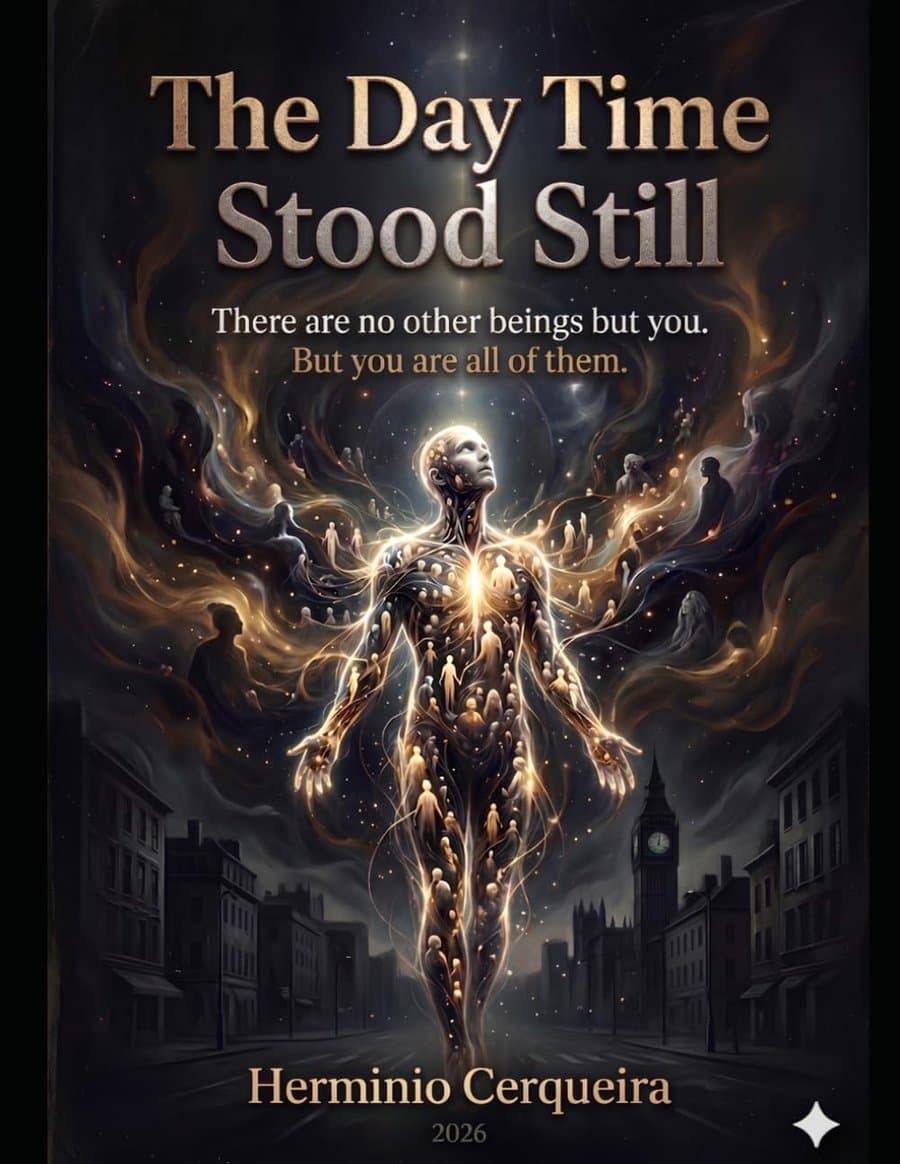
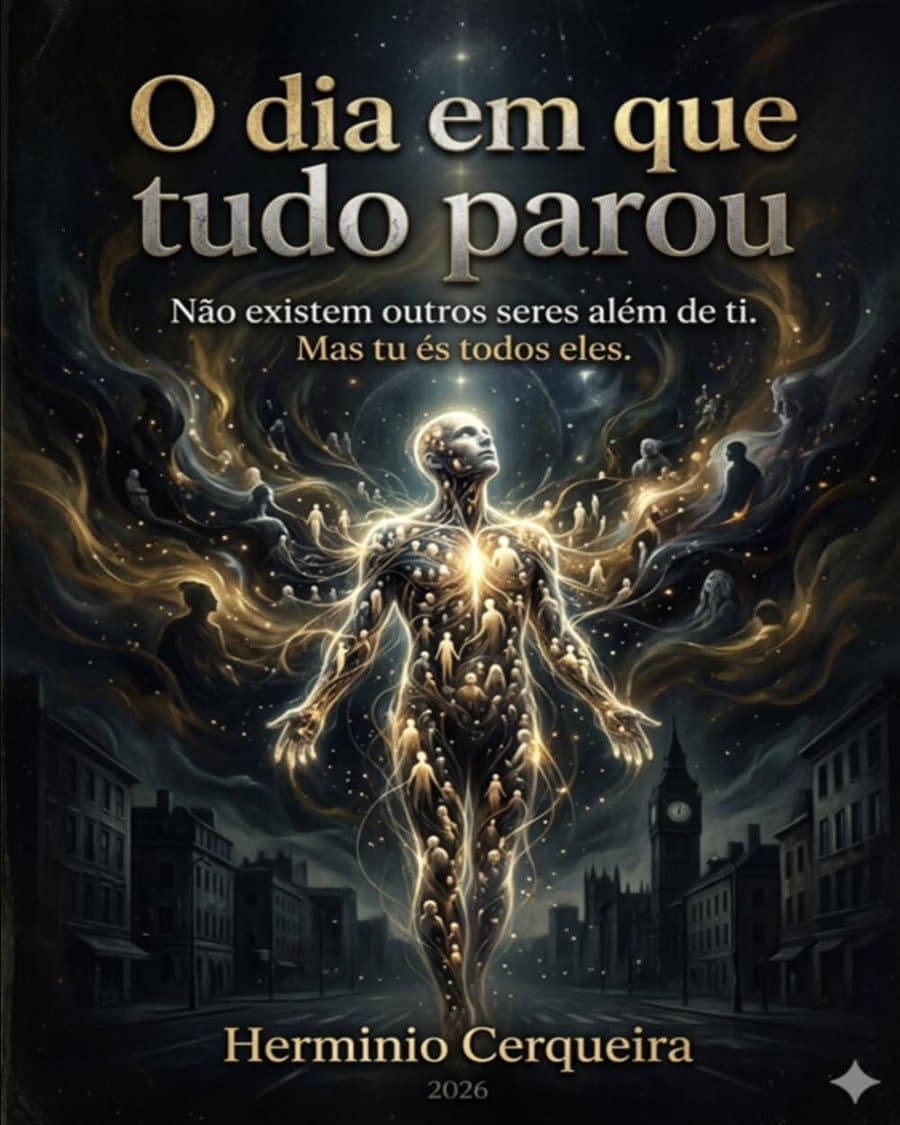
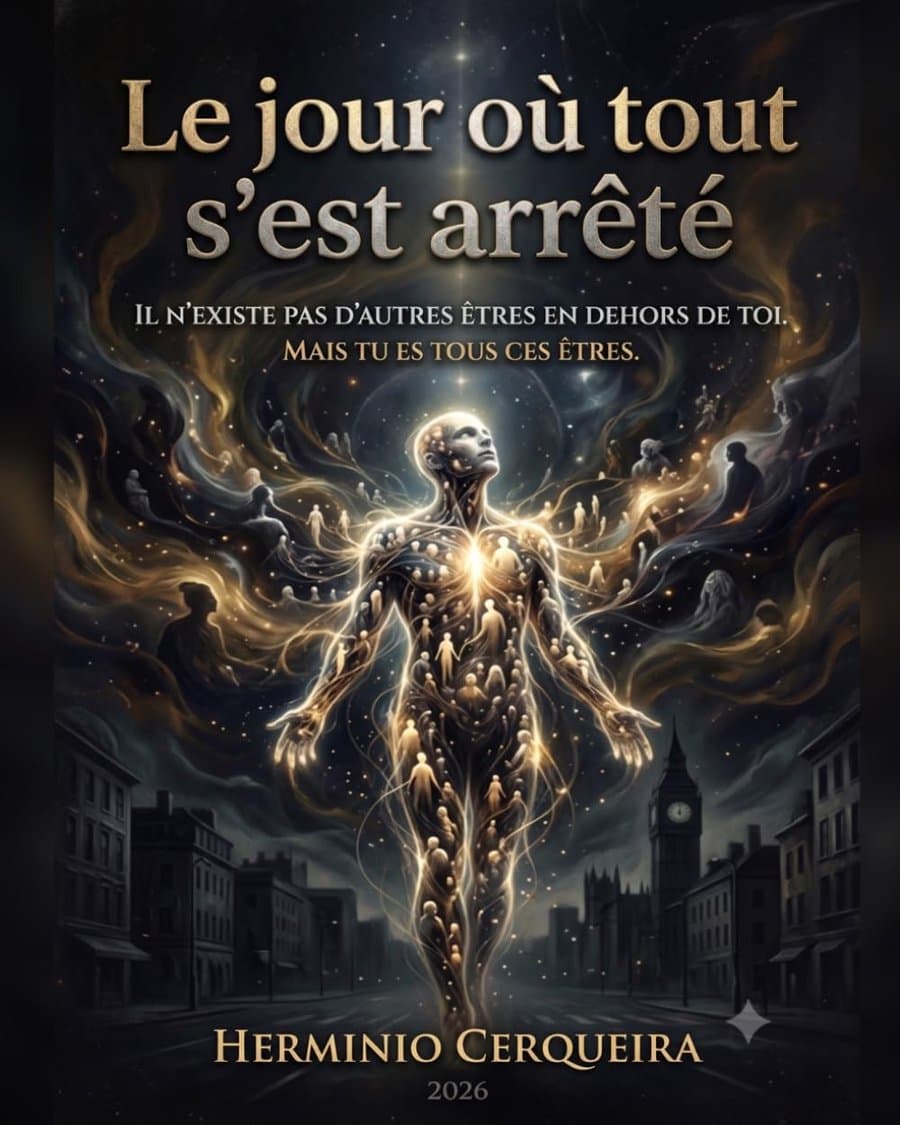
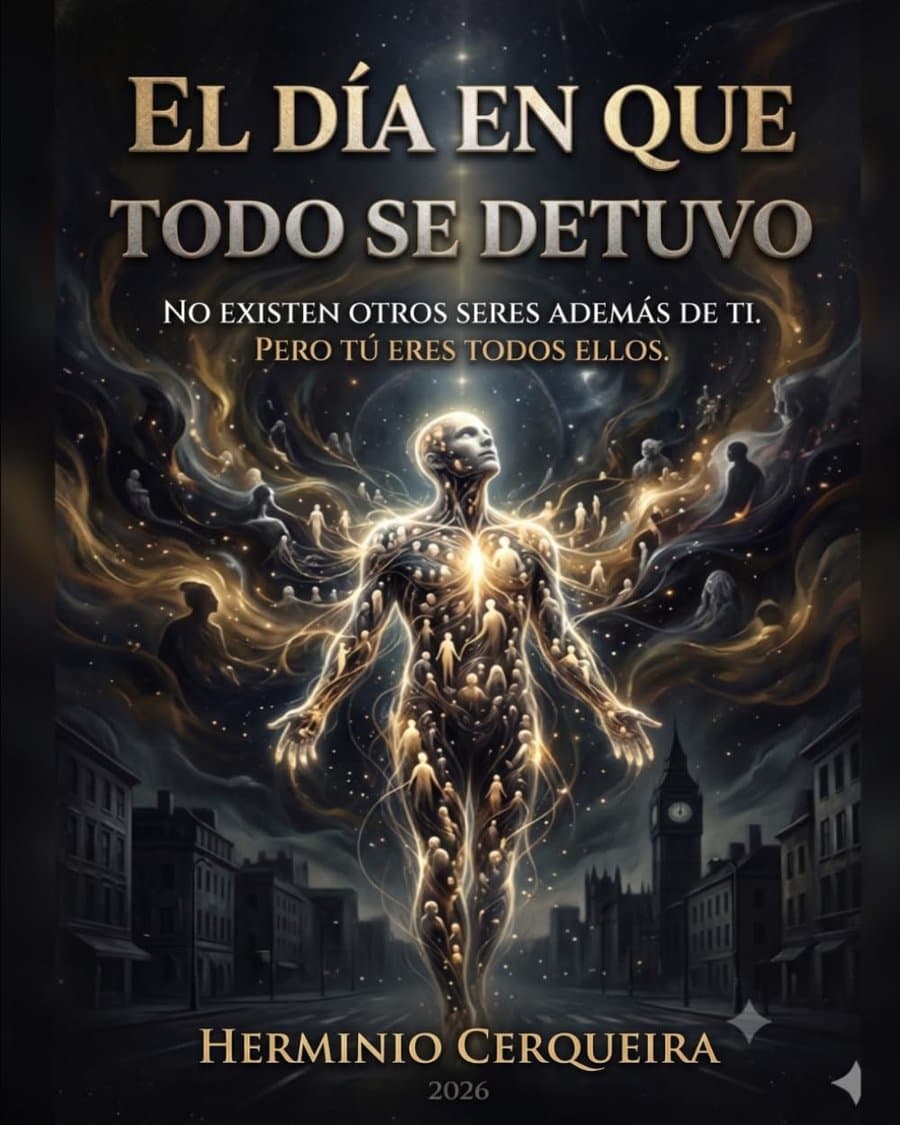

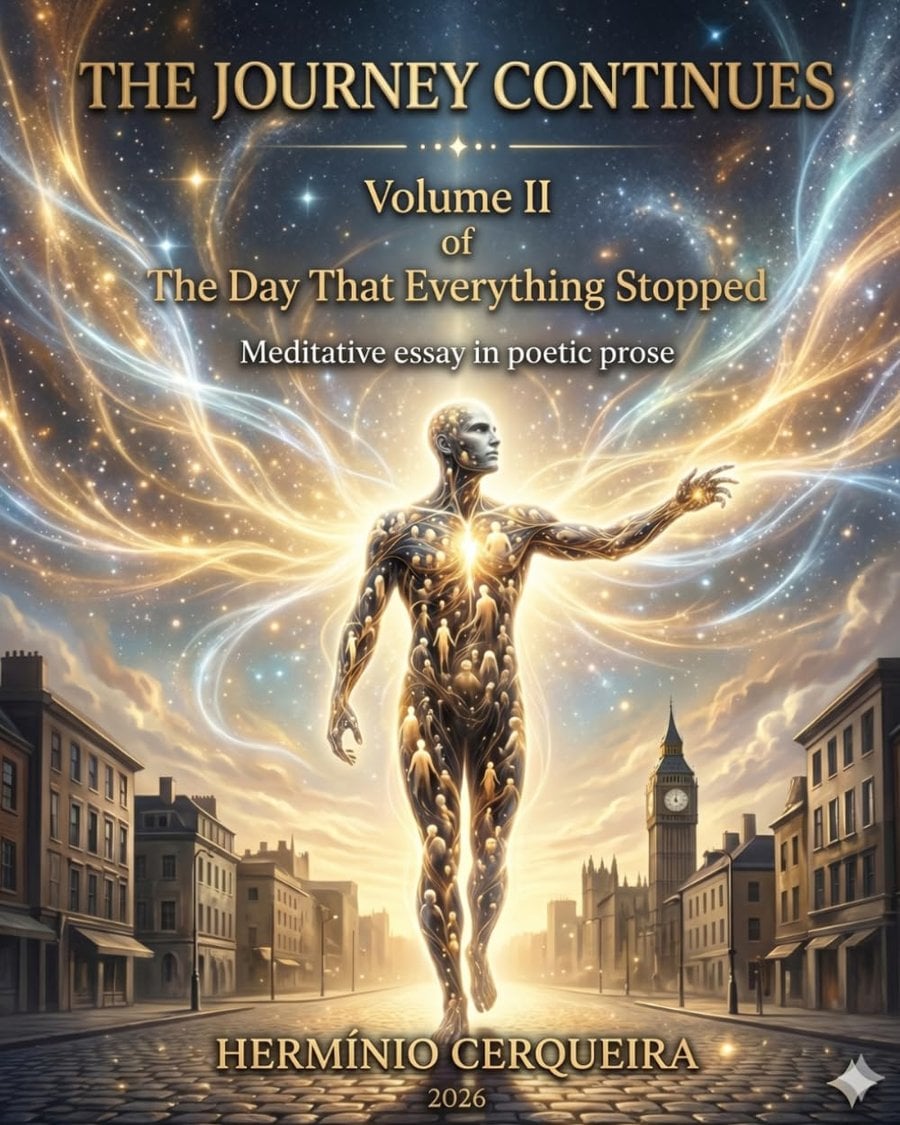
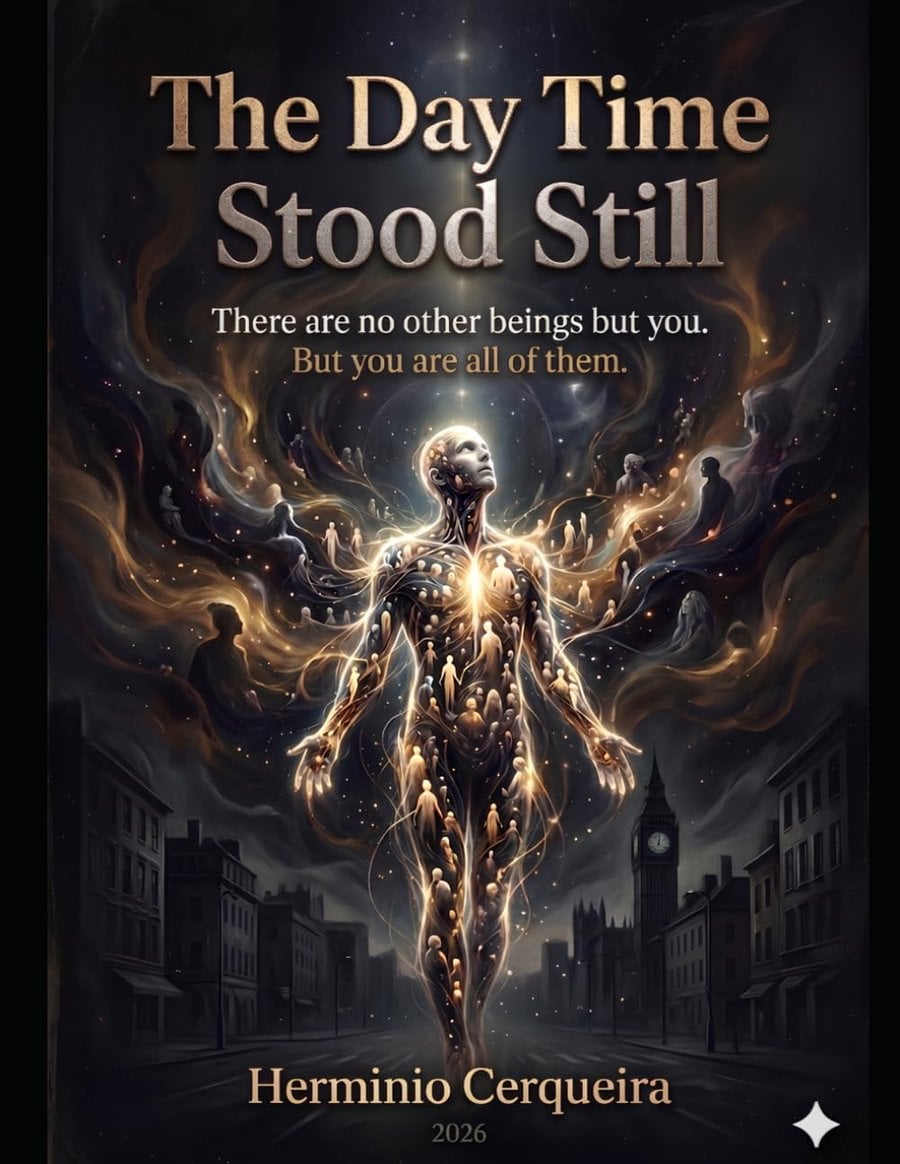
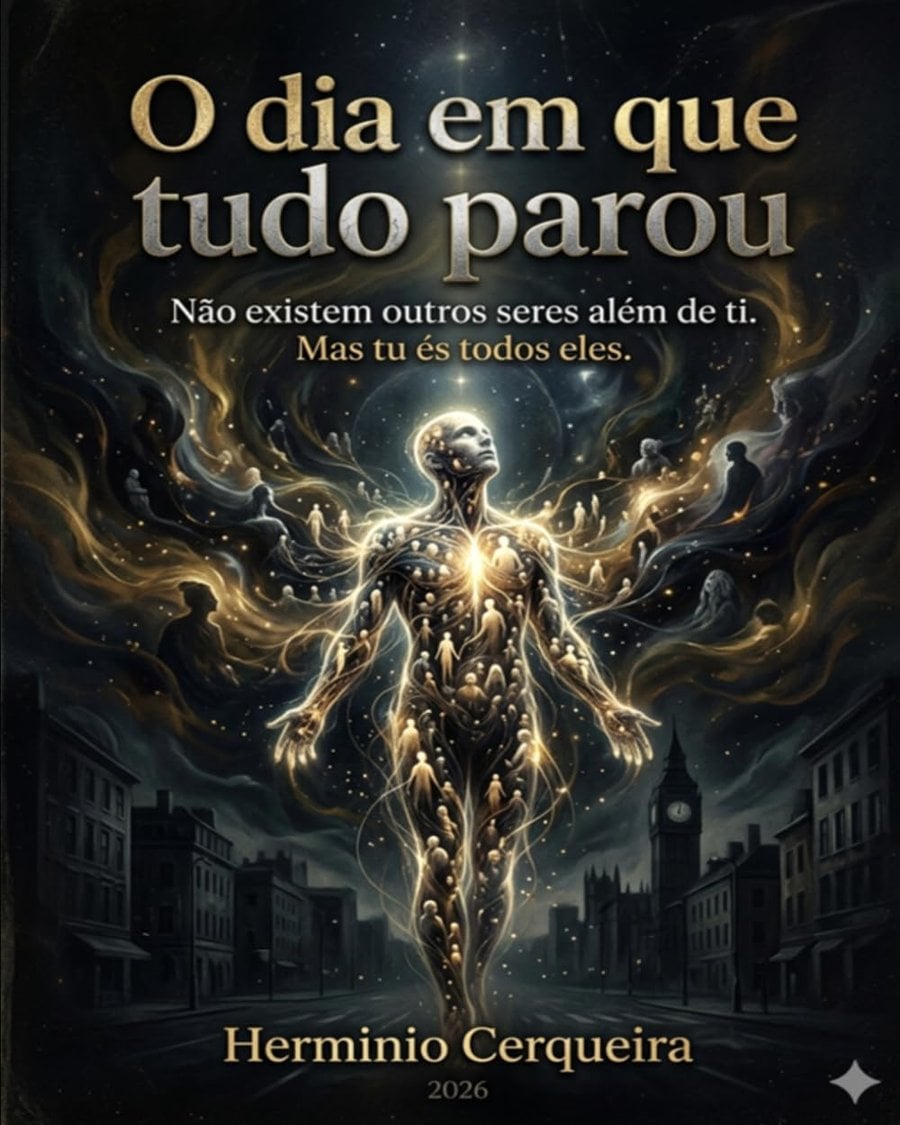
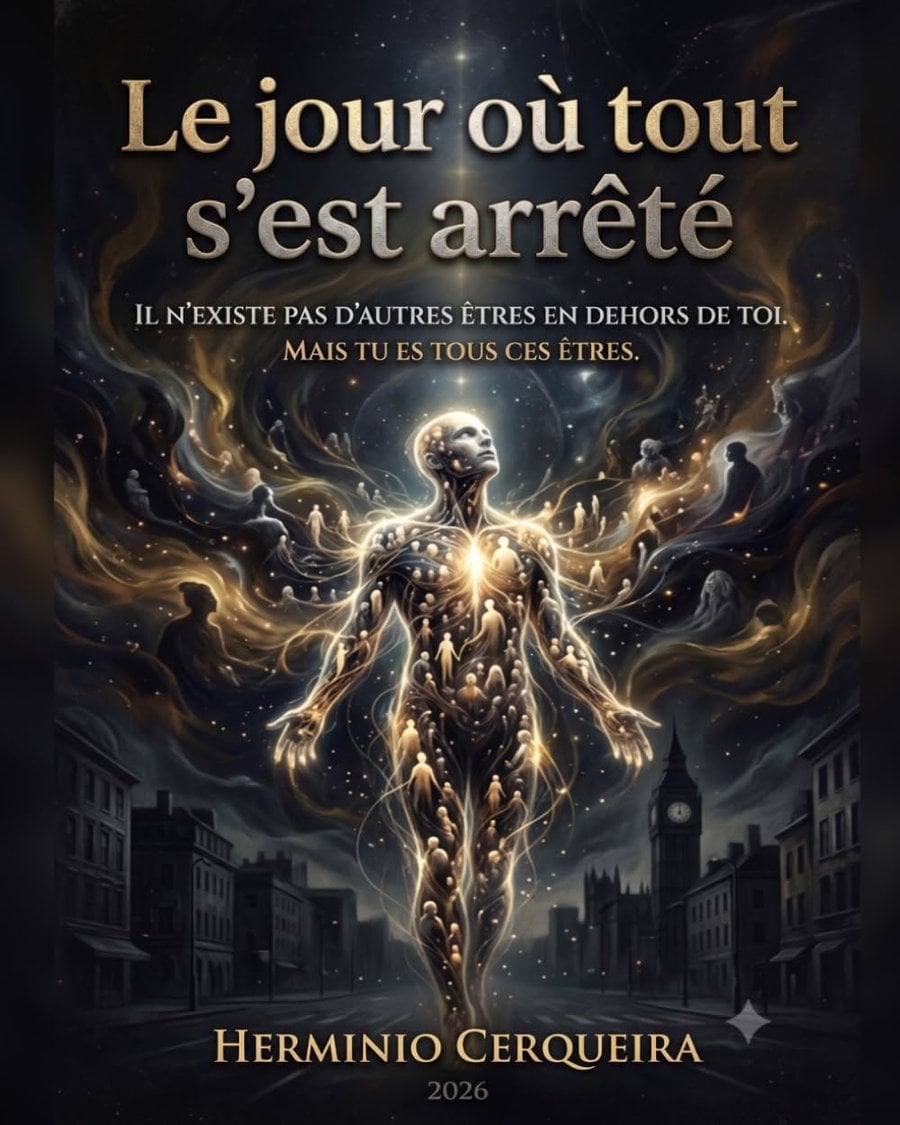
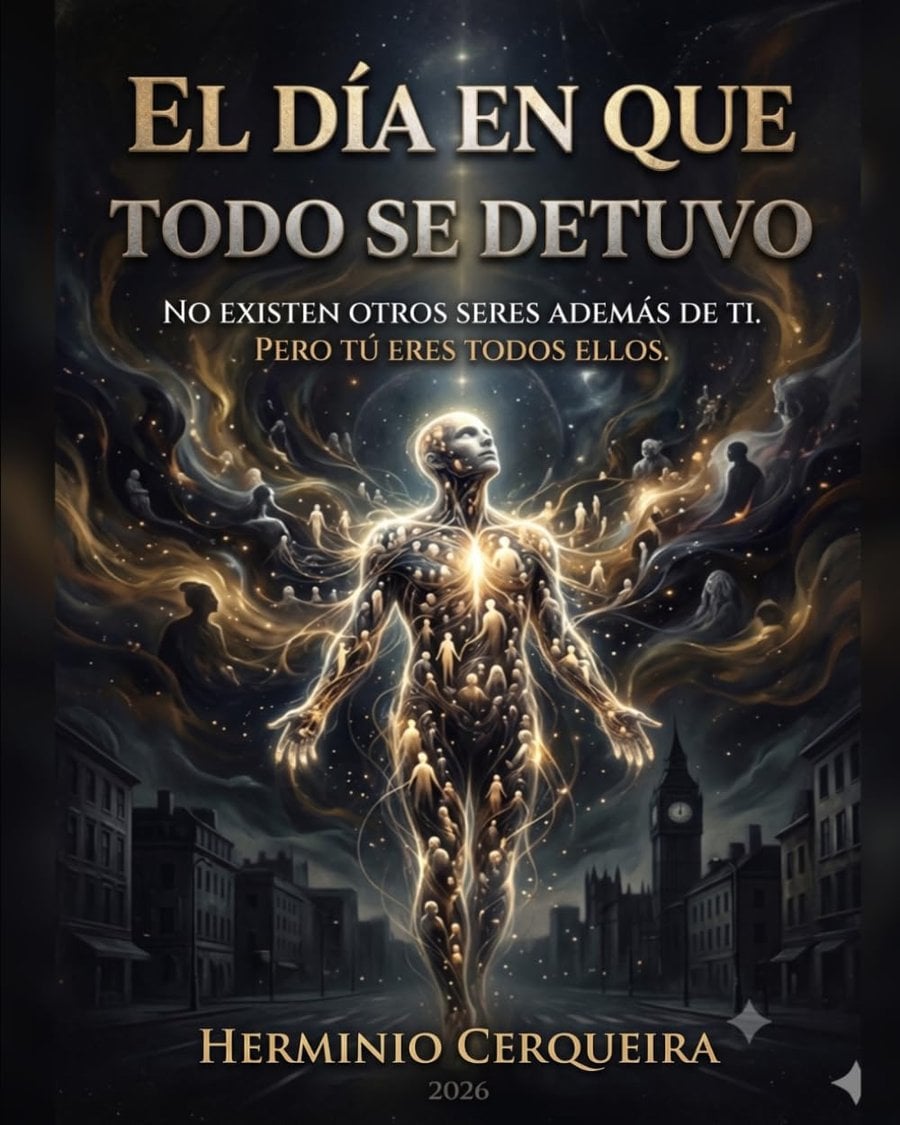

The Day Everything StoppedO Dia em que Tudo ParouLe jour où tout s’est arrêtéEl día en que todo se detuvoDer Tag, an dem alles stehte
There are no other beings besides you. But you are all of them
O Despertar do Silêncio
Le réveil du silence
El despertar del silencio
Das Erwachen der Stille
“que os pintores chamam ouro líquido”
- Pages
- 400 pages
- ISBN
- ISBN 979-8195296384
- Published
- Formats
- Kindle and paperback
- Pages
- 497 pages
- ISBN
- ISBN 979-8199463720
- First published
- Formats
- Kindle, paperback, and hardcover
- Pages
- 508 pages
- ISBN
- ISBN 979-8186788577
- Published
- Formats
- Kindle and paperback
- Pages
- 491 pages
- ISBN
- ISBN 979-8186790921
- Published
- Formats
- Kindle and paperback
- Pages
- 531 pages
- ISBN
- ISBN 979-8186786054
- Published
- Formats
- Kindle and paperback
About the book
Text published with the English edition (Amazon).
There are no other beings besides you. But you are all of them.
— Huang Po
There was a time when I believed that life came with instructions. That there was a manual, a guide, a map that could be followed to reach a destination called “happiness.” I was that kind of person—the one who makes plans, the one who makes lists, the one who believes that with enough effort, you can achieve anything. And it worked, until the point when it simply stopped working.
I remember the day with the precision of a broken clock that still tells the exact time twice a day. It was a spring Saturday. Light poured through the windows with that quality that painters call “liquid gold.” I had achieved what I thought would make me complete: a respectable career, a nice apartment, relationships that pretended to be okay. And yet, as I sat in that room bathed in gold, I felt an emptiness so profound it seemed to have physical substance.
It wasn't exactly depression. Or maybe it was—but of a kind that psychologists don't yet have a name for. It was the feeling of living someone else's life. As if I were an actor who had learned his part so well that he had forgotten he was an actor.
In the months that followed, I did what many people do: I started blaming external factors. I changed jobs. I ended a relationship that should have ended years ago. I traveled. I read self-help books that promised transformation through positive techniques. All of this was helpful, to a certain extent. But it was like dusting off a cracked mirror: no matter how shiny you made it, the crack remained.
And then, on a particularly creative sleepless night, I came across a video on an unlikely website—it featured a Buddhist monk talking about suffering. He was nothing exceptional. He wasn't charismatic or mesmerizing. He was just an elderly man, dressed in saffron-colored robes, saying very simple things in a very clear way.
He said something like, “You suffer not because life is bad. You suffer because you want life to be different from the way it is.” It seemed absurd. It seemed impossible. And yet, something in my body recognized this as truth – not as an intellectual truth, but as a truth that came from a deeper place, like the memory of something you've always known.
At that moment, I began a journey that lasted several years and that, honestly, has not yet ended. I traveled to Asia. I spent months in silent meditation retreats—silent not only in terms of sound but in terms of all forms of communication. I read classic Buddhist texts, from the Pali Canon to Tibetan teachings. I studied with monks who had spent fifty years in remote mountains. And, more importantly, I began to apply these teachings in my own life, in ways that were both mundane and radically transformative.
What I discovered was not what I was looking for. I didn't find a formula for happiness. I did not find a technique to eliminate suffering. What I discovered was far more revolutionary: I discovered that the path to freedom runs through suffering, not around it. That compassion is more important than achievement. That silence is more eloquent than any speech. And that the fullest life possible is not one in which everything goes smoothly, but one in which you deeply understand how to respond to what is given.
Index of editions
One line per edition, in the language in which it was published. Choose your Amazon store once; it applies to every edition.
English edition:
The Day Everything Stopped
400 pagesKindle and paperback
English edition:
The Day Everything Stopped
474 pagesKindle and paperback
Portuguese edition:
O Dia em que Tudo Parou
497 pagesKindle, paperback, and hardcover
French edition:
Le jour où tout s’est arrêté
508 pagesKindle and paperback
Spanish edition:
El día en que todo se detuvo
491 pagesKindle and paperback
German edition:
Der Tag, an dem alles stehte
531 pagesKindle and paperback
- In the Amazon stores, each link uses the edition’s own code (ASIN); availability in each country is managed by Amazon.
- In Portugal, buy from Amazon Spain: there is no Portuguese Amazon store.
Critical reading — “A Obra Comentada” (2026)
A third-person critical reading, reproduced from “A Obra Comentada,” the annotated catalog of the work published by the author himself. It is not a press review.
Original text in Portuguese.
Díptico meditativo em prosa, O Dia em Que Tudo Parou é o livro-nascente deste eixo: a cena que lhe dá título — um sábado de Primavera, a luz «que os pintores chamam ouro líquido», a carreira feita, o apartamento agradável, e «um vazio tão profundo que parecia ter densidade física» — reaparece depois, citada e reescrita, em vários outros volumes. O primeiro tomo, subintitulado «Ensaios sobre o sofrimento, o não apego e a presença», narra a crise e a travessia: a noite de insónia em que um monge budista diz, num vídeo improvável, «Tu sofres não porque a vida é má. Tu sofres porque queres que a vida seja diferente da forma como é»; os retiros silenciosos na Ásia; a descoberta de que «o caminho para a liberdade passa através do sofrimento, não à sua volta». A estrutura segue as grandes noções budistas — dukkha, anicca, maitri, os Três Selos da Realidade — mas em linguagem contemporânea e confessional, com práticas de meditação no fim de cada capítulo e uma recusa explícita do género da auto-ajuda: «qualquer caminho espiritual que comece com uma mentira nunca levará a lugar nenhum». A epígrafe de Huang Po — «Não existem outros seres além de ti. Mas tu és todos eles» — e a máxima zen do dedo e da lua («que estas páginas sejam dedos úteis») marcam o tom: aponta-se, não se doutrina.
No conjunto da obra, este díptico é a pedra angular. Fornece o vocabulário (o silêncio, a presença, a impermanência), o mito pessoal (o dia da paragem) e, sobretudo, a ética: a responsabilidade como primeira escolha, a resposta contra a reacção. É impossível não ler aqui a raiz da tese XVIII do Manifesto — o estratega que aprendeu com Frankl que a última liberdade é a atitude interior é o mesmo que recusa reduzir a estratégia a cálculo. Entre os dois volumes, a passagem do ensaio à prosa poética anuncia já a deriva formal de todo o eixo: do argumento para a imagem, da tese para a soleira.
Quotations from the book
“um vazio tão profundo que parecia ter densidade física”
“Ensaios sobre o sofrimento, o não apego e a presença”
“o caminho para a liberdade passa através do sofrimento, não à sua volta”
“qualquer caminho espiritual que comece com uma mentira nunca levará a lugar nenhum”
“Não existem outros seres além de ti. Mas tu és todos eles”
“que estas páginas sejam dedos úteis”
Source: «A Obra Comentada» (Sintra, Julho de 2026) — comentário crítico
Book details
- Genre
- Essay
- Axis of the work
- Poetry, Spirituality, and Meditation
- First published
- Pages
- 400 (English edition)
- Formats
- Kindle e-book · Paperback · Hardcover
- Languages
- 5 — Portuguese, English, French, Spanish, and German
- ISBN
- 979-8195296384