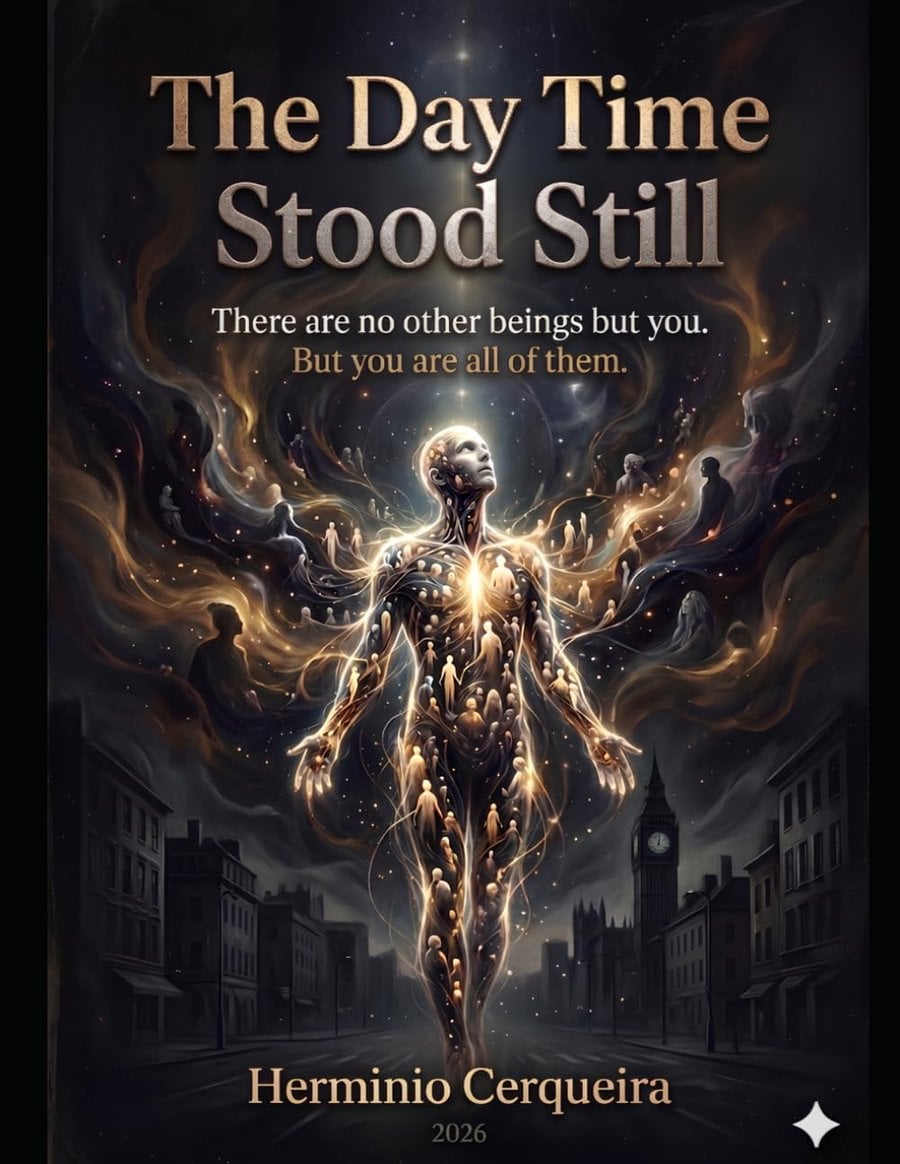
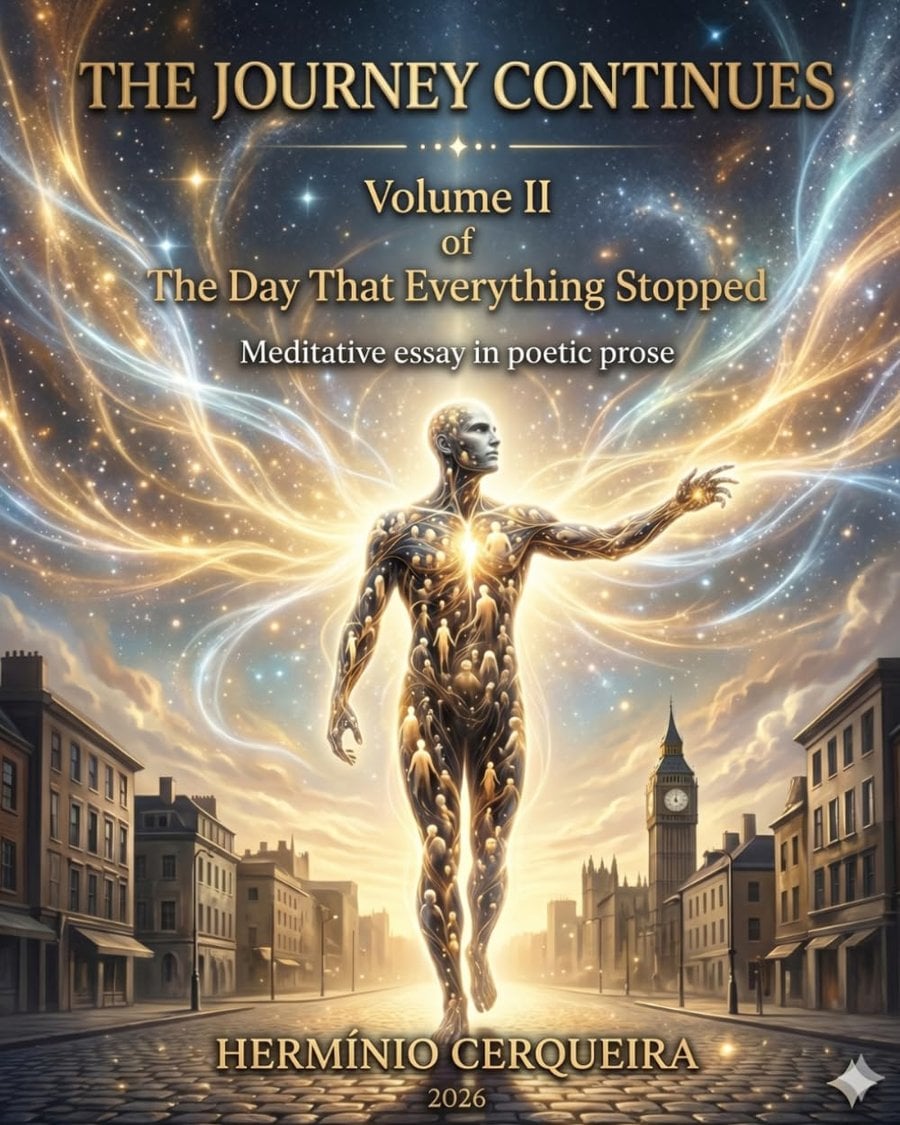
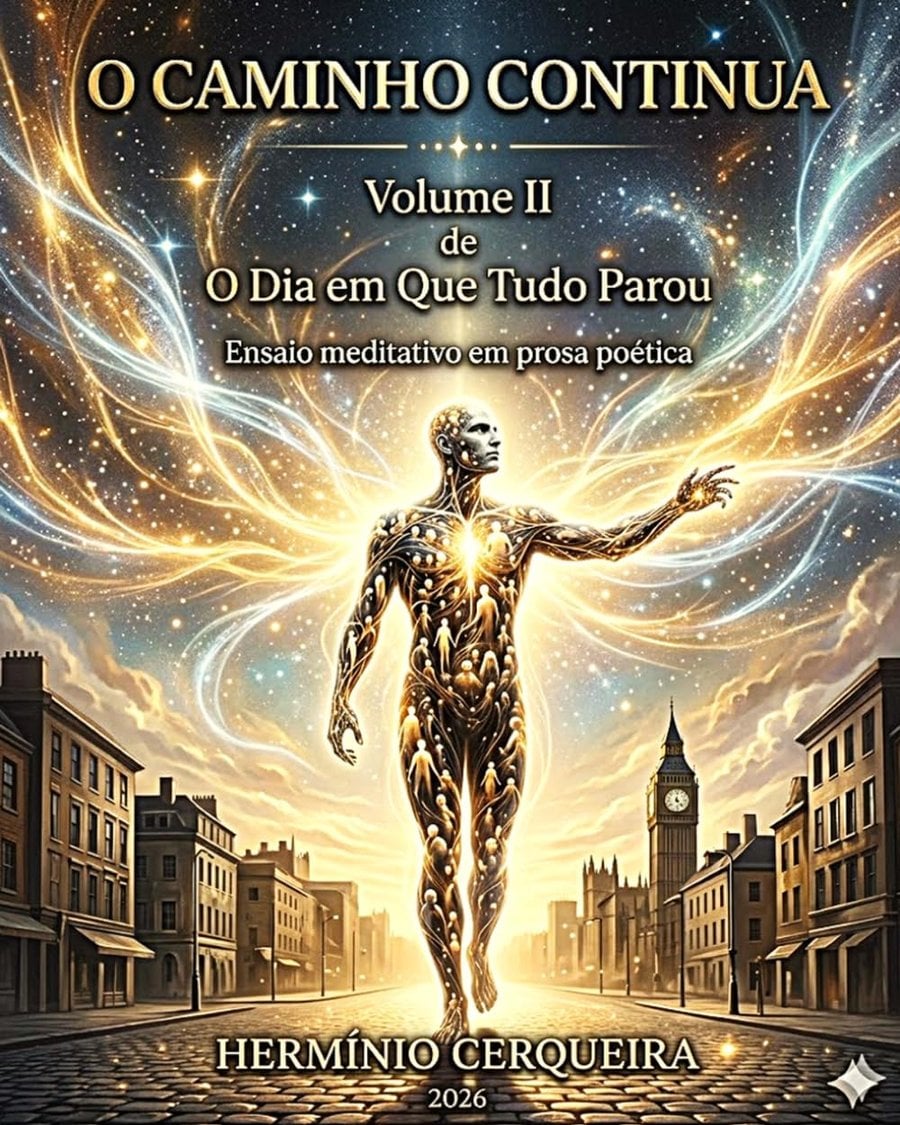
Poetry, Spirituality, and MeditationEssayVolume 2
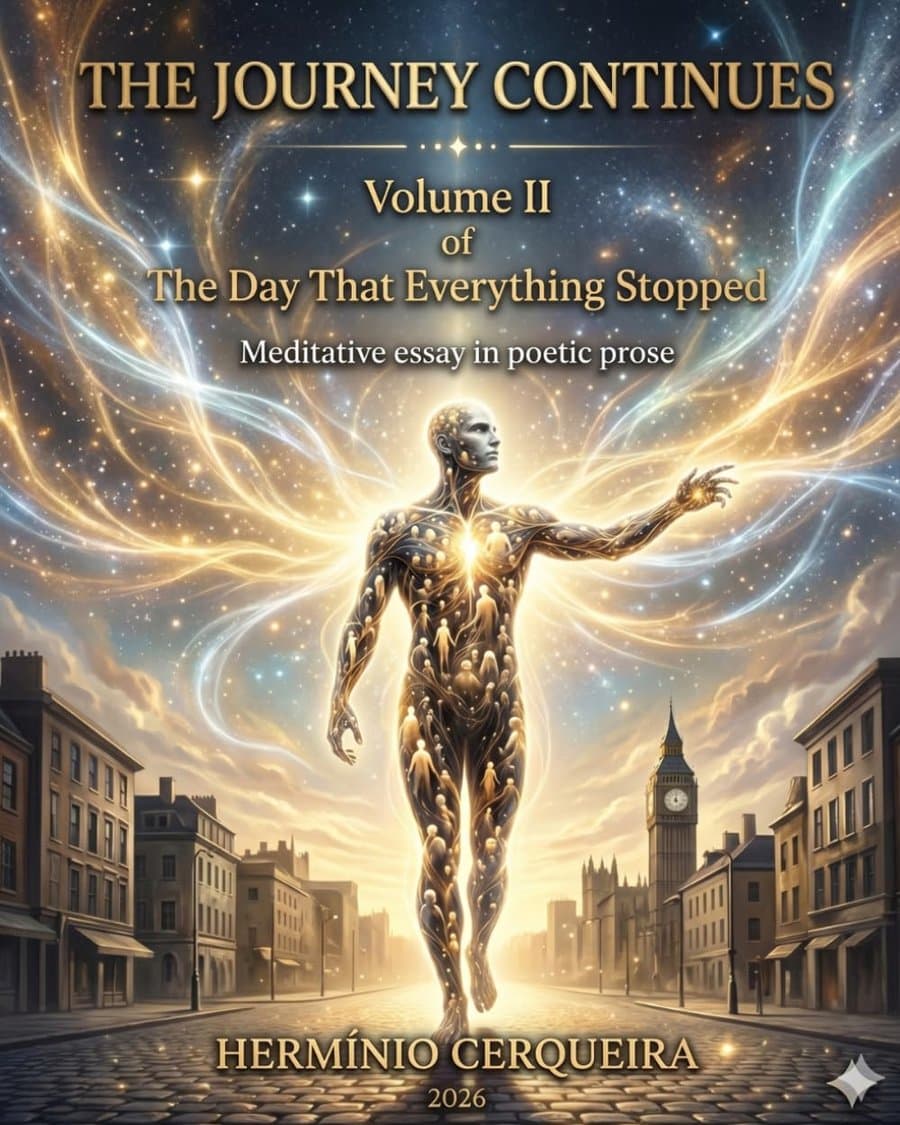
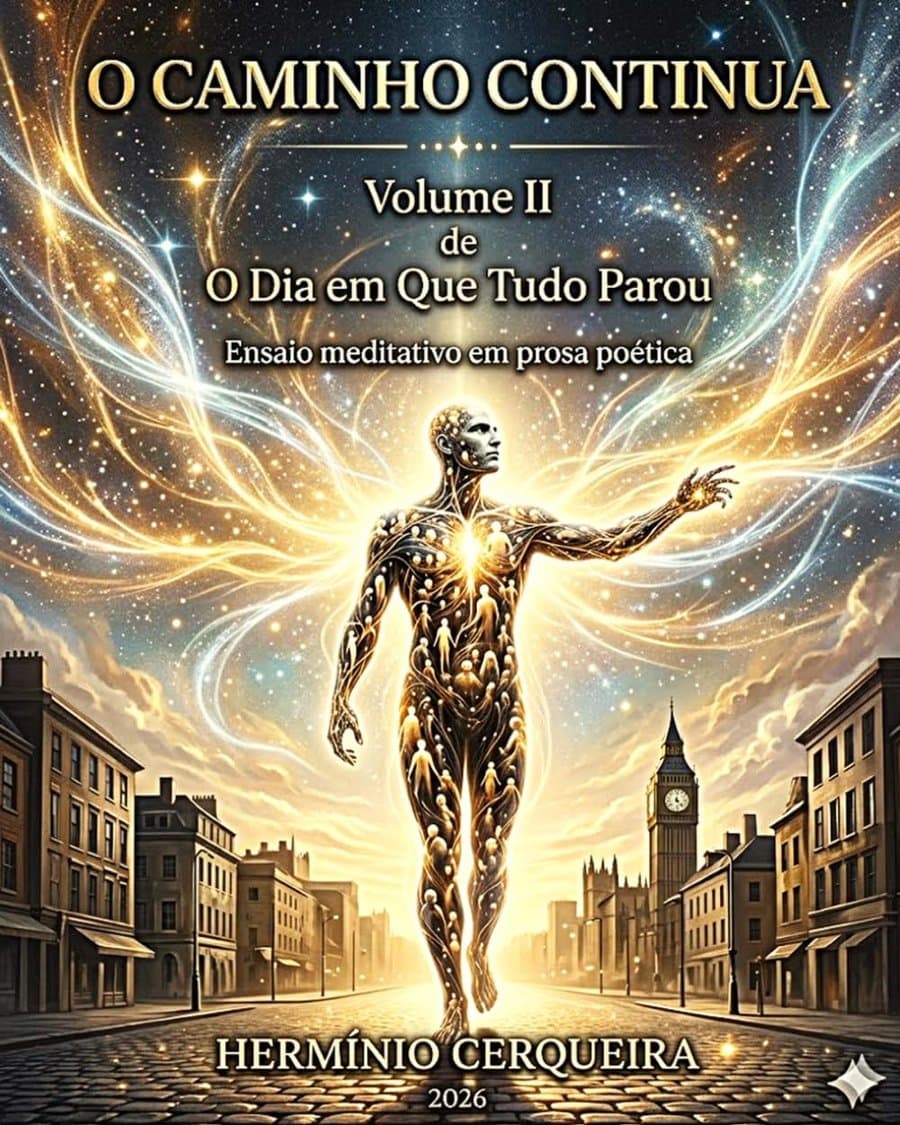
The Journey ContinuesO Caminho Continua, Volume 2
Volume II of The Day Everything Stopped
O Dia em Que Tudo Parou, Volume 2
Available in 2 languages
“Não somos donos do vento, mas somos responsáveis pela forma como orientamos a vela.”
- Pages
- 494 pages
- ISBN
- ISBN 979-8186710059
- Published
- Formats
- Kindle and paperback
- Pages
- 500 pages
- ISBN
- ISBN 979-8180442956
- First published
- Formats
- Kindle, paperback, and hardcover
About the book
Text published with the English edition (Amazon).
There is a strange moment, at the end of the climb, when the hiker reaches the summit and discovers that the summit was not the end. He had imagined it as a place of arrival, a definitive balcony overlooking the world, and for a long time he had walked only to get there. But then, upon stepping onto the highest point, he sees something else: the horizon has receded, valleys he didn't know have opened up, and the path, far from ending, descends on the other side and continues. The summit was not a closed door. It was a threshold.
Thus ends the first volume of this journey, and thus begins the second. In the previous book, we traversed difficult terrain together. We spoke of the day everything stopped—that instant when the familiar ground opens beneath our feet and we are forced to confront what we have always postponed: the impermanence of all that we love, the discreet presence of suffering, the fear that hides beneath our haste. We learned not to run away. We learned, slowly, to sit beside our own pain with the tenderness we would show a friend, to practice that kindness towards ourselves that the ancients called maitri. We looked at the emptiness in the face and discovered that it was not an abyss, but a space—the space where everything breathes and nothing is trapped. And, finally, we saw how compassion naturally arises from understanding, and how compassion, to be true, must descend from the heights of the idea and become gesture, an outstretched hand, presence.
All of this was the work of the ascent. It was necessary to shatter illusions, release burdens, traverse the night. But the fall of illusions is not destiny—it is merely the condition. When what was false falls, what is true becomes available. And what remains, after so much cleansing, is a luminous and everyday question: how to live now? Not how to survive, not how to endure, but how to live standing, with eyes open, with lightness and with roots. It is to this question that this second volume is dedicated.
Because there is an art to living that cannot be learned on easy days. You learn it later—after the storm has passed and taught us what was essential. It is the art of inhabiting the morning without demanding that it be perfect, of drinking coffee without rushing to finish it, of looking at a tree as if it were the first time and, at the same time, as if we had known it forever. It is the wisdom of the mundane, the hidden sanctity of the repeated gesture. Those who have endured suffering and not hardened return to the world with different eyes: they see that the extraordinary was, all along, dissolved in the ordinary, like salt in seawater.
This volume, therefore, broadens the horizon. We will speak of inner freedom—the kind that no one can give or take away, because it doesn't depend on circumstances but on the relationship we establish with them. We will speak of reconciliation: with the past that cannot be changed, with the people who weren't what we expected, with ourselves and our imperfections, and with nature, from whom we have distanced ourselves and to whom we belong. We will speak of the journey—because a fulfilled life is not a state one arrives at and remains in, but a faithful walk, putting one foot in front of the other even when the path climbs, even when the landscape repeats itself, even when no one sees us walking.
However, I want to be honest with you from the very first page, reader. I don't offer recipes. Be wary of those who promise seven steps to happiness, of those who design your destiny in a formula that works for everyone. Life doesn't fit into formulas, and happiness isn't a product you assemble by following instructions. Each human being is, in this profound sense, the architect of their own path.
Excerpt
Há uma hora estranha, ao fim da subida, em que o caminhante chega ao cume e descobre que o cume não era o fim. Imaginara-o como um lugar de chegada, uma varanda definitiva sobre o mundo, e durante muito tempo caminhou apenas para lá chegar. Mas eis que, ao pisar o ponto mais alto, vê outra coisa: o horizonte recuou, abriram-se vales que não conhecia, e a senda, longe de terminar, desce do outro lado e continua. O cume não era uma porta fechada. Era uma soleira.
Assim termina o primeiro volume desta travessia, e assim começa o segundo. No livro anterior, percorremos juntos o terreno difícil.
— O Caminho Continua — Volume 2
Original text in Portuguese.
Editorial note
Source: publisher’s description of the Portuguese edition (Amazon).
Index of editions
One line per edition, in the language in which it was published. Choose your Amazon store once; it applies to every edition.
English edition:
The Journey Continues
494 pagesKindle and paperback
Portuguese edition:
O Caminho Continua
500 pagesKindle, paperback, and hardcover
- In the Amazon stores, each link uses the edition’s own code (ASIN); availability in each country is managed by Amazon.
- In Portugal, buy from Amazon Spain: there is no Portuguese Amazon store.
Critical reading — “A Obra Comentada” (2026)
A third-person critical reading, reproduced from “A Obra Comentada,” the annotated catalog of the work published by the author himself. It is not a press review.
Original text in Portuguese.
O segundo volume, O Caminho Continua, assume-se como «ensaio meditativo em prosa poética» e abre com uma das mais felizes imagens do autor: o caminhante que chega ao cume e descobre que «o cume não era uma porta fechada. Era uma soleira.» Se o primeiro tomo foi a subida — derrubar ilusões, sentar-se ao lado da própria dor —, o segundo pergunta «como viver, agora?» e responde com uma arte do quotidiano: liberdade interior, reconciliação com o passado, a «sabedoria do banal». A novidade formal é dupla. Cada capítulo abre agora com uma cena narrativa em terceira pessoa — o homem que, numa madrugada de neblina, pousa o telemóvel e descobre «a escolha de escolher» — antes de passar à meditação; e o diálogo alarga-se do budismo à filosofia ocidental: Viktor Frankl e o espaço entre o estímulo e a resposta, Sartre e a condenação à liberdade, Kierkegaard e o salto. A síntese é dada numa frase de timbre marinheiro que qualquer leitor da obra estratégica do autor reconhecerá: «Não somos donos do vento, mas somos responsáveis pela forma como orientamos a vela.»
No conjunto da obra, este díptico é a pedra angular. Fornece o vocabulário (o silêncio, a presença, a impermanência), o mito pessoal (o dia da paragem) e, sobretudo, a ética: a responsabilidade como primeira escolha, a resposta contra a reacção. É impossível não ler aqui a raiz da tese XVIII do Manifesto — o estratega que aprendeu com Frankl que a última liberdade é a atitude interior é o mesmo que recusa reduzir a estratégia a cálculo. Entre os dois volumes, a passagem do ensaio à prosa poética anuncia já a deriva formal de todo o eixo: do argumento para a imagem, da tese para a soleira.
Quotations from the book
“o cume não era uma porta fechada. Era uma soleira.”
Other expressions quoted from the book
“ensaio meditativo em prosa poética”“como viver, agora?”“sabedoria do banal”“a escolha de escolher”
Source: «A Obra Comentada» (Sintra, Julho de 2026) — comentário crítico
Book details
- Genre
- Essay
- Axis of the work
- Poetry, Spirituality, and Meditation
- First published
- Pages
- 494 (English edition)
- Formats
- Kindle e-book · Paperback · Hardcover
- Languages
- 2 — Portuguese and English
- ISBN
- 979-8186710059