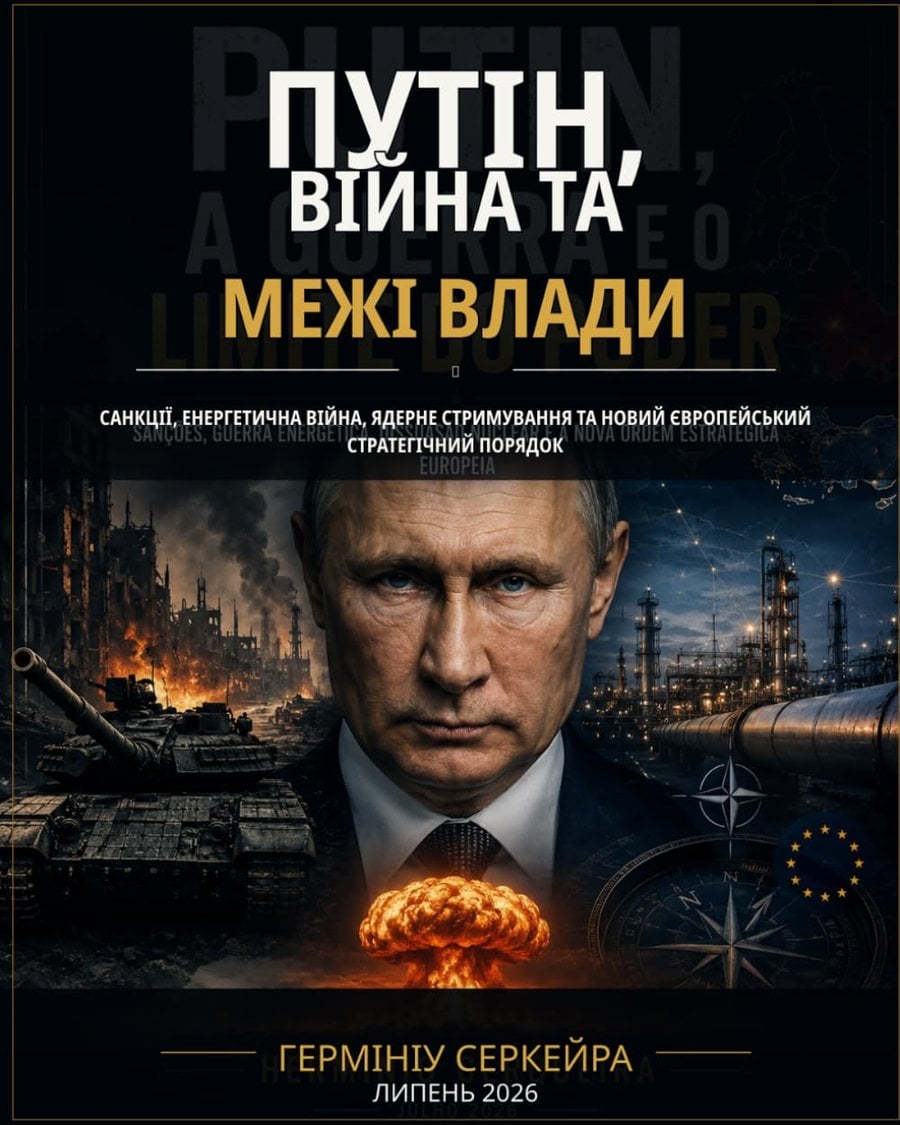
Стратегія і геополітикаЕсеїстика
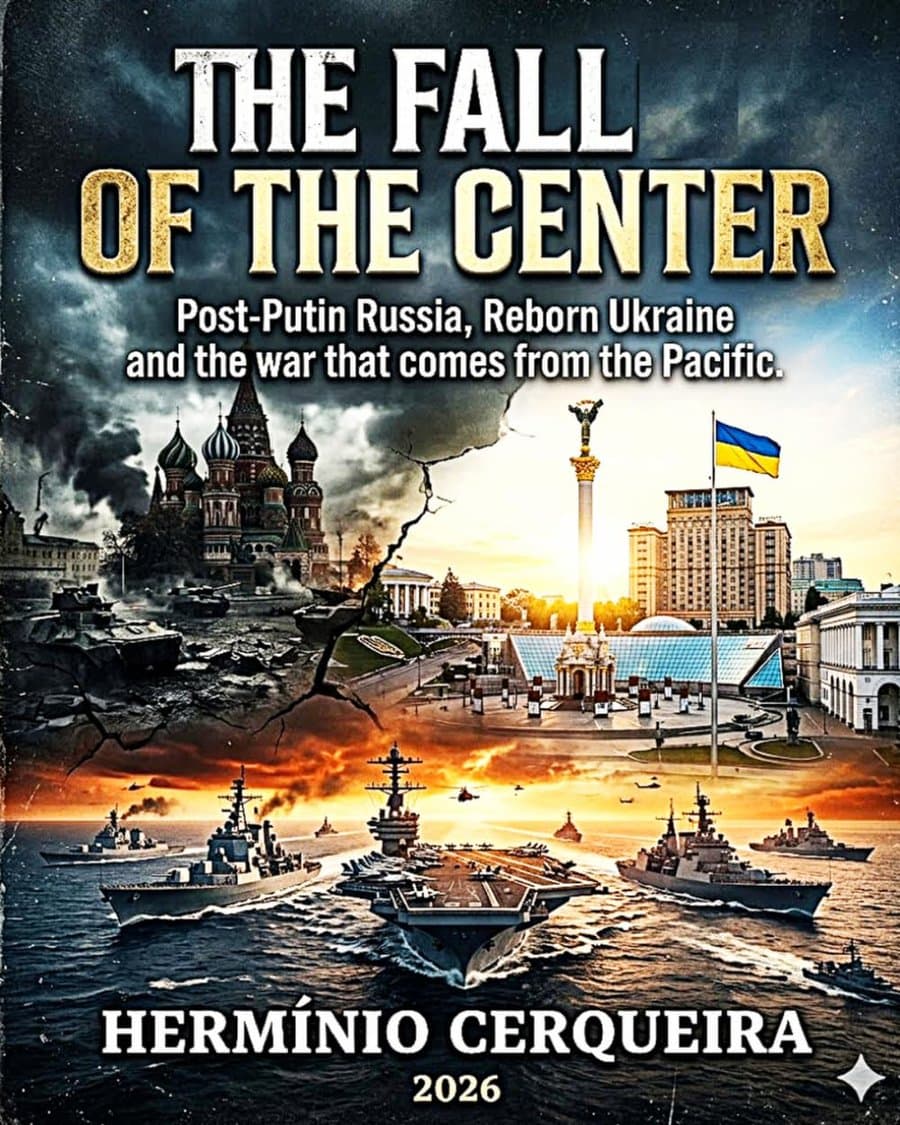
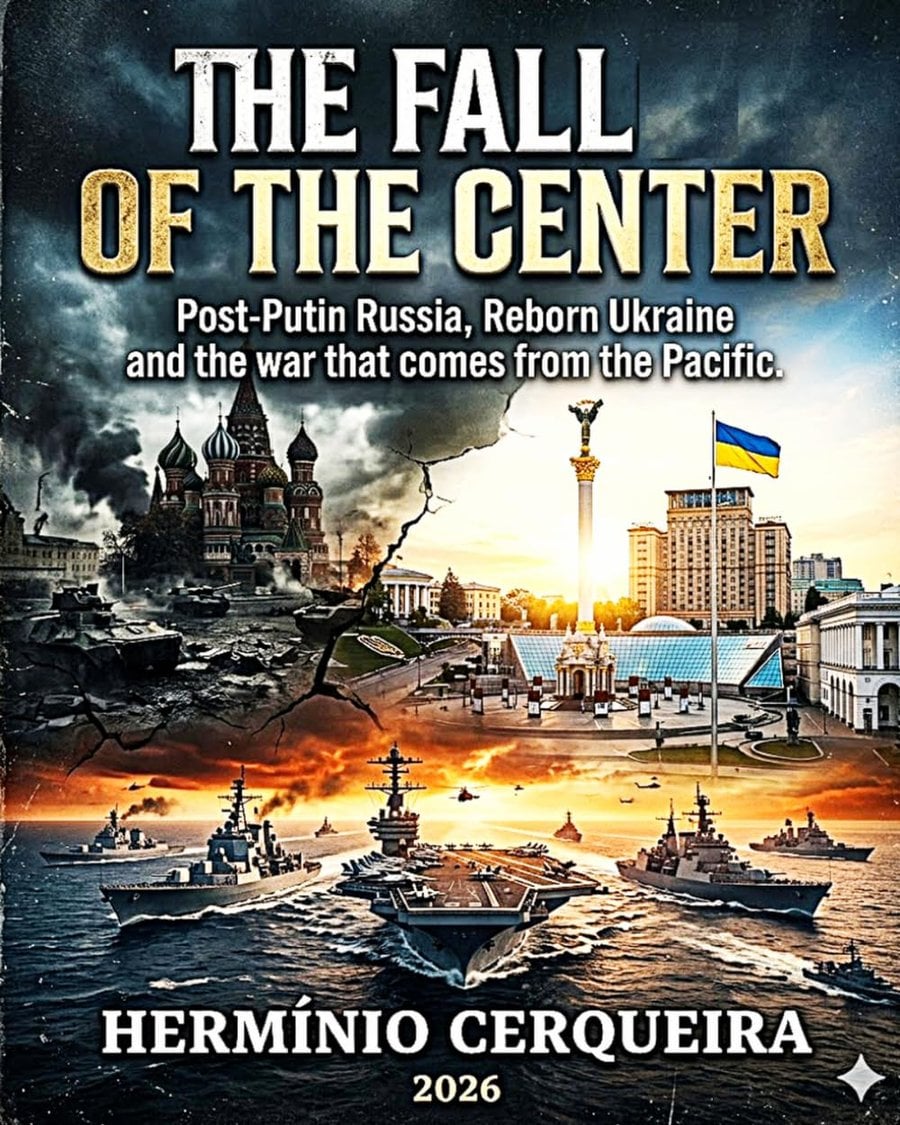
The Fall of the Center
Post-Putin Russia, Reborn Ukraine and the war that comes from the Pacific
«O leitor deve resistir à tentação de ler os cenários mais ousados como previsões. A desintegração da Rússia não é inevitável. A invasão chinesa de Taiwan não é certa»
- Сторінок
- 402 сторінки
- ISBN
- ISBN 979-8196334887
- Перша публікація
- Формати
- Kindle і м’яка обкладинка
Про книгу
Анотація з оригінального видання (мова: англійська).
"Empires don't fall all at once. They crumble first on the margins, where the center can no longer reach."
— Adapted from Fernand Braudel
"The 21st century will be the century in which the great powers rediscover that they do not control the map—they only draw it."
— Parag Khanna
Why This Book, Why Now?
We are living through a time of tectonic shifts in the international order. The system that emerged after 1991, based on American hegemony and the expansion of the liberal-democratic model, is being challenged on multiple fronts. Russia challenged it head-on by invading Ukraine in February 2022; China challenges it silently by building a parallel system of influence that extends from the South China Sea to the digital Silk Roads; the United States, internally divided and oscillating between interventionism and retreat, no longer offers the same strategic predictability as before.
This book stems from the conviction that these three crises—the war in Ukraine, the internal restructuring of Russia, and the Sino-American tension in the Pacific—are not isolated phenomena. They are manifestations of the same systemic transformation: the weakening of traditional imperial centers and the emergence of new centrifugal dynamics that are reshaping the world's political map.
The central thesis of this work is that a Russian defeat in Ukraine—or at least the recognition that the Kremlin's maximalist objectives are unattainable—will not simply produce a new government in Moscow. It will trigger an imperial reordering with unpredictable consequences: centrifugal pressures on the ethnic republics of the Federation, a growing dependence on China that could transform Russia into a de facto vassal state, and disputes over Russian territorial integrity, especially in the less populated and more fragile regions of Siberia and the Far East.
Meanwhile, in the Pacific, Taiwan emerges as the point by which the American capacity to prevent a coercive alteration of the regional order is measured. The most recent analyses from the US intelligence community indicate that Beijing does not plan an invasion for 2027, but Chinese military maneuvers around the island have intensified dramatically since the end of 2025, with exercises simulating naval blockades and amphibious operations on an unprecedented scale.
The book is structured in five parts that can be read sequentially or independently. The first part deals with Ukraine's post-war future and the monumental challenges of reconstruction. The second analyzes defeated Russia and the dynamics of succession. The third examines the Sino-Russian relationship as a form of economic vassalage. The fourth explores centrifugal movements within the Russian Federation. The fifth projects scenarios for Taiwan and the Pacific.
A forward-looking approach was deliberately chosen, working with plausible scenarios rather than closed prophecies. Each chapter combines historical analysis, current data, and well-founded extrapolations, seeking to offer the reader an integrated view of transformations that, although they may seem distant, are already underway.
Покажчик видань
По одному рядку на кожне видання — мовою, якою його опубліковано. Оберіть крамницю Amazon один раз — вибір діятиме для всіх видань.
Мова видання: англійська:
The Fall of the Center
402 сторінкиKindle і м’яка обкладинка
- У крамницях Amazon кожне посилання використовує код самого видання (ASIN); наявність у кожній країні визначає Amazon.
Критичне прочитання — «A Obra Comentada» (2026)
Критичне прочитання від третьої особи, відтворене з «A Obra Comentada» — коментованого каталогу творчості, виданого самим автором. Це не рецензія в пресі.
Оригінальний текст португальською.
Publicado em português como A Queda do Centro e em edição inglesa como The Fall of the Center, este é o livro mais assumidamente prospectivo do eixo — e aquele em que o autor expõe com maior transparência as regras do seu jogo. A epígrafe de abertura, adaptada de Braudel, dá o mote: «Os impérios não caem de uma só vez. Desfazem-se primeiro nas margens, onde o centro já não consegue chegar». A tese central é enunciada sem rodeios no prefácio: uma derrota russa na Ucrânia — ou o simples reconhecimento de que os objectivos maximalistas do Kremlin são inatingíveis — «não produzirá simplesmente um novo governo em Moscovo. Desencadeará uma reordenação imperial de consequências imprevisíveis»: pressões centrífugas sobre as repúblicas étnicas da Federação, vassalização económica face à China e disputas sobre a própria integridade territorial russa na Sibéria e no Extremo Oriente. E, em paralelo, a convicção de que as três crises — a guerra na Ucrânia, a recomposição interna da Rússia e a tensão sino-americana no Pacífico — «não são fenómenos isolados», mas manifestações de uma mesma transformação sistémica.
A estrutura é límpida: cinco partes autónomas — a reconstrução da Ucrânia pós-bélica (com comparações desenvolvidas com o Plano Marshall, a Coreia do Sul, o Japão e o modelo israelita); a Rússia derrotada e as dinâmicas de sucessão; a relação sino-russa como vassalagem económica; os movimentos centrífugos dentro da Federação; e os cenários para Taiwan e o Pacífico. O método é o da geopolítica prospectiva, com filiação declarada na escola francesa de Gaston Berger e Michel Godet e na sua distinção entre futuro provável, possível e desejável. O autor é exemplarmente honesto quanto aos limites do exercício: «O leitor deve resistir à tentação de ler os cenários mais ousados como previsões. A desintegração da Rússia não é inevitável. A invasão chinesa de Taiwan não é certa». As hipóteses extremas são identificadas como tal e discutidas «com o rigor que merecem», sobre uma base documental que inclui o Rapid Damage and Needs Assessment do Banco Mundial, a RAND, o Atlantic Council, o PIIE e o NEST Centre.
No conjunto da obra, A Queda do Centro ocupa a charneira entre o eixo oriental europeu (A Guerra da Ucrânia em 2026, de que é o prolongamento especulativo) e o eixo do Pacífico (O Jogo das Máscaras, cujo teatro antecipa na quinta parte): é o livro que pergunta «e depois?» quando os outros perguntam «e agora?». O fecho revela a dimensão cívica que o título esconde: depois de percorrer ruínas hipotéticas, o autor devolve a responsabilidade ao leitor europeu — exigir preparação aos governos, praticar a solidariedade com os refugiados, resistir «à tentação do desespero» — e conclui com a frase que resume o livro e, porventura, todo o eixo: «O centro está a cair. Mas debaixo de cada ruína, há alicerces para construir algo novo. É esse o trabalho da nossa geração». Entre a frieza dos cenários e este apelo final, o livro encontra o seu registo próprio: prospectiva com consciência.
Цитати з книги
«Os impérios não caem de uma só vez. Desfazem-se primeiro nas margens, onde o centro já não consegue chegar»
«não produzirá simplesmente um novo governo em Moscovo. Desencadeará uma reordenação imperial de consequências imprevisíveis»
«O centro está a cair. Mas debaixo de cada ruína, há alicerces para construir algo novo. É esse o trabalho da nossa geração»
Інші процитовані вислови з книги
«não são fenómenos isolados»«com o rigor que merecem»«e depois?»«e agora?»«à tentação do desespero»
Джерело: «A Obra Comentada» (Sintra, Julho de 2026) — comentário crítico
Вихідні дані
- Жанр
- Есеїстика
- Вісь творчості
- Стратегія і геополітика
- Перша публікація
- Сторінок
- 402 (мова видання: англійська)
- Формати
- Електронна книга Kindle · Друкована книга (м’яка обкладинка)
- Мови
- 1 — англійська
- ISBN
- 979-8196334887