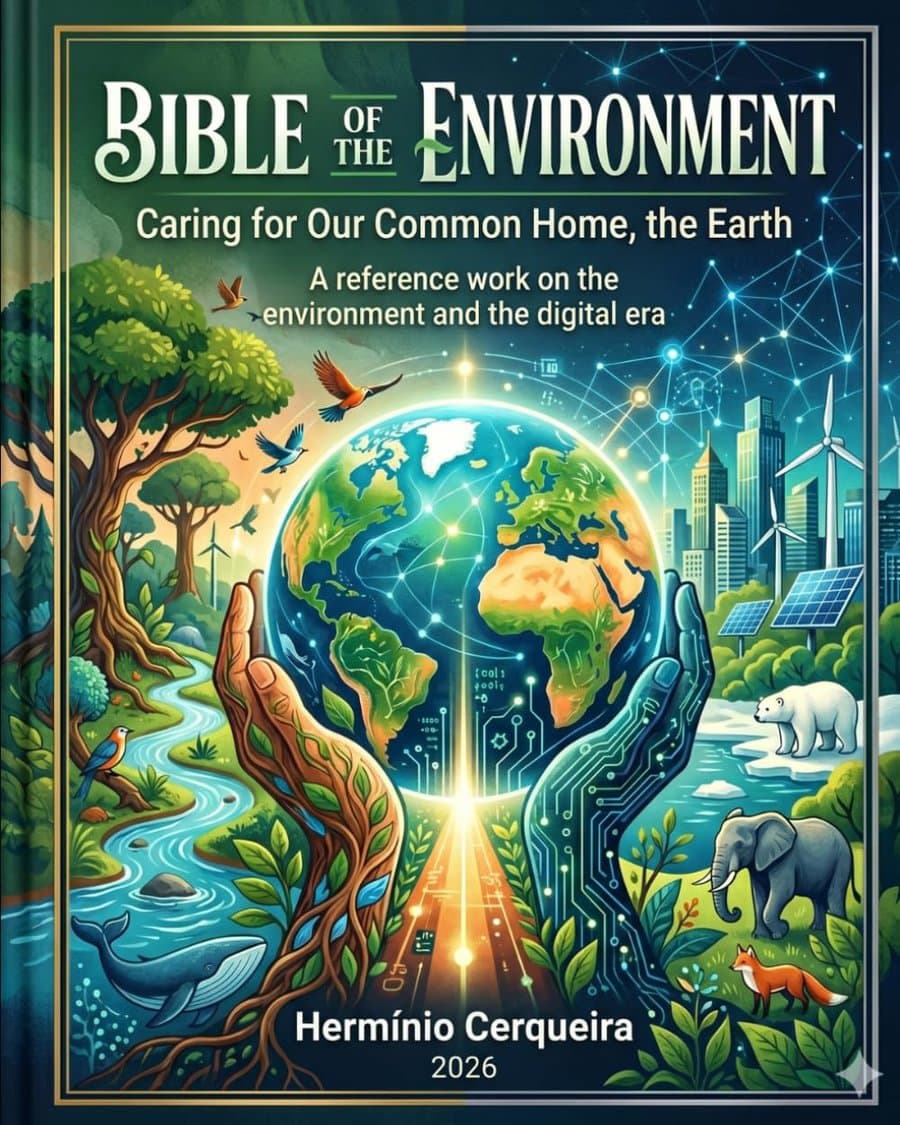
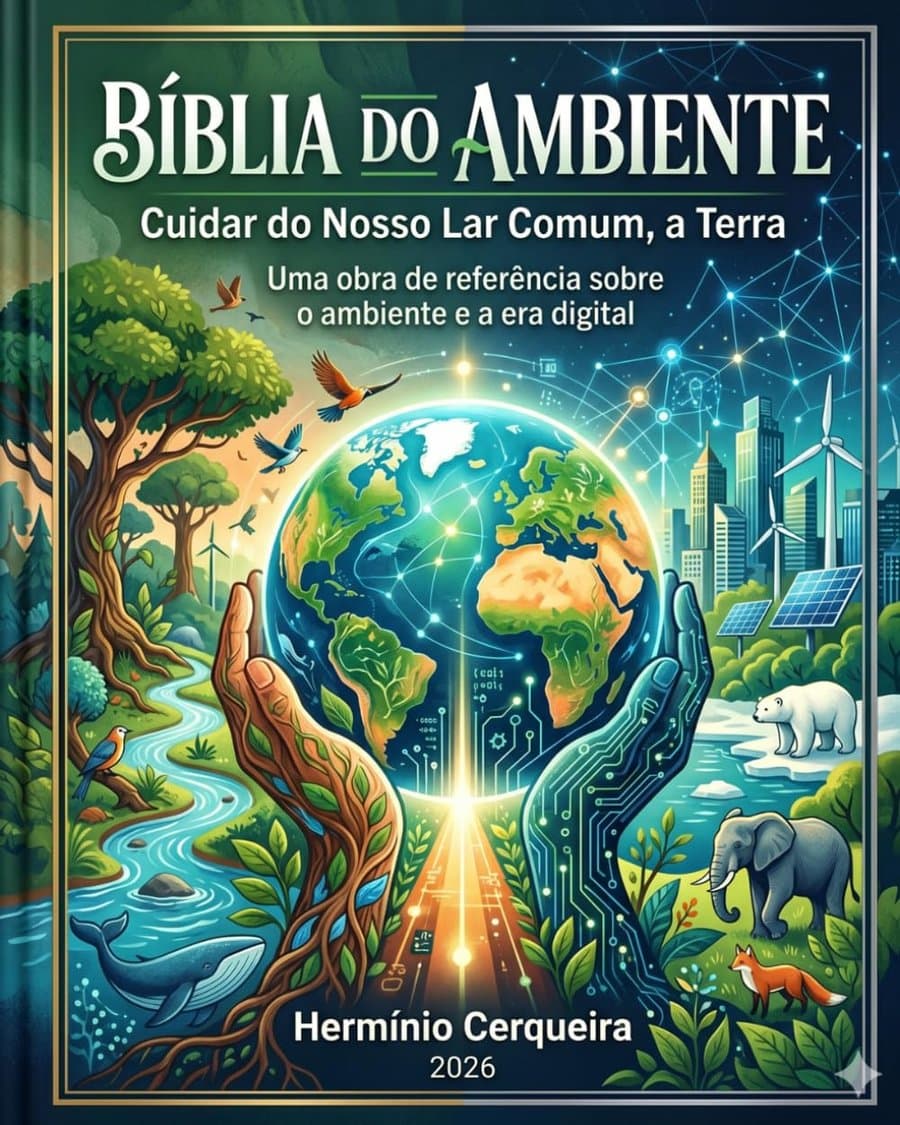
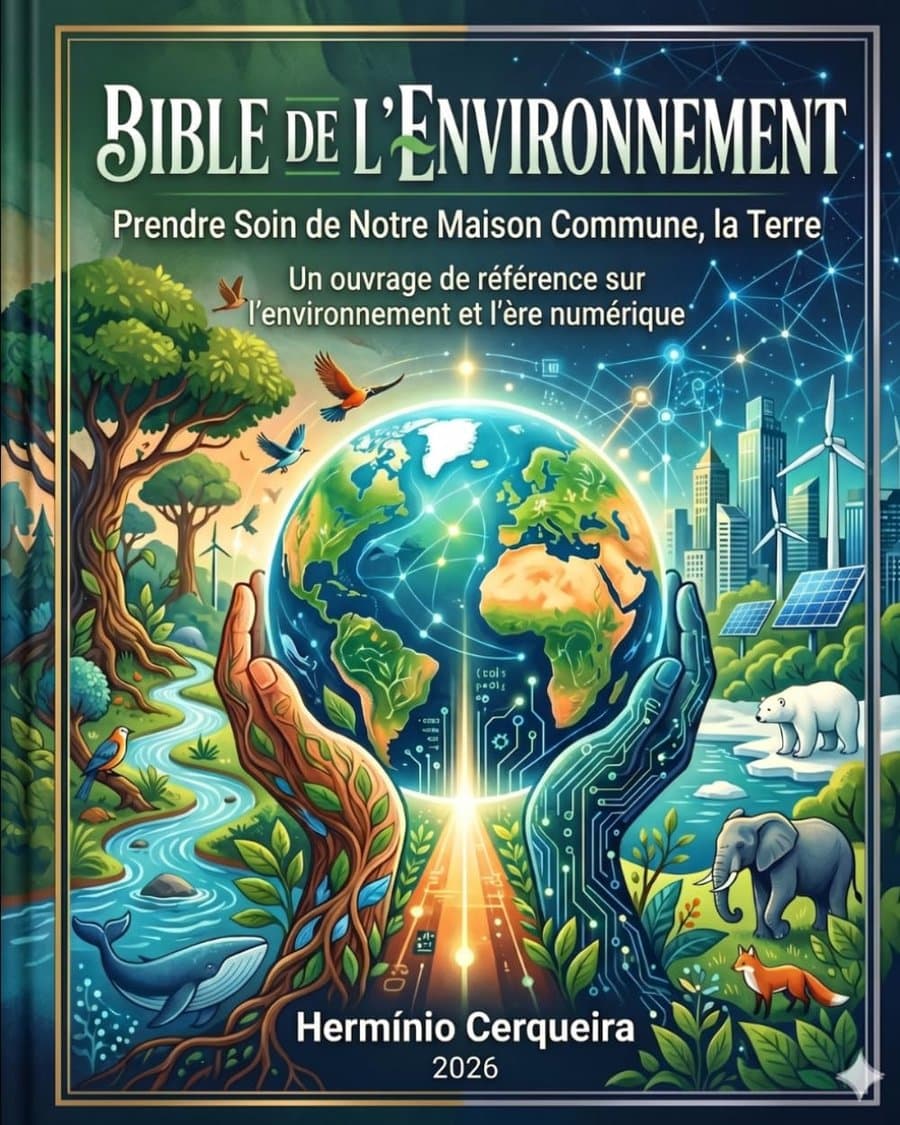
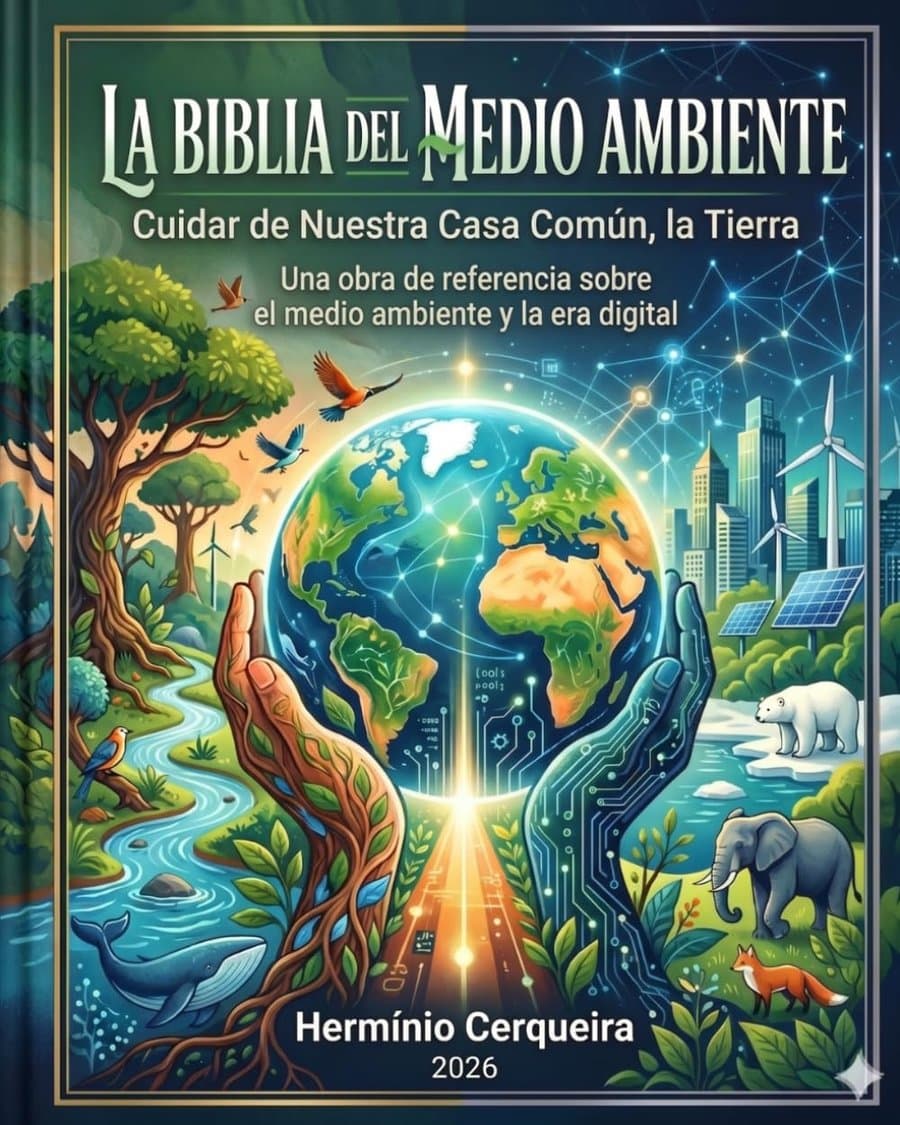
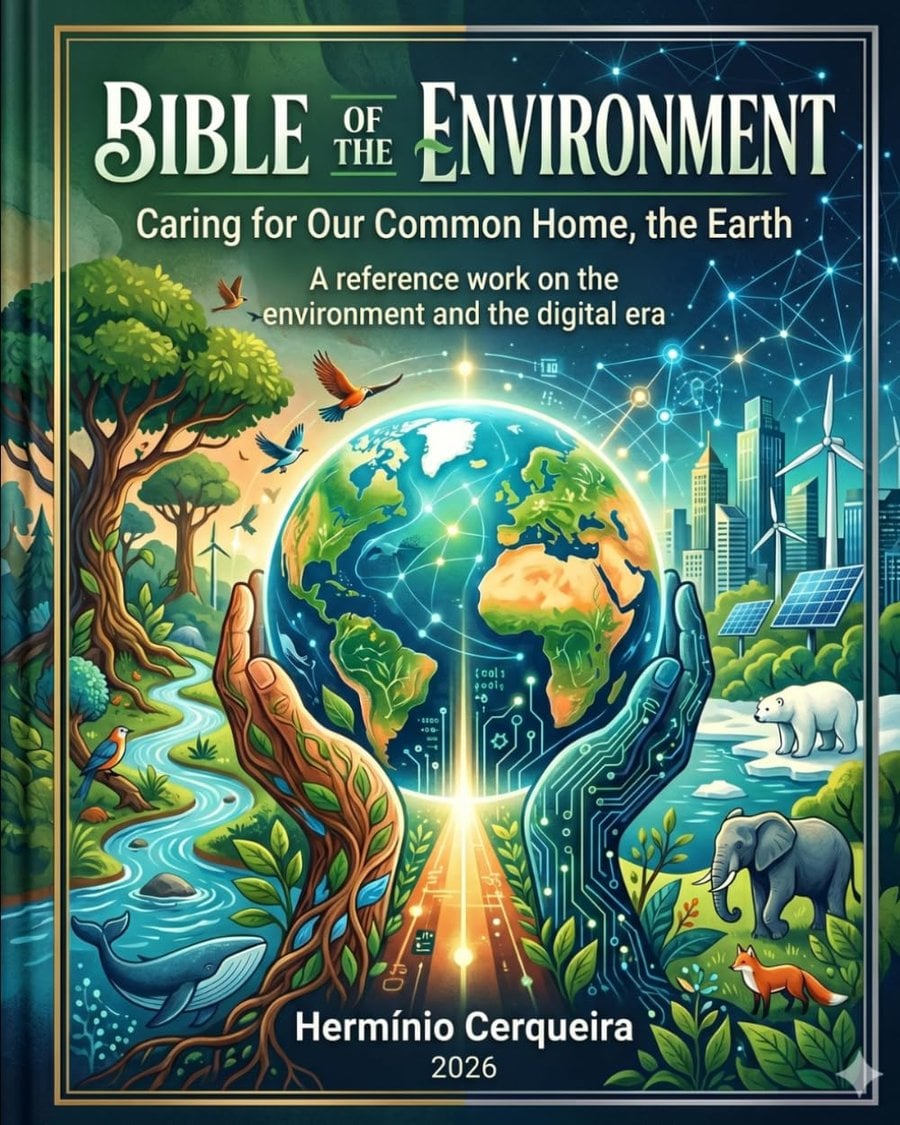
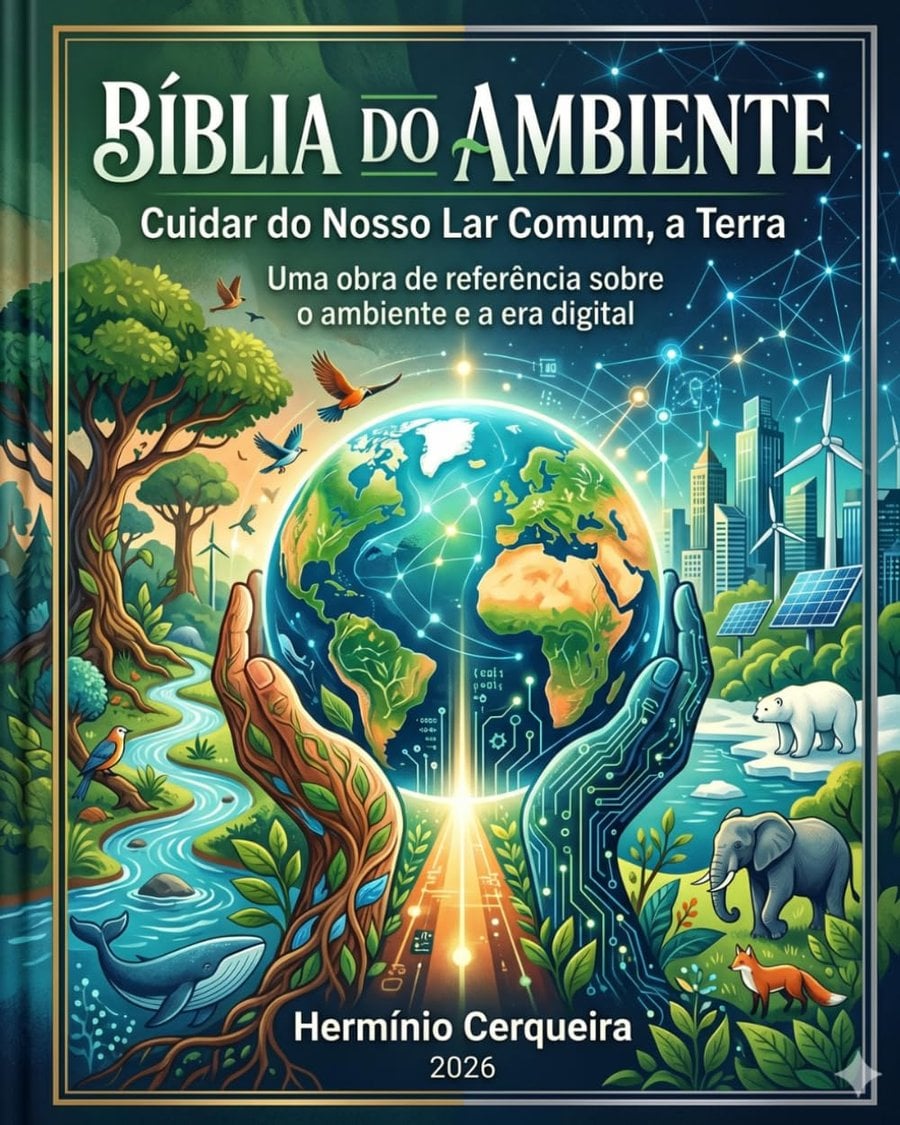
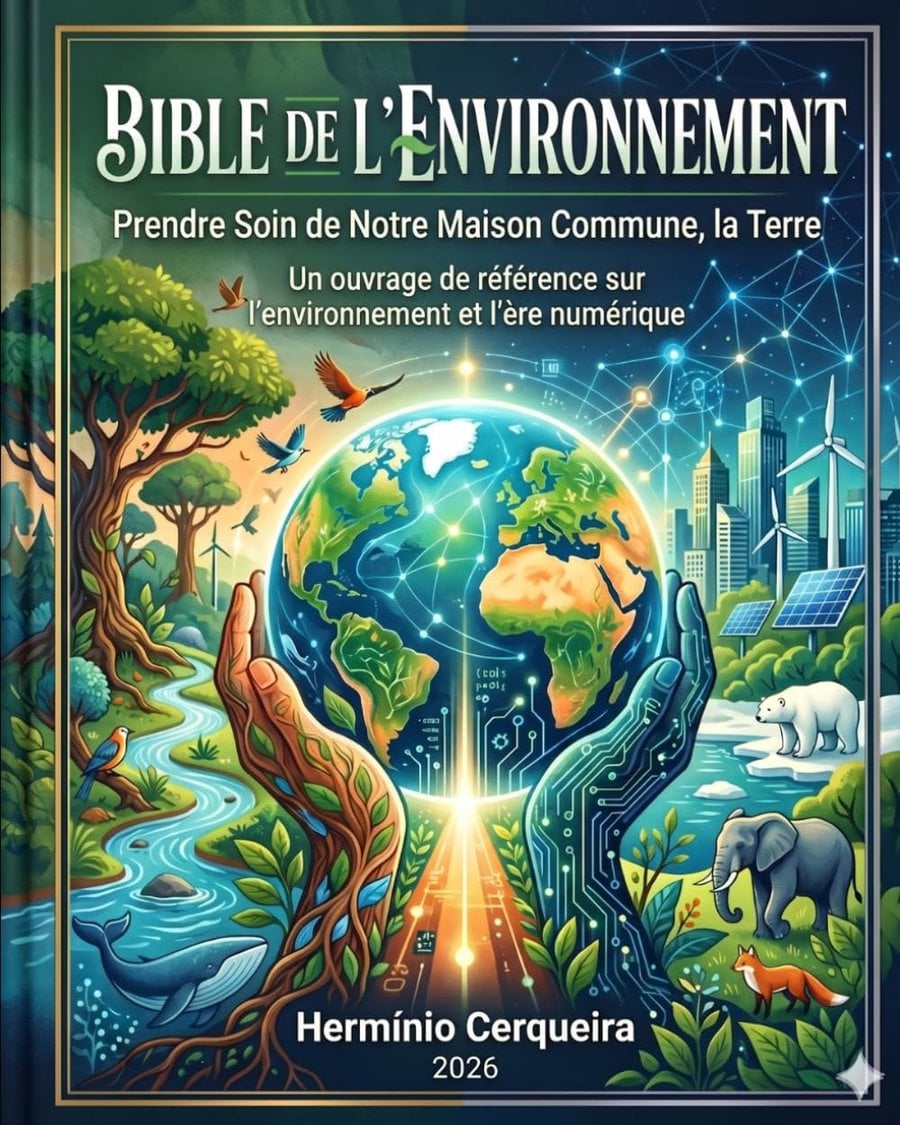
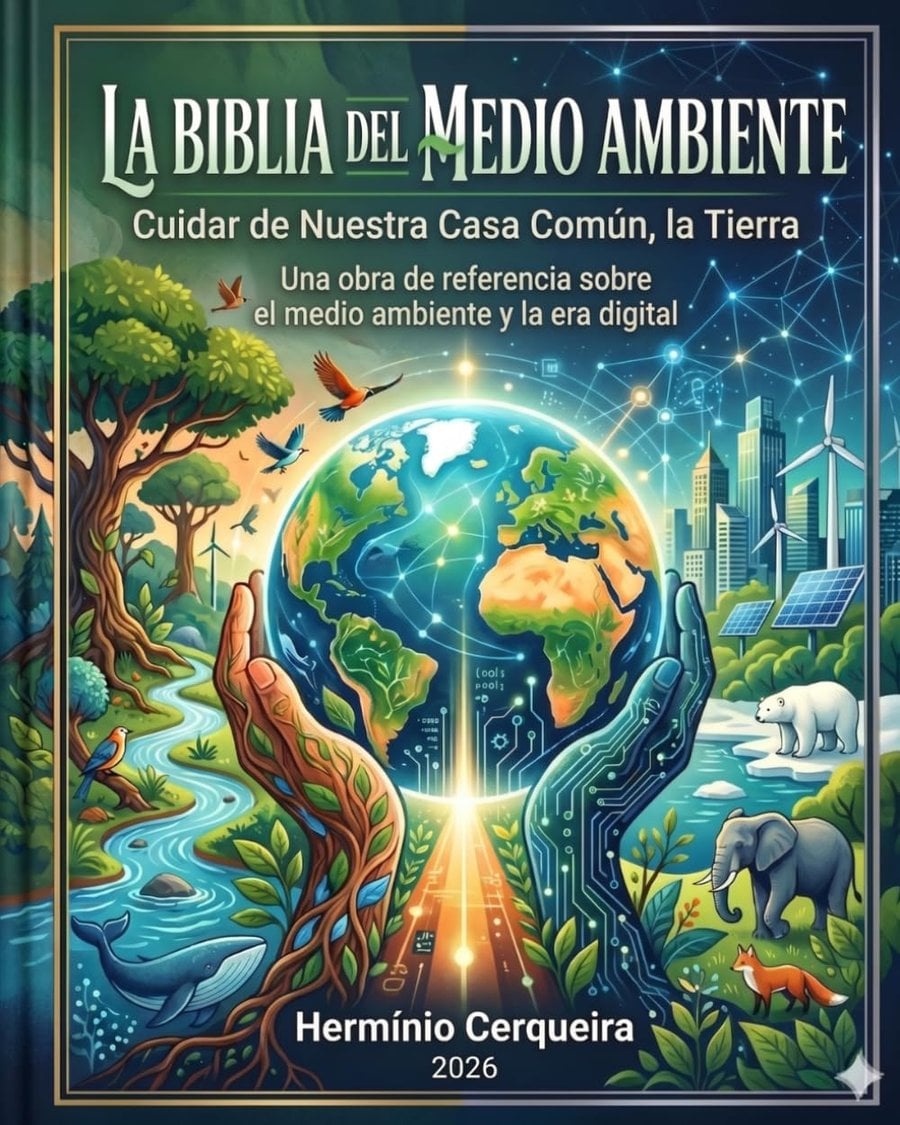
Environmental BibleA Bíblia do AmbienteLa Bible de l’environnementLa Biblia del Medio Ambiente
Caring for Our Common Home, the Earth
Cuidar do Nosso Lar Comum, a Terra
Prendre soin de notre maison commune, la Terre
Cuidando nuestra casa común, la Tierra
“nomear mal o que usamos é a primeira rendição”
- Pages
- 592 pages
- ISBN
- ISBN 979-8183604733
- Published
- Formats
- Kindle and paperback
- Pages
- 626 pages
- ISBN
- ISBN 979-8183601633
- First published
- Formats
- Kindle and paperback
- Pages
- 659 pages
- ISBN
- ISBN 979-8183636734
- Published
- Formats
- Kindle and paperback
- Pages
- 651 pages
- ISBN
- ISBN 979-8183638837
- Published
- Formats
- Kindle and paperback
About the book
Text published with the English edition (Amazon).
"The Bible of the Environment — Caring for Our Common Home, the Earth" is a fundamental work, hybrid in its subject matter: it focuses on the Earth and integrates, in an original way, the environmental footprint of the digital age — the energy and water of data centers, artificial intelligence, and the geopolitics of critical minerals. It was written from scratch, in Portuguese from Portugal and in APA 7 format, without any copying of the sources, which served only as informational raw material and were rewritten in the author's own words.
The work is organized into preliminaries, a general introduction, six thematic parts with twenty-seven chapters, a general conclusion, and a final critical apparatus—bibliography, glossary, and index. Each part underwent factual verification and linguistic and orthographic revision before compilation, according to source validation criteria based on four filters: authority, evidence, timeliness, and consistency. The Earth we inherited is not the same one we will leave behind. Something profound has changed in the last two centuries: the rate at which humankind transforms the biosphere has, for the first time in geological history, surpassed the planet's own capacity for regeneration. In this context, the Environmental Bible arises from the conviction that understanding the ecological crisis of the 21st century requires a perspective that goes beyond the natural sciences or isolated public policies. It also requires confronting the digital dimension of contemporary existence—the algorithms that shape perceptions, the platforms that define agendas, the data flows that consume energy and extract resources. This work aims to be a rigorous and accessible reference tool, capable of articulating scientific knowledge with ethical, philosophical, and cultural reflection, uniting the tradition of environmental thought with the radical novelty of the digital age. The reader will find here not a manifesto, but a cartography of what is at stake—and what can still be done.
---
Summary
The Environmental Bible — Caring for Our Common Home, Earth is a seminal encyclopedic and essayistic reference work that addresses the planetary ecological crisis in its dual dimension: biophysical and digital. Starting from the scientific foundations established by the Earth system — planetary boundaries, biogeochemical cycles, biodiversity, climate, and oceanography — the work progressively advances to the socio-technical systems that condition human responses to the environmental emergency.
The approach is deliberately hybrid. It combines climate science, ecology, international environmental law, ecological economics, philosophy of nature, and critical digital studies. It recognizes that the ecological transition and the digital transition are inseparable: cloud computing, artificial intelligence, global supply chains, and the attention economy have direct material impacts on the planet's metabolism, while digital tools constitute indispensable instruments for environmental monitoring, modeling, and governance.
The work is structured in six parts. Part One establishes the scientific foundations of the crisis: from the Anthropocene to the planetary boundaries defined by Rockström et al. Part Two examines the major biomes and their conservation status. Part Three analyzes global environmental governance, from the Rio de Janeiro Accords to the Paris Agreement and the Kunming-Montreal Global Biodiversity Framework. Part Four addresses ecological economics and just transition models. Part Five explores the intersection between digital technology and the environment, including the carbon footprint of the internet, data mining, and the promises and limitations of green AI. Part Six proposes an ethics of planetary care, integrating contributions from philosophy, religious traditions, and political ecology.
Excerpt
«Bíblia do Ambiente — Cuidar do Nosso Lar Comum, a Terra» é uma obra de fundo, híbrida no seu objeto: tem a Terra como centro e integra, de forma original, a pegada ambiental da era digital — a energia e a água dos centros de dados, a inteligência artificial e a geopolítica dos minerais críticos. Foi escrita de raiz, em português de Portugal e em norma APA 7, sem qualquer cópia das fontes, que serviram apenas de matéria-prima informativa e foram reescritas por palavras próprias.
A obra organiza-se em preliminares, introdução geral, seis partes temáticas com vinte e sete capítulos, conclusão geral e um aparato crítico final — bibliografia, glossário e índice remissivo.
— A Bíblia do Ambiente
Original text in Portuguese.
Editorial note
Source: publisher’s description of the Portuguese edition (Amazon).
Index of editions
One line per edition, in the language in which it was published. Choose your Amazon store once; it applies to every edition.
English edition:
Environmental Bible
592 pagesKindle and paperback
Portuguese edition:
A Bíblia do Ambiente
626 pagesKindle and paperback
French edition:
La Bible de l’environnement
659 pagesKindle and paperback
Spanish edition:
La Biblia del Medio Ambiente
651 pagesKindle and paperback
- In the Amazon stores, each link uses the edition’s own code (ASIN); availability in each country is managed by Amazon.
- In Portugal, buy from Amazon Spain: there is no Portuguese Amazon store.
Critical reading — “A Obra Comentada” (2026)
A third-person critical reading, reproduced from “A Obra Comentada,” the annotated catalog of the work published by the author himself. It is not a press review.
Original text in Portuguese.
Não foi localizado manuscrito desta obra no arquivo consultado; a presente nota baseia-se no catálogo do autor e no dossier oficial que a integra no terceiro eixo, onde figura como título publicado em três línguas (português, inglês e francês). A prudência aconselha, por isso, uma caracterização mais breve do que a dos restantes volumes.
Segundo o dossier de autor, A Bíblia do Ambiente completa o arco do eixo europeu alargando o contrato social proposto na Economia da Dignidade «à casa que o alberga»: se aquele livro desloca a pergunta económica do crescimento para a dignidade, este desloca-a da sociedade para o planeta que a sustenta. O subtítulo — Cuidar da Nossa Casa Comum, a Terra — inscreve deliberadamente a obra na linhagem do ecologismo integral contemporâneo, com o seu eco reconhecível do vocabulário da Laudato Si', embora transposto para o registo laico e analítico que caracteriza o ensaísmo do autor.
O elemento mais original assinalado pelo catálogo é a atenção pioneira à pegada material da era digital: a energia e a água consumidas pelos centros de dados e pela inteligência artificial. Com este gesto, o livro liga o eixo ambiental aos eixos cibernético e tecnológico da obra, recusando a ficção de uma «nuvem» imaterial — coerente com a tese, cara ao autor, de que «nomear mal o que usamos é a primeira rendição». A preocupação climática atravessa, aliás, todo o eixo: a Autonomia Estratégica trata a transição energética como primeira política industrial e de segurança da Europa, e a Economia da Dignidade faz da sustentabilidade o quarto pilar do novo contrato social, documentando o primeiro triénio acima de 1,5 graus. É legítimo ler A Bíblia do Ambiente como o desenvolvimento monográfico dessa preocupação — o volume onde a casa comum deixa de ser condição de fundo para se tornar objecto próprio. Fica registada, para edição futura deste volume comentado, a necessidade de cotejar esta nota com o texto integral da obra.
Other expressions quoted from the book
“à casa que o alberga”“nuvem”
Source: «A Obra Comentada» (Sintra, Julho de 2026) — comentário crítico
Book details
- Genre
- Essay
- Axis of the work
- Europe, Portugal, and Political Economy
- First published
- Pages
- 592 (English edition)
- Formats
- Kindle e-book · Paperback
- Languages
- 4 — Portuguese, English, French, and Spanish
- ISBN
- 979-8183604733
You may also like
 Europe, Portugal, and Political Economy
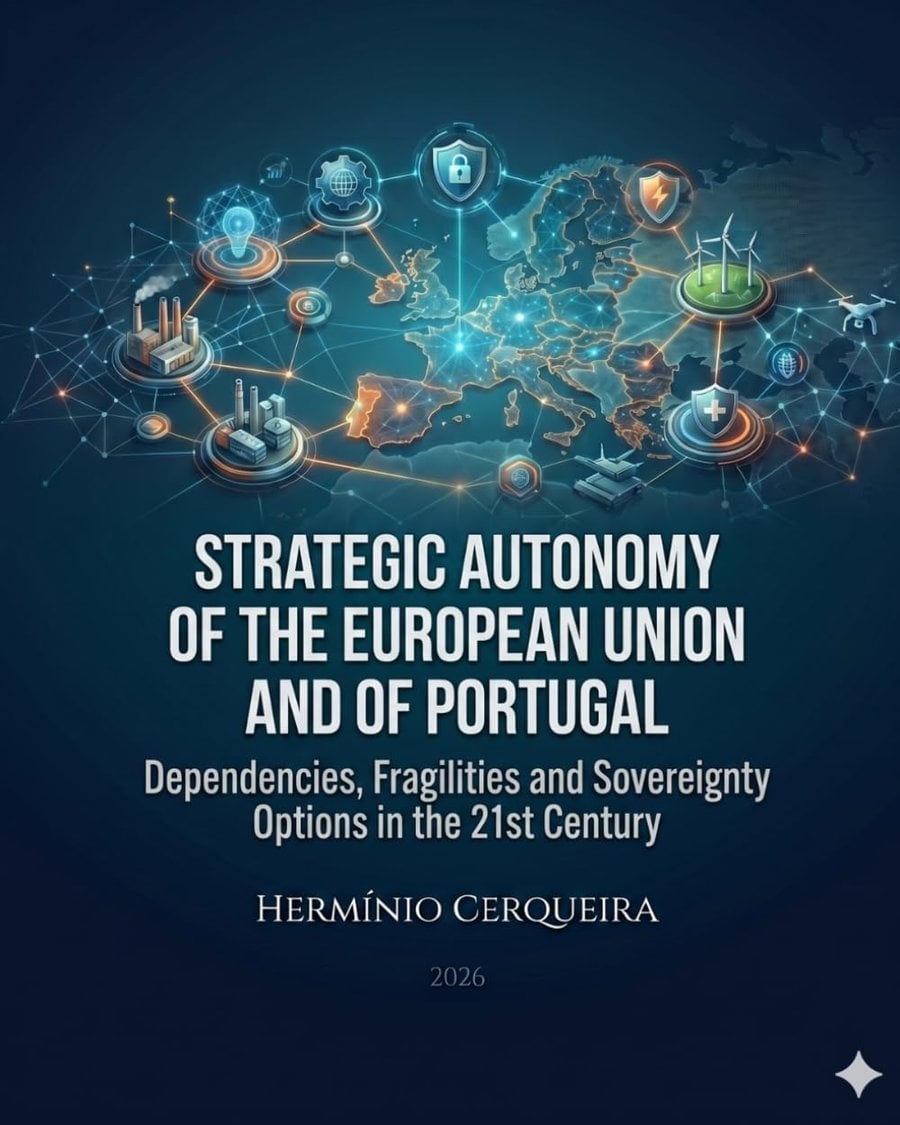
Strategic Autonomy from the European Union and from Portugal
2026 · 704 pages
 Europe, Portugal, and Political Economy
Treatise on the Multidimensional Strategic Defence of Europe
2026 · 657 pages