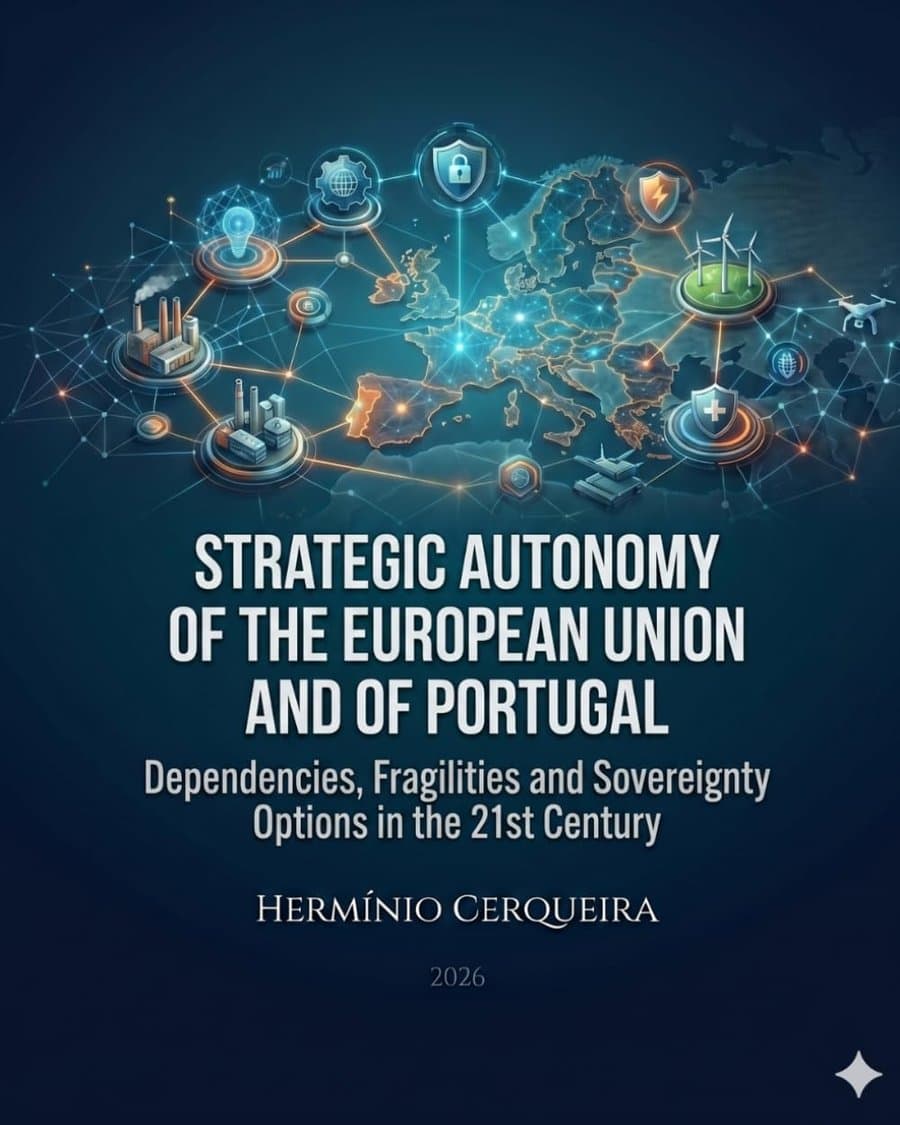
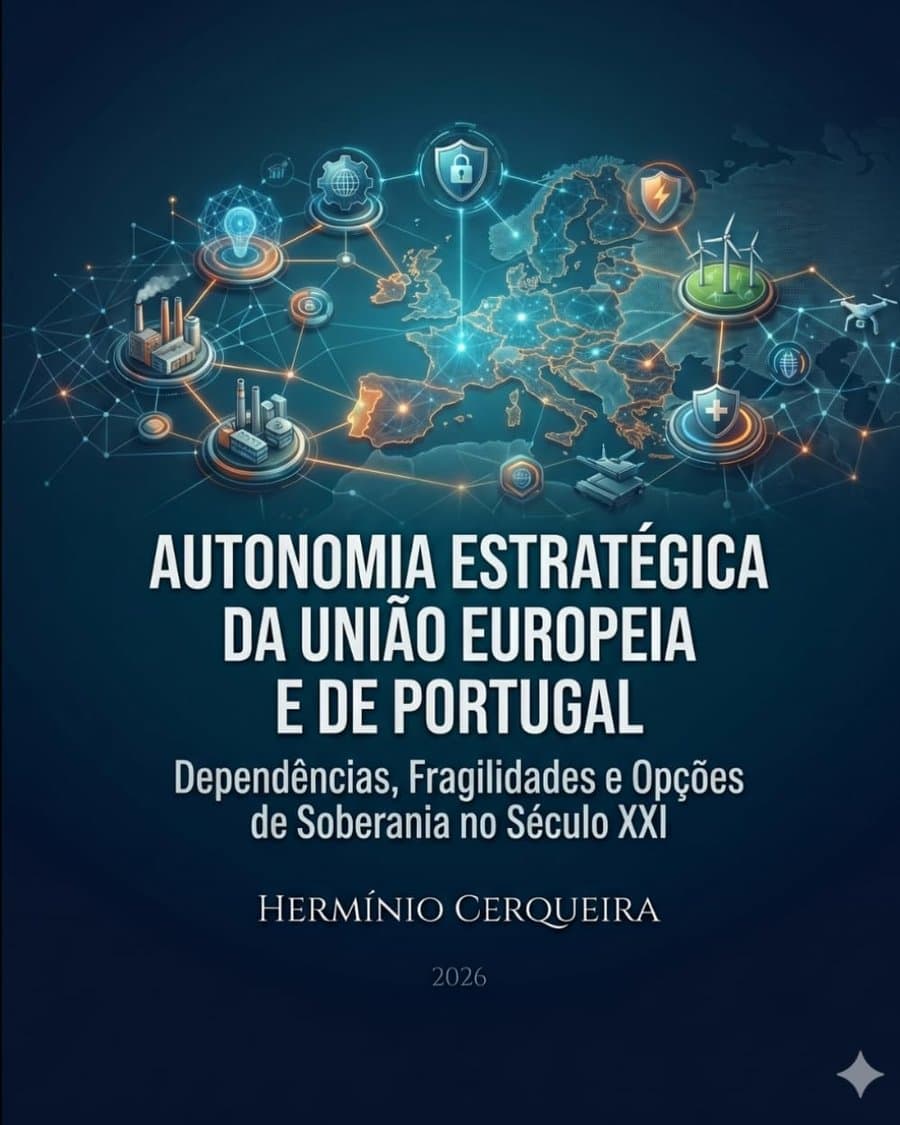
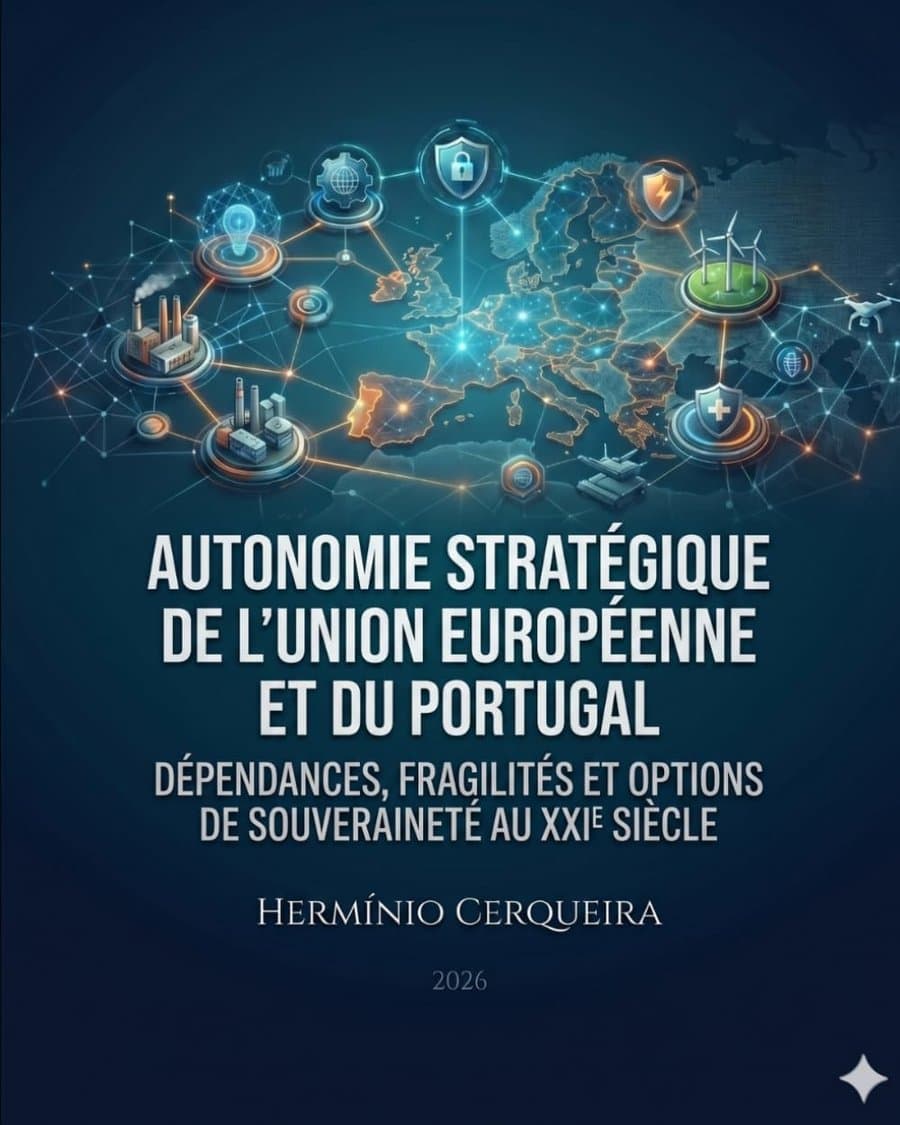
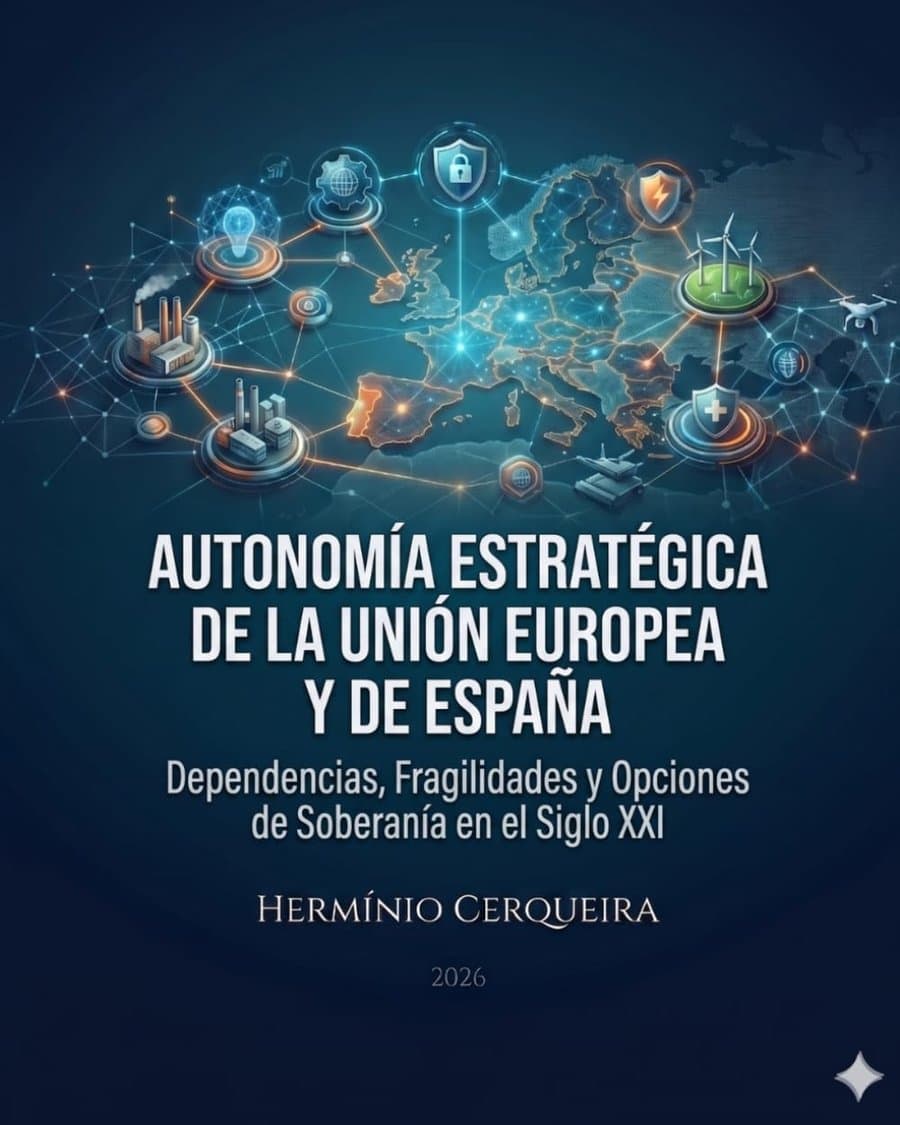
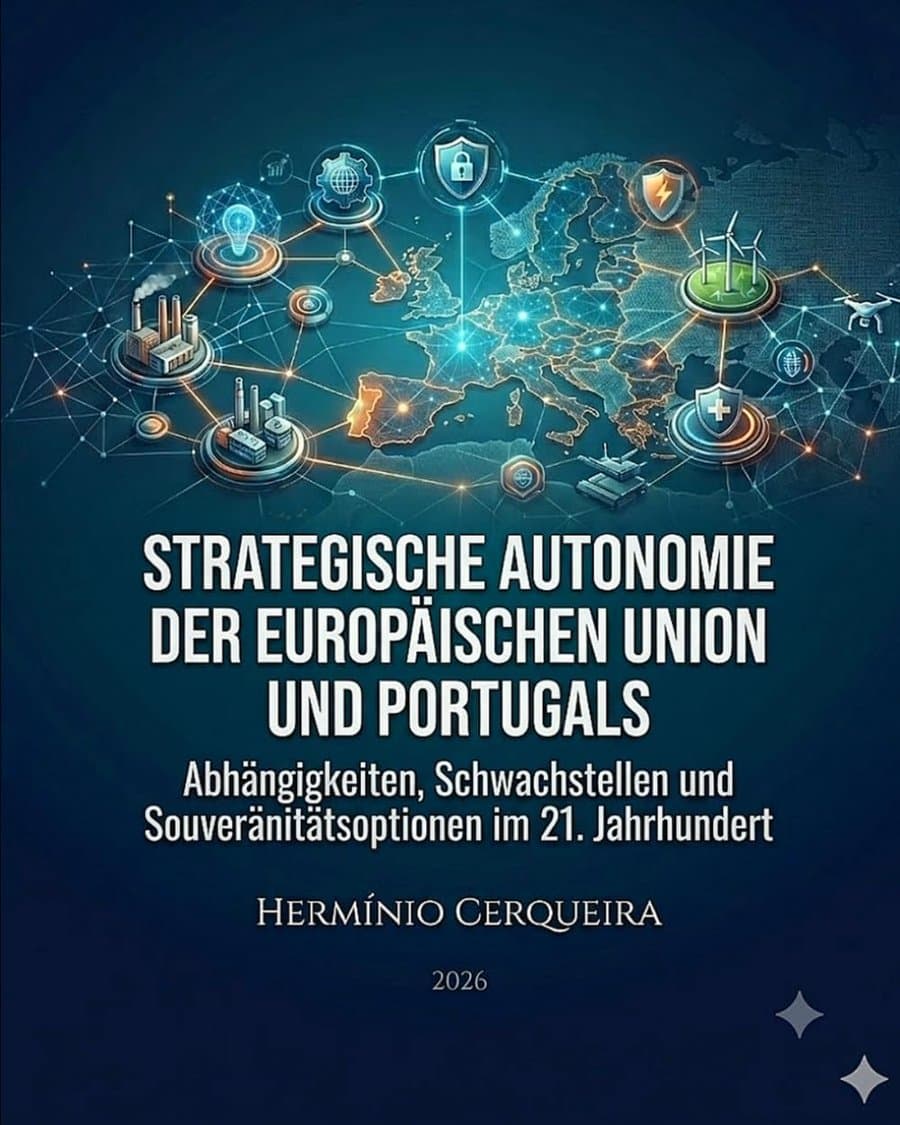
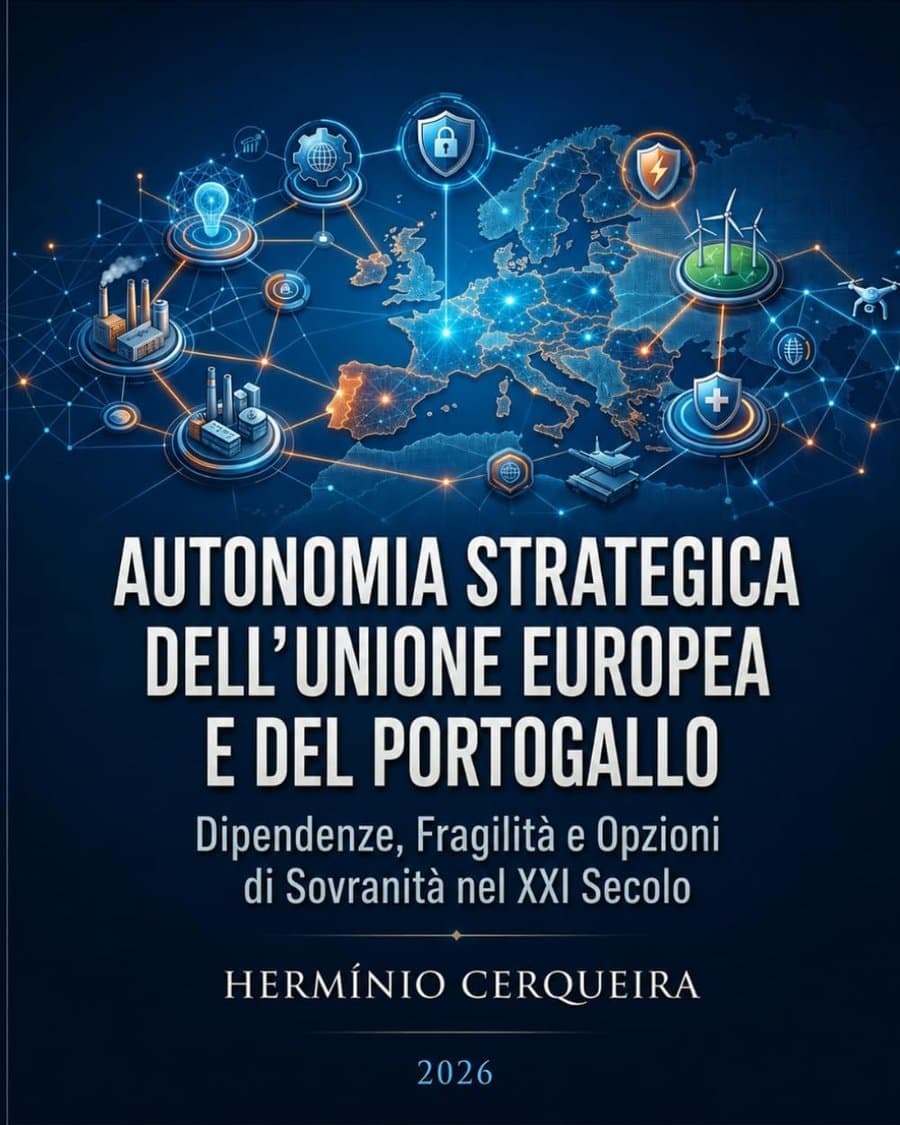
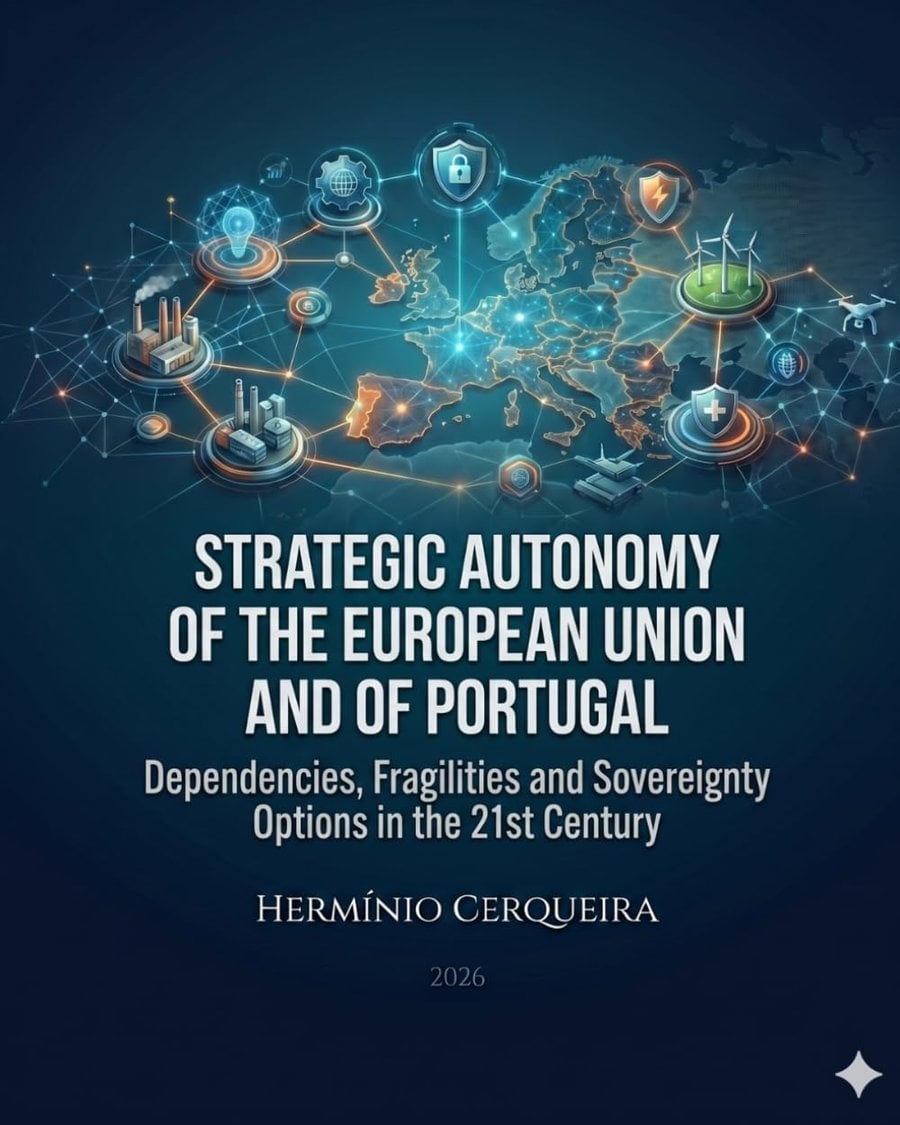
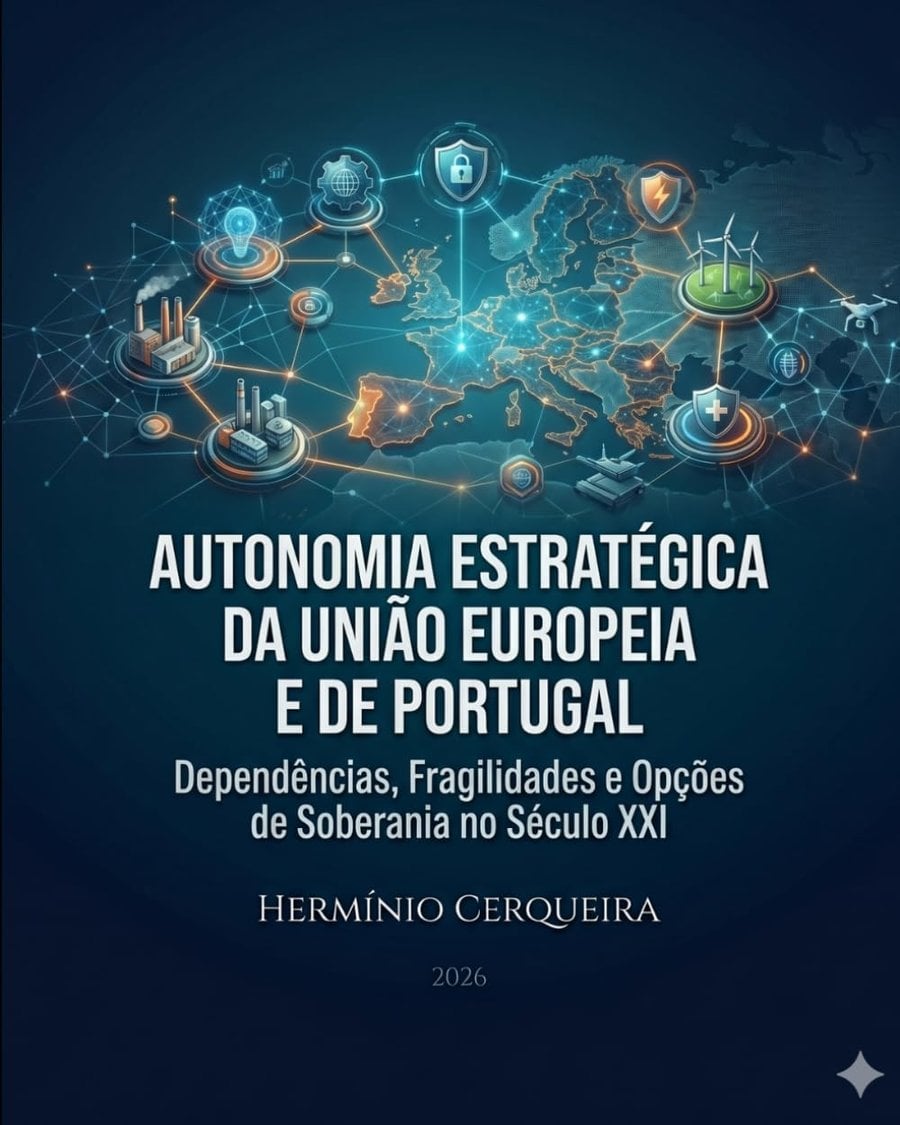
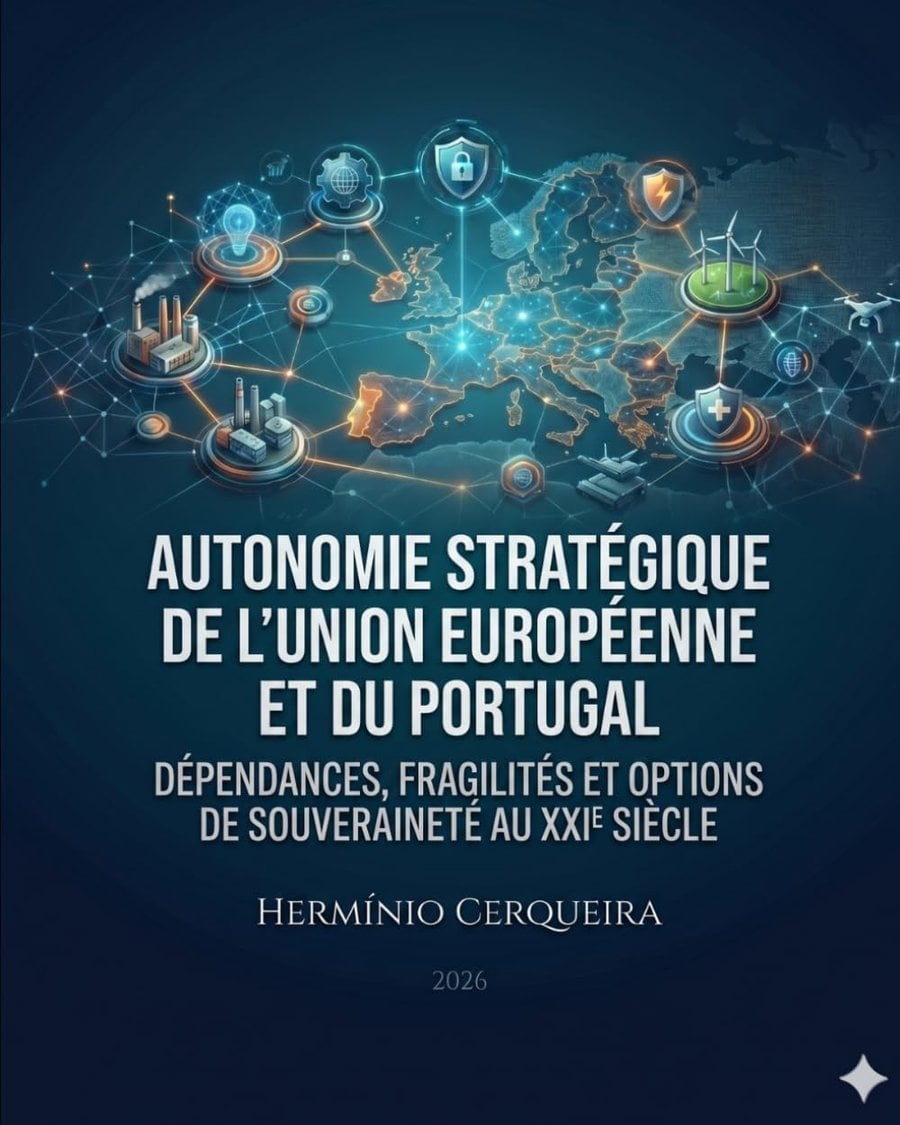
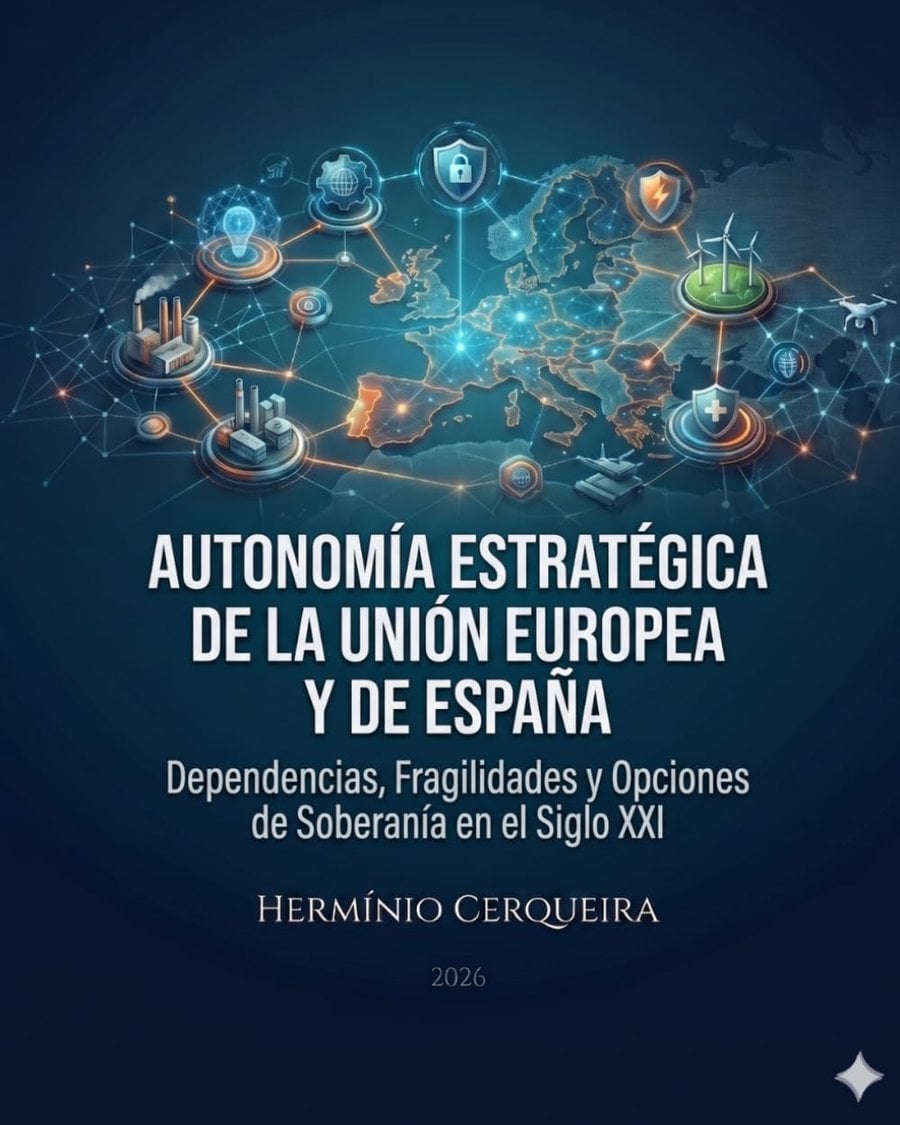
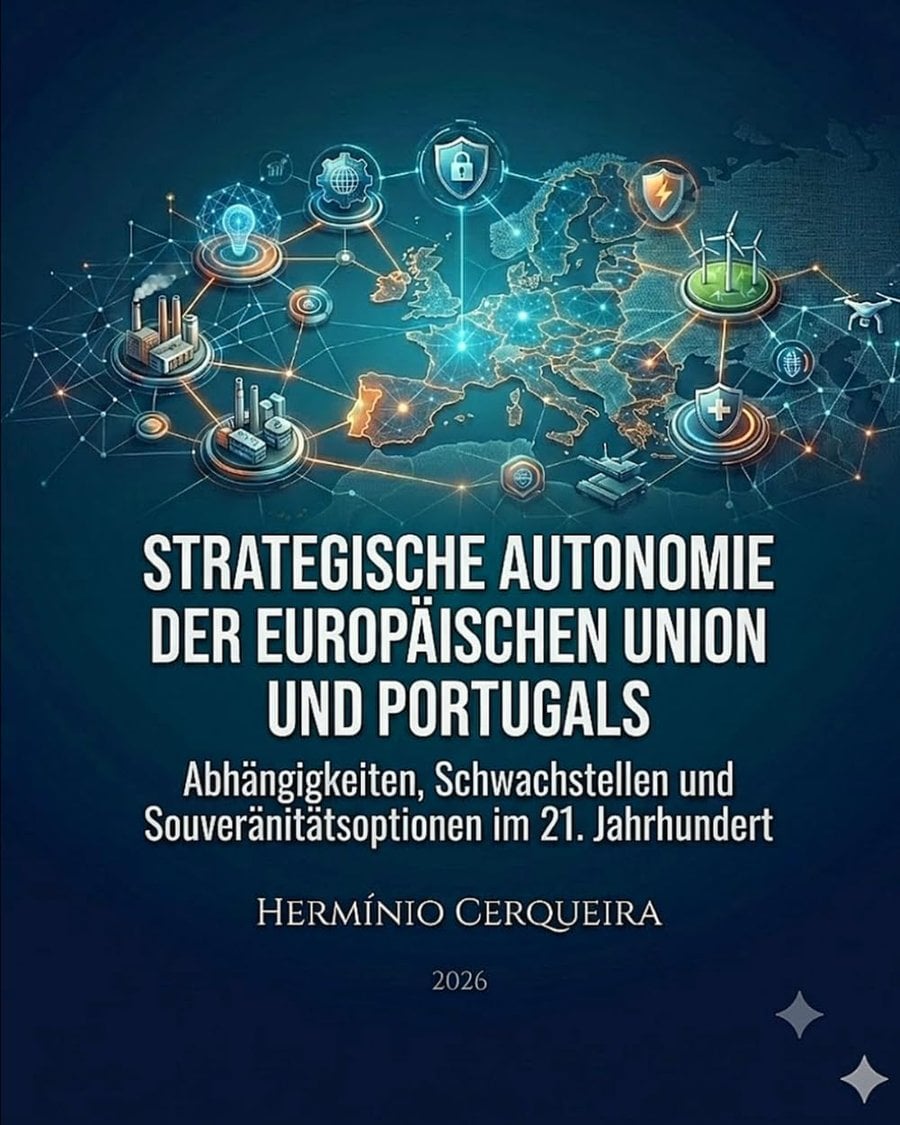
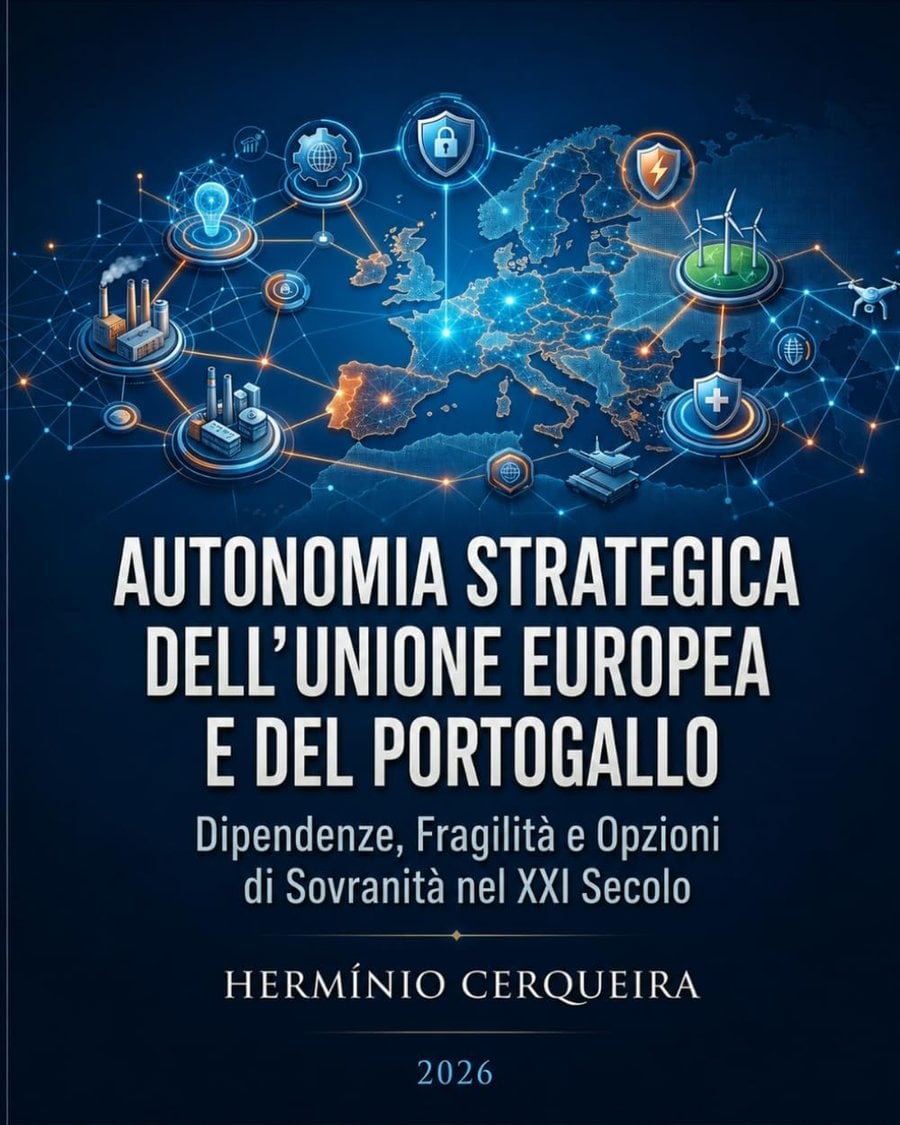
Strategic Autonomy from the European Union and from PortugalAutonomia Estratégica da União Europeia e de PortugalAutonomie stratégique de l’Union européenne et du PortugalAutonomía estratégica de la Unión Europea y desde PortugalStrategische Autonomie aus der Europäischen Union und aus PortugalAutonomia strategica dall’Unione europea e dal Portogallo
Dependencies, Weaknesses, and Options of Sovereignty in the 21st Century
Dépendances, faiblesses et options de la souveraineté au XXIe siècle
Dependencias, debilidades y opciones de la soberanía en el siglo XXI
Abhängigkeiten, Schwächen und Optionen der Souveränität im 21. Jahrhundert
Dipendenze, punti deboli e opzioni della sovranità nel XXI secolo
“O livro fecha; o trabalho começa.”
- Pages
- 704 pages
- ISBN
- ISBN 979-8199397940
- Published
- Formats
- Kindle and paperback
- Pages
- 726 pages
- ISBN
- ISBN 979-8199390354
- First published
- Formats
- Kindle and paperback
- Pages
- 781 pages
- ISBN
- ISBN 979-8199482301
- Published
- Formats
- Kindle and paperback
- Pages
- 762 pages
- ISBN
- ISBN 979-8181792876
- Published
- Formats
- Kindle and paperback
- Pages
- 807 pages
- ISBN
- ISBN 979-8180744456
- Published
- Formats
- Kindle and paperback
- Pages
- 749 pages
- ISBN
- ISBN 979-8189648182
- Published
- Formats
- Kindle and paperback
About the book
Text published with the English edition (Amazon).
In memory of those who understood, before many others,
that European sovereignty is not nostalgia,
but the only way to maintain, in the 21st century,
The possibility of thinking about the future.
A Europe caught between urgency and hesitation.
A word that came from the sea.
There are political expressions that enter the public vocabulary through the door of the archives, slowly, almost silently, and there are others that erupt from a specific place, a date, a handshake that will later be revealed as historic. European strategic autonomy belongs to this second family. It was born, symbolically, by the sea: in the fortified port of Saint-Malo, in the far north of Brittany, on a cold weekend in December 1998. It was there that French President Jacques Chirac and British Prime Minister Tony Blair met to recognize, for the first time jointly and formally, that the European Union should possess the capacity for autonomous action, supported by reliable military forces, the means to decide how to employ them, and the will to do so, in order to respond to international crises. (CVCE, 1998). At that moment, two countries that historically disagreed on almost everything in the field of European defense opened a crack of understanding. From this crack would emerge, over two and a half decades, an entire conceptual, institutional, and political edifice.
It is tempting, today, to look back at Saint-Malo as the inaugural moment of an inevitable trajectory. But the truth is that, at the end of 1998, nobody foresaw the exact sequence that would follow. The Cologne European Council came in June 1999, and the Helsinki Council in December of the same year, the latter with its Headline Goal of sixty thousand personnel. Then came the European Security and Defence Policy (ESDP), institutionalized in 2003, and its transformation into a Common Security and Defence Policy (CSDP) with the Treaty of Lisbon. After that, the 2016 Global Strategy, the Permanent Structured Cooperation launched in 2017, the European Defence Fund in 2018, and the Strategic Compass in 2022. Finally, the White Paper on European Defence – Readiness 2030, presented by Kaja Kallas and Andrius Kubilius in March 2025 (European Commission, 2025). Saint-Malo was a promise that took a long time to be fulfilled, but whose semantics have never left the European vocabulary. There is something symptomatic in the maritime origin of the expression. In European political geography, the sea is simultaneously a border and a bridge, a starting point and a line of defense. Strategic autonomy, like the sea, is ambiguous: it can separate or it can bring together, it can be an obstacle or a path. Nothing about it is univocal. Saint-Malo did not declare a rupture with the Atlantic Alliance; on the contrary, it reaffirmed that NATO continued to be the foundation of the collective defense of its members. But it hinted, with almost liturgical care, that Europe should be able to act even when the United States did not want to or could not act. This hint, irrelevant in the complacent context of the post-Cold War era, would become, little more than a quarter of a century later, the central issue of European foreign policy. oday, in May 2026, this book is being written at a time when that insinuation has become an emergency. Donald Trump's return to the White House in January 2025, the prolonged war in Ukraine, and the protectionist shift in the global economy are compounded by the technological fracture between the United States and China, the militarization of space, and the increasing instrumentalization of critical value chains. All of this contributes to making what was a conjectural hypothesis in 1998 a condition for political survival today. The question is no longer whether Europe should become strategically autonomous...
Index of editions
One line per edition, in the language in which it was published. Choose your Amazon store once; it applies to every edition.
English edition:
Strategic Autonomy from the European Union and from Portugal
704 pagesKindle and paperback
Portuguese edition:
Autonomia Estratégica da União Europeia e de Portugal
726 pagesKindle and paperback
French edition:
Autonomie stratégique de l’Union européenne et du Portugal
781 pagesKindle and paperback
Spanish edition:
Autonomía estratégica de la Unión Europea y desde Portugal
762 pagesKindle and paperback
German edition:
Strategische Autonomie aus der Europäischen Union und aus Portugal
807 pagesKindle and paperback
Italian edition:
Autonomia strategica dall’Unione europea e dal Portogallo
749 pagesKindle and paperback
- In the Amazon stores, each link uses the edition’s own code (ASIN); availability in each country is managed by Amazon.
- In Portugal, buy from Amazon Spain: there is no Portuguese Amazon store.
Critical reading — “A Obra Comentada” (2026)
A third-person critical reading, reproduced from “A Obra Comentada,” the annotated catalog of the work published by the author himself. It is not a press review.
Original text in Portuguese.
É o livro mais traduzido de todo o catálogo — publicado em português, inglês, francês, espanhol e alemão, como se o autor tivesse querido que a sua tese europeia circulasse em todas as grandes línguas da própria União — e é também, porventura, o mais arquitectado. Concluído em Lisboa em Maio de 2026, o volume abre com uma evocação de Saint-Malo, o porto bretão onde, em Dezembro de 1998, Chirac e Blair reconheceram pela primeira vez que a União Europeia devia possuir capacidade de acção autónoma. Dessa «palavra que veio do mar» o autor extrai toda a genealogia do conceito — de Colónia e Helsínquia ao Tratado de Lisboa, da Estratégia Global de Mogherini à Bússola Estratégica e ao Livro Branco Readiness 2030 — para chegar ao momento presente, em que o regresso de Trump à Casa Branca transformou uma insinuação diplomática em condição de sobrevivência política.
A tese central é enunciada com rara disciplina em três proposições articuladas: a autonomia estratégica europeia é necessária — não como opção entre outras, mas como condição de sobrevivência do projecto europeu; é incompleta — porque a sua arquitectura institucional, industrial e orçamental está longe das exigências do contexto; e é assimétrica — porque distribui custos e benefícios de modo profundamente desigual entre Estados-membros, com Portugal a ocupar nesse mapa uma posição que exige reflexão própria. Esta terceira proposição é, reconhece o autor, a menos discutida na literatura e a mais original do livro: enquanto a maior parte das análises trata a União como entidade homogénea, Cerqueira mostra como o Fundo Europeu de Defesa beneficia massivamente a indústria francesa e deixa «migalhas» à portuguesa. Contra o triunfalismo declarativo, o derrotismo cínico e o federalismo voluntarista — as três tentações que recusa expressamente — o livro lembra que «a soberania não se decreta: conquista-se, exerce-se, paga-se».
A estrutura é enciclopédica e sistemática: uma introdução conceptual, quinze capítulos e uma conclusão em nove andamentos, apoiados numa bibliografia consolidada de centenas de entradas em sistema autor-data. Os capítulos 1 a 9 percorrem, vector a vector, as dependências europeias — defesa (PESCO, CARD, FED, ReArm Europe), energia (REPowerEU, o apagão ibérico de Abril de 2025), indústria e matérias-primas críticas, tecnologia digital e semicondutores, saúde, alimentação e finanças (SWIFT, euro digital, activos russos congelados). Os capítulos 10 a 13 fazem o mesmo exercício para Portugal — os três pilares UE/NATO/CPLP, as Forças Armadas e a emergência da Tekever, Sines e os cabos submarinos, o PRR e a fuga de cérebros. O capítulo 14 formula uma verdadeira doutrina nacional em oito eixos, com proposta de uma Lei de Bases da Autonomia Estratégica, calendário e indicadores; o capítulo 15 ensaia seis cenários prospectivos, da «autonomia reforçada» à «cisão atlântica» de um Trump permanente.
O diálogo intelectual é denso e explícito: as três imagens de Daniel Fiott (responsabilização, precaução, emancipação) fornecem a grelha conceptual; Howorth, Tocci, Biscop, Mölling e Lippert estruturam o debate académico; os relatórios Draghi e Letta de 2024 dão dimensão institucional ao diagnóstico; e, num gesto raro no ensaísmo estratégico português, o autor visibiliza deliberadamente a produção nacional — a revista Nação e Defesa do IDN, os estudos de Mafalda Pinheiro Alves, a EuroDefense Portugal, o IPRI e o ICS. O registo oscila, por escolha assumida de método, entre o técnico e o ensaístico: a autonomia estratégica é «simultaneamente matéria técnica e matéria cívica», e reduzi-la a uma só dimensão seria subtraí-la ao debate democrático ou ao rigor que merece.
No conjunto da obra, este é o livro-charneira do eixo europeu: retoma o diagnóstico das dependências desenvolvido nos livros geopolíticos e antecipa tanto a crítica orçamental do Mito dos 3% como o programa decenal da Esperança Lúcida. A coda literária — o regresso ao mar de Saint-Malo, que é também o mar de Sagres e dos Açores — devolve a matéria técnica à identidade marítima portuguesa e fecha com uma das frases mais citáveis do catálogo: «O livro fecha; o trabalho começa.» Entre o pessimismo dos vencidos e o optimismo dos ingénuos, Cerqueira propõe a serenidade de quem sabe o que está em jogo — e a convicção de que, para um pequeno Estado atlântico, a escolha real não é entre adesão ou recusa à autonomia europeia, mas entre uma adesão passiva e instrumental e uma adesão activa que faça de Portugal coarquitecto, à sua escala, da nova soberania continental.
Quotations from the book
“a soberania não se decreta: conquista-se, exerce-se, paga-se”
“simultaneamente matéria técnica e matéria cívica”
Other expressions quoted from the book
“palavra que veio do mar”“migalhas”“autonomia reforçada”“cisão atlântica”
Source: «A Obra Comentada» (Sintra, Julho de 2026) — comentário crítico
Book details
- Genre
- Essay
- Axis of the work
- Europe, Portugal, and Political Economy
- First published
- Pages
- 704 (English edition)
- Formats
- Kindle e-book · Paperback
- Languages
- 6 — Portuguese, English, French, Spanish, German, and Italian
- ISBN
- 979-8199397940