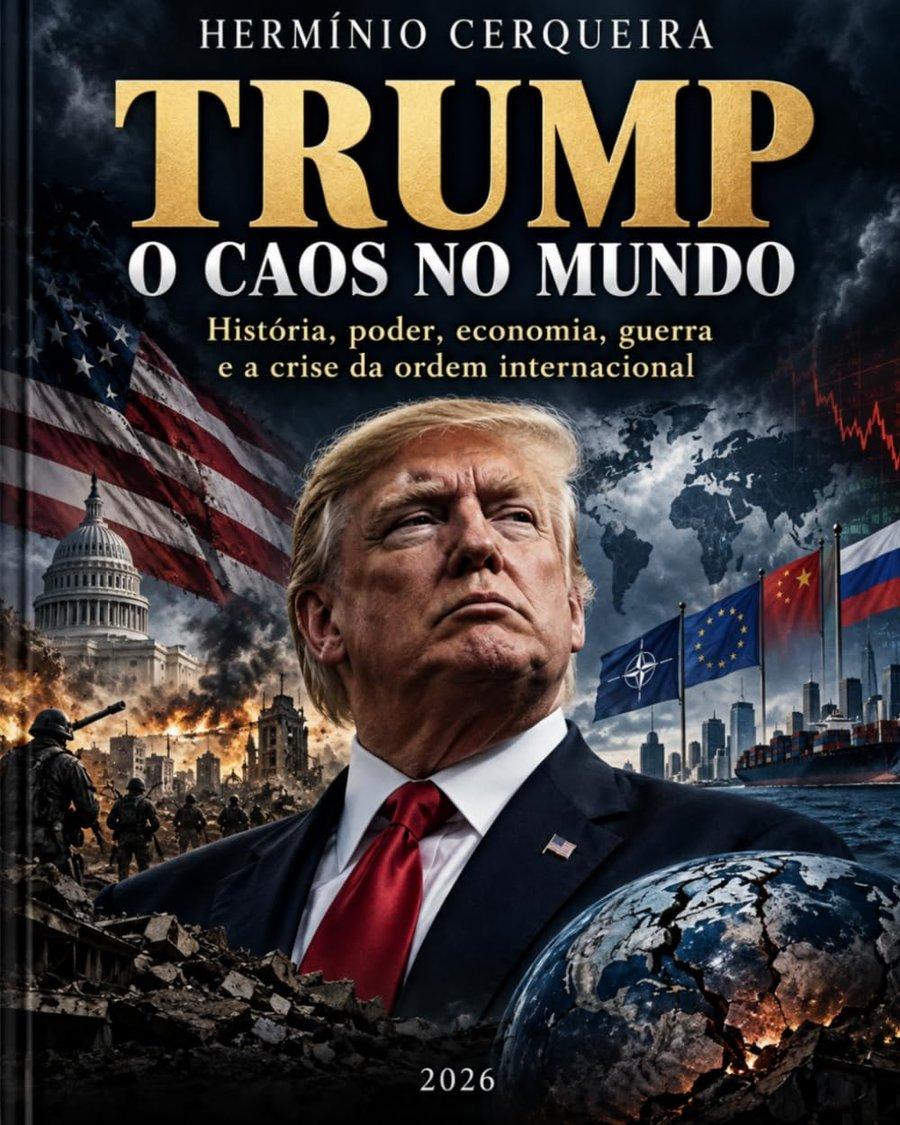
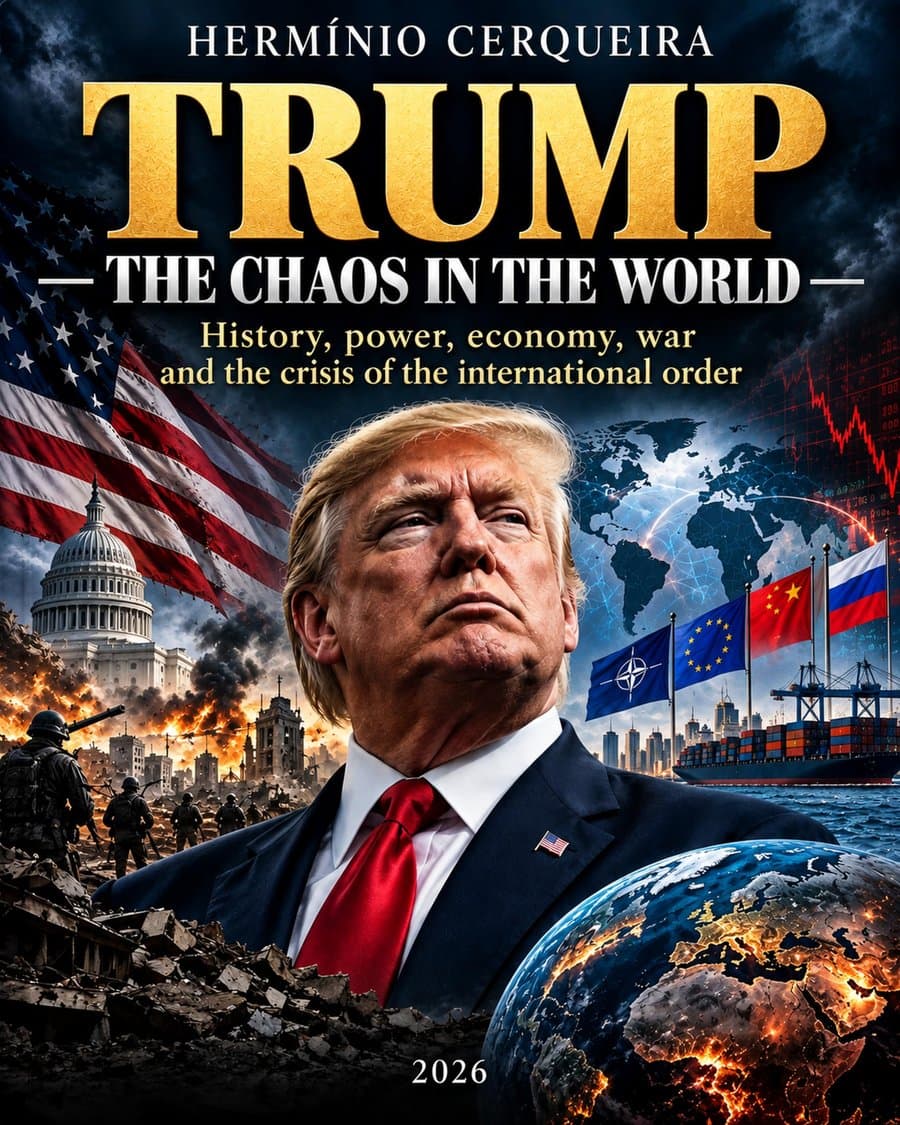
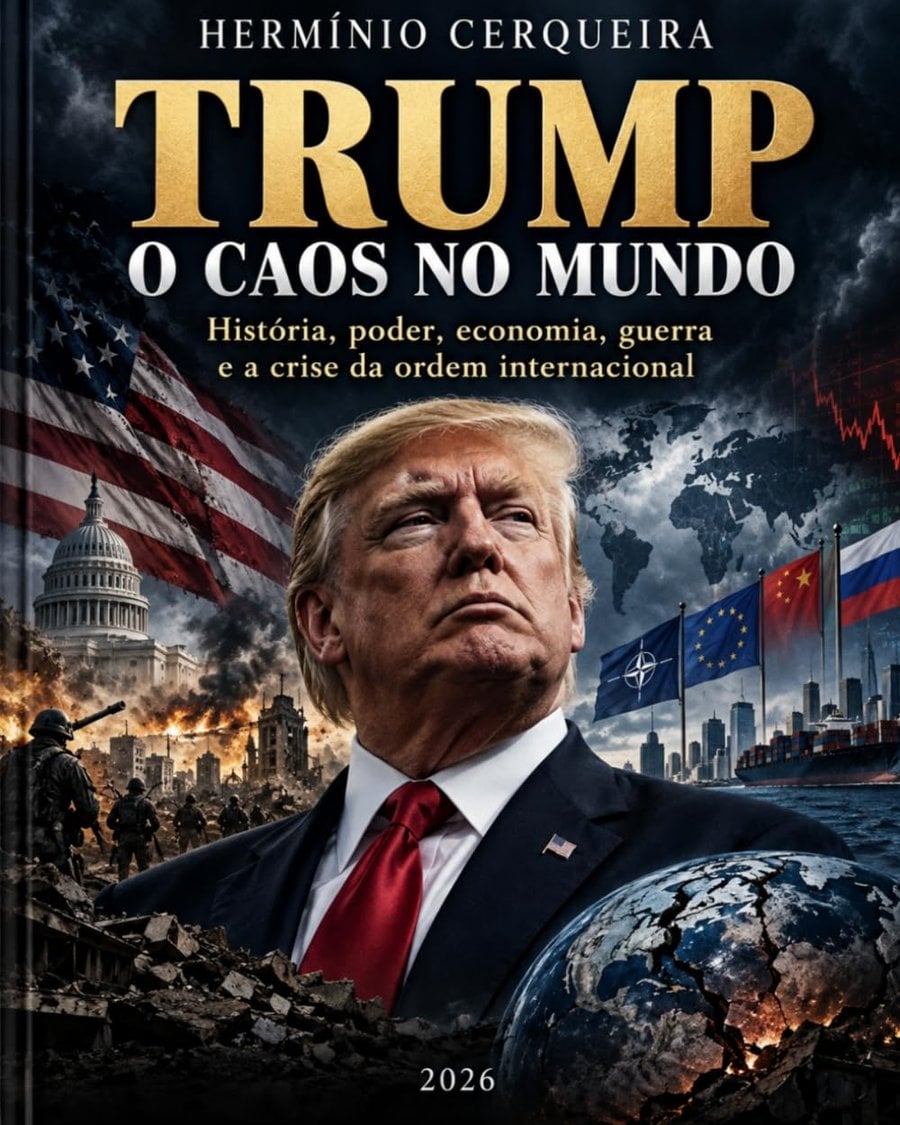
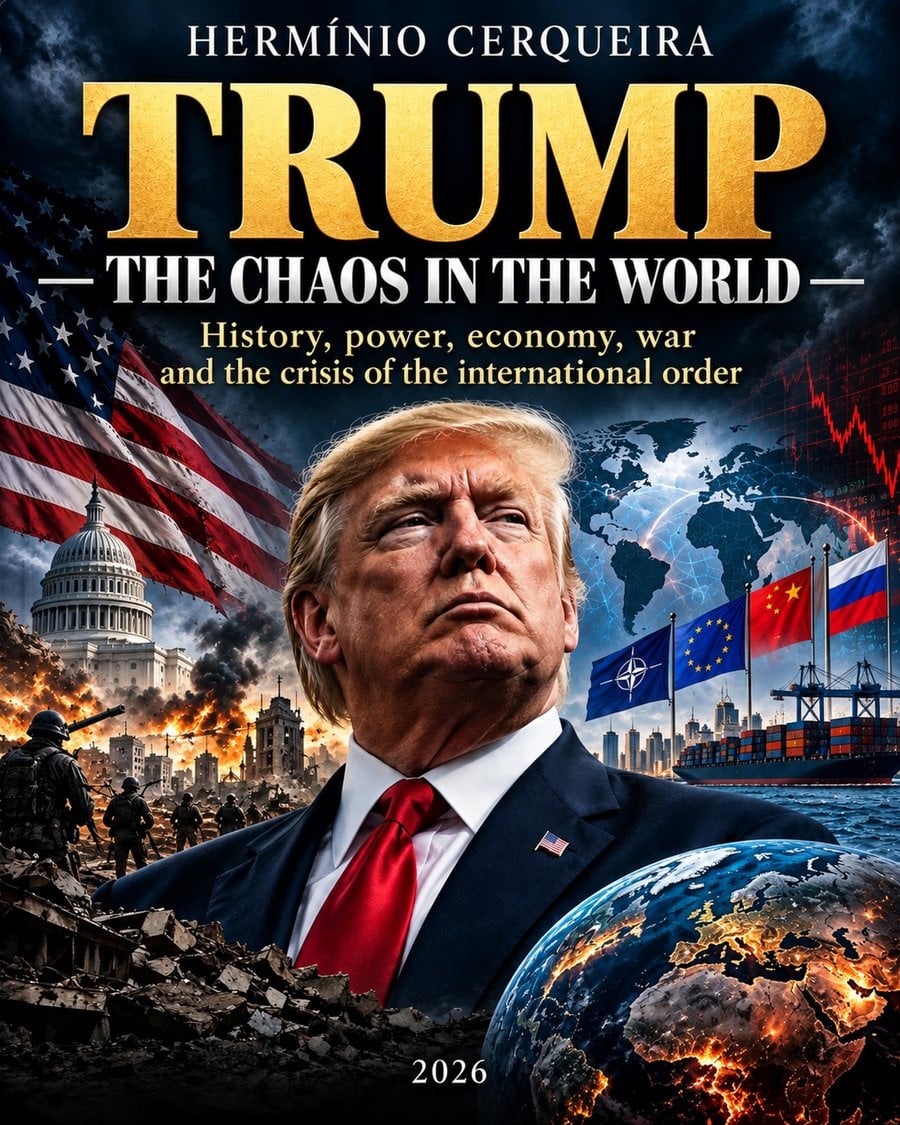
Trump — O Caos no MundoTrump — Chaos in the World
História, poder, economia, guerra e a crise da ordem internacional
History, power, economics, war, and the crisis of the international order
- Liczba stron
- 771 stron
- ISBN
- ISBN 979-8177151465
- Pierwsze wydanie
- Formaty
- Miękka oprawa i Kindle
- Liczba stron
- 1118 stron
- Data wydania
- Formaty
- Miękka oprawa i Kindle
Opis
Opis z wydania oryginalnego, w języku: portugalski.
Tekst opublikowany wraz z wydaniem w języku: angielski (Amazon).
Pokaż więcejPokaż mniej — Opis
O caos chega à vida quotidiana muito antes de receber um nome nos livros de História. Aparece numa factura de transporte, no preço de um alimento, no adiamento de uma contratação ou na inquietação de quem acompanha uma guerra sem saber se ela terminará amanhã ou alastrará na semana seguinte. A distância entre uma decisão presidencial e a mesa de uma família é hoje percorrida por navios, contratos, redes financeiras e expectativas. A política internacional deixou há muito de ser um assunto reservado a diplomatas; decide parte das condições em que todos trabalham, compram, poupam e imaginam o futuro.
Donald Trump não criou sozinho as contradições deste mundo. Herdou desigualdades, guerras, dependências industriais e instituições que já tinham perdido credibilidade. Também não controla todos os acontecimentos que se seguem às suas decisões. A responsabilidade de um governante, porém, não desaparece porque os problemas são anteriores à sua chegada. Quem assume a direcção da maior potência militar e de uma economia central no sistema internacional adquire uma obrigação particular: perceber como os seus actos afectam os restantes participantes, incluindo os que não têm meios para se defender das consequências.
A tese deste livro é que o trumpismo transforma demasiadas vezes a interdependência em instrumento de coacção e a imprevisibilidade em método de governação. A ameaça pode obter uma concessão imediata; repetida sem limites, ensina o interlocutor a procurar uma saída. Uma tarifa pode proteger uma actividade; generalizada sem avaliação, encarece os factores de produção dessa mesma economia. Um ataque pode destruir uma instalação; isso não demonstra que tenha criado condições para uma paz mais segura. Entre a imagem da vitória e o resultado estratégico existe um espaço que a propaganda procura esconder e que a análise deve tornar visível.
O leitor encontrará aqui uma crítica às decisões e ao método de Trump, não uma condenação colectiva dos norte-americanos. A sociedade dos Estados Unidos contém instituições, movimentos, investigadores, trabalhadores e eleitores com posições divergentes. Confundir um país inteiro com o seu Presidente reproduziria o mesmo empobrecimento intelectual que reduz relações internacionais a personalidades e ressentimentos. Também seria errado absolver outros governos dos seus próprios actos. A Rússia responde pela agressão à Ucrânia; o poder iraniano responde pelas suas decisões; a China deve ser avaliada pelos seus instrumentos de pressão e pelas suas restrições internas. Criticar Washington não concede imunidade a Pequim, Moscovo ou Teerão.
A obra acompanha as origens do trumpismo, o primeiro mandato, a pandemia, a recusa da derrota de 2020 e o regresso ao poder. Examina depois a transformação do Estado, as guerras, a economia e as consequências internacionais. Ormuz reúne várias destas dimensões: mostra como uma decisão militar pode atravessar navios, seguros, energia e preços até chegar à vida doméstica. A análise estende-se à Europa, à China, aos países mais vulneráveis e a Portugal, terminando na questão das alternativas democráticas.
A pergunta final é prática. Como pode uma sociedade reduzir a sua exposição ao poder arbitrário, preservar capacidade de decisão e impedir que cada crise prepare a seguinte? A resposta exige escolhas difíceis e investimentos demorados. Exige também uma disciplina mais simples: recusar a ideia de que o barulho equivale a estratégia, de que a humilhação produz respeito e de que a capacidade de destruir constitui, por si só, uma forma de governar.
Pokaż więcejPokaż mniej — Opis
This work is a critical political essay on the rise of Donald Trump, his two presidencies, and the consequences of his method of power. It does not constitute an exhaustive biography, nor does it conflate the United States with its President. It examines decisions and institutions, acknowledges the responsibilities of other actors, and distinguishes documented events from interpretation. The information is dated September 22, 2026. In this edition, the references used are also presented at the end of each chapter, maintaining a consolidated bibliography at the end. Sensitive factual statements were reviewed prioritizing primary sources, official documents, judicial decisions, multilateral organizations, and institutional research; when a source represents only the position of one party, this is indicated. Hypothetical examples are presented as such; scenarios are not guaranteed predictions. The texts provided as a starting point guided the choice of issues, but the factual statements were confronted with identified sources. The book uses European Portuguese with spelling prior to the 1990 Orthographic Agreement. The original titles of the sources retain the language of publication. Dates of decisions, reports, and projections should be read within their respective contexts.
Introduction Chaos enters daily life long before it receives a name in history books. It appears in a transport invoice, in the price of food, in the postponement of a hiring, or in the anxiety of those who follow a war without knowing if it will end tomorrow or spread the following week. The distance between a presidential decision and a family's table is now traversed by ships, contracts, financial networks, and expectations. International politics has long ceased to be a matter reserved for diplomats; it determines part of the conditions under which everyone works, buys, saves, and imagines the future.
Donald Trump did not create the contradictions of this world alone. He inherited inequalities, wars, industrial dependencies, and institutions that had already lost credibility. Nor does he control all the events that follow his decisions. However, the responsibility of a leader does not disappear because the problems predate his arrival. Whoever assumes the leadership of the greatest military power and a central economy in the international system acquires a particular obligation: to understand how their actions affect other participants, including those who have no means to defend themselves from the consequences.
The thesis of this book is that Trumpism often transforms interdependence into an instrument of coercion and unpredictability into a method of governance. A threat may obtain an immediate concession; repeated without limits, it teaches the interlocutor to seek a way out. A tariff may protect an activity; generalized without evaluation, it increases the cost of production factors in that same economy. An attack may destroy an installation; this does not demonstrate that it has created conditions for a more secure peace. Between the image of victory and the strategic outcome lies a space that propaganda seeks to hide and that analysis must make visible. The reader will find here a critique of Trump's decisions and methods, not a collective condemnation of Americans. American society comprises institutions, movements, researchers, workers, and voters with divergent positions. To confuse an entire country with its President would reproduce the same intellectual impoverishment that reduces international relations to personalities and resentments. It would also be wrong to absolve other governments of their own actions. Russia is accountable for its aggression against Ukraine; Iranian power is accountable for its decisions; China must be judged by its instruments of pressure and its internal constraints. Criticizing Washington does not grant immunity to Beijing, Moscow, or Tehran.
Spis wydań
Każde wydanie w osobnej linii, w języku, w którym się ukazało. Sklep Amazon wybiera się raz — obowiązuje dla wszystkich wydań.
Wydanie w języku: portugalski:
Trump — O Caos no Mundo
771 stronMiękka oprawa i Kindle
Wydanie w języku: angielski:
Trump — Chaos in the World
1118 stronMiękka oprawa i Kindle
- W sklepach Amazon każdy odnośnik korzysta z kodu danego wydania (ASIN); dostępnością w poszczególnych krajach zarządza Amazon.
- W Portugalii książki kupuje się w Amazon Hiszpania: nie istnieje portugalski sklep Amazon.
Dane książki
- Gatunek
- Esej
- Oś twórczości
- Strategia i geopolityka
- Pierwsze wydanie
- Liczba stron
- 771 (wydanie w języku: portugalski)
- Formaty
- Książka drukowana (miękka oprawa) · E-book Kindle
- Języki
- 2 — portugalski i angielski
- ISBN
- 979-8177151465