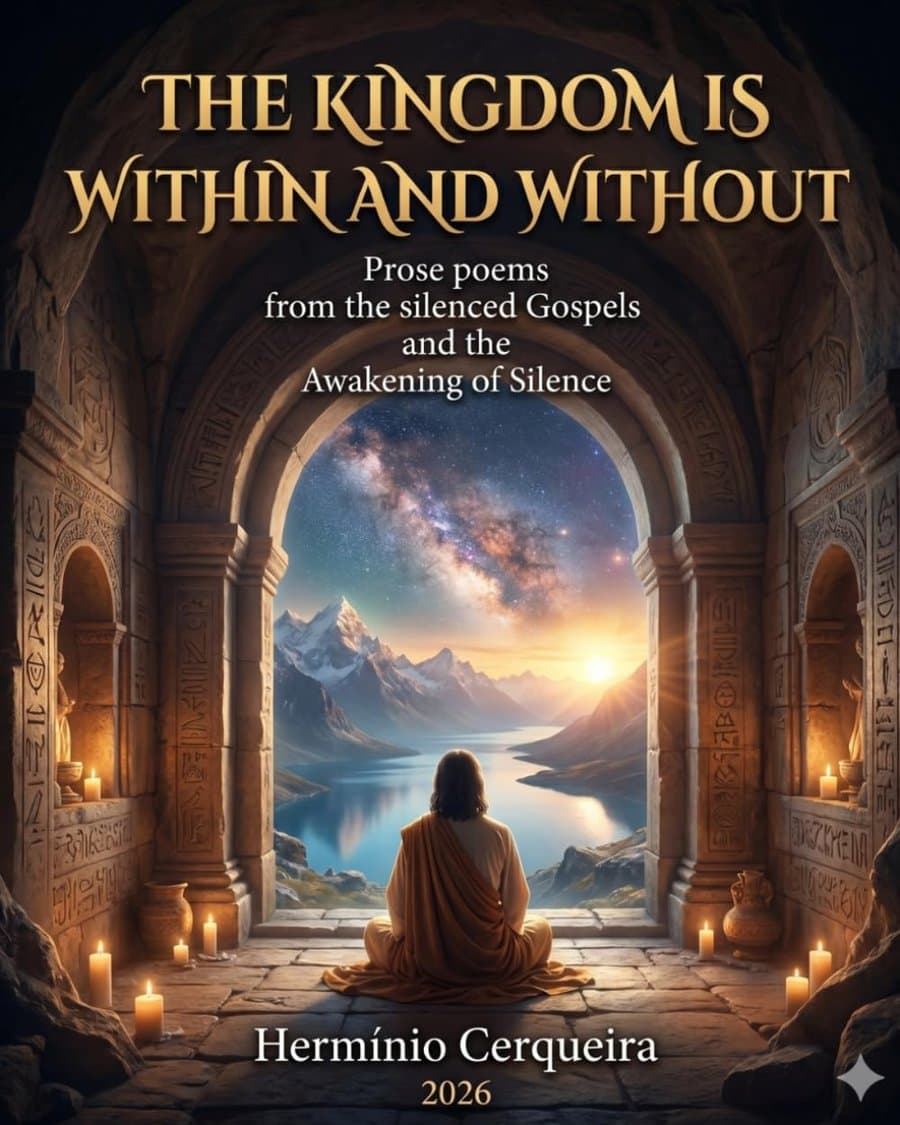
The Kingdom Is Within and WithoutO Reino está Dentro e Fora
Prose poems from the silenced Gospels and the Awakening of Silence
Available in 2 languages
“Aos que ainda perguntam. E aos que aprenderam a calar.”
- Pages
- 458 pages
- ISBN
- ISBN 979-8198502260
- Published
- Formats
- Kindle and paperback
- Pages
- 458 pages
- ISBN
- ISBN 979-8198499058
- First published
- Formats
- Kindle and paperback
About the book
Text published with the English edition (Amazon).
For those who are still asking.
And to those who have learned to be silent.
"The Kingdom is within you and it is outside of you."
When you come to know yourselves,
then you will be known.
— Gospel of Thomas, logion 3 (NHC II,2)
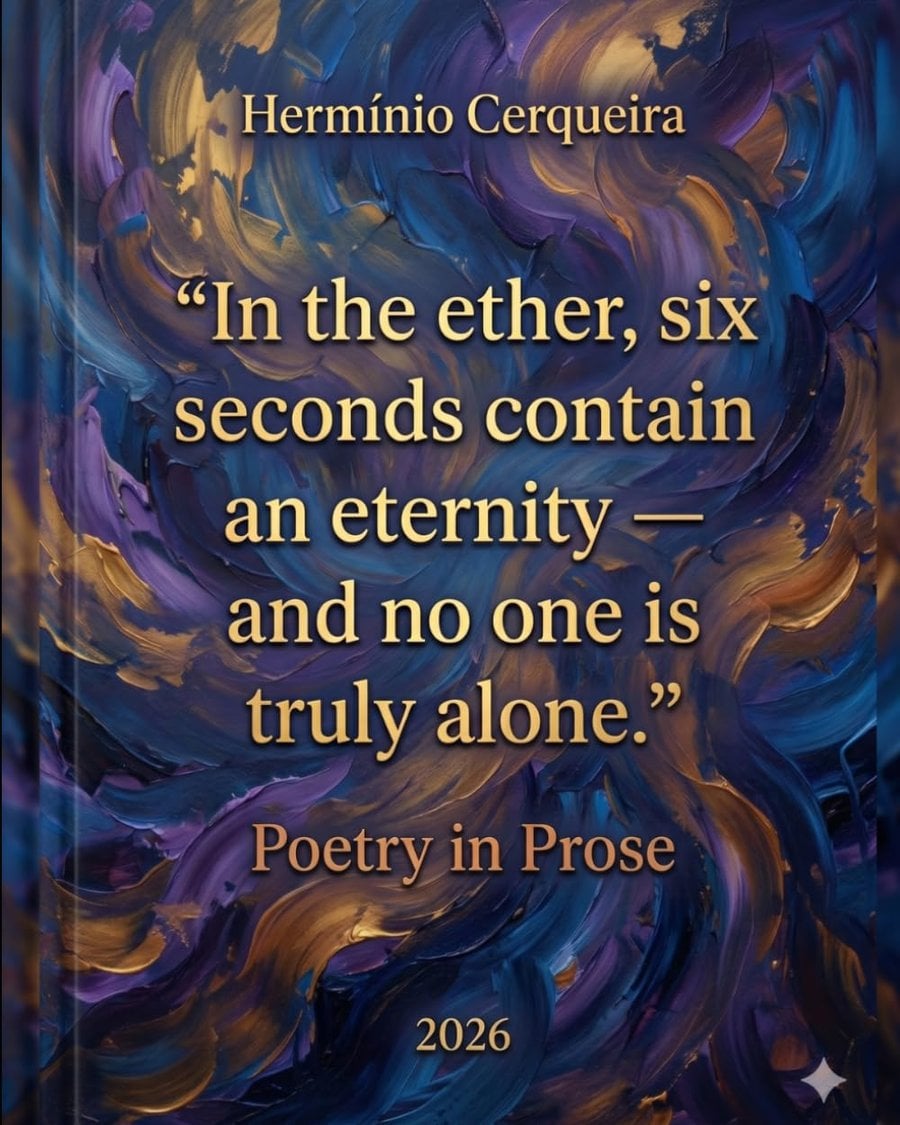
"May this book reach you in a moment."
where your heart is ready.
— resonance of The Awakening of Silence
There was a day when everything stopped—and it was on that day that everything began. It wasn't a day of external catastrophe, although there was that too. It wasn't a day of tragic news, although life had brought me several. It was an ordinary day, one of those days when the sun streams through the window as if it had never entered before, and the light has that dense, liquid quality that ancient painters called morning gold, and mystics called causeless grace, and Zen monks simply called now. It was a Saturday, perhaps it was Sunday, the name of the day doesn't matter: what matters is that inside me, a clock I had been running aimlessly for a long time stopped. And when that clock stopped, I heard for the first time a silence that had always been there, waiting for me, patient as a mother.
It wasn't fear, although there was fear. It wasn't emptiness, although there was emptiness. It was, above all, recognition—like returning to a house where one was born, after many years abroad, and discovering that everything is as one left it, and that it was one who had changed languages, and that one needed to relearn to breathe in the language of childhood. I sat in my usual chair, at my usual table, with my usual glass, and the world, that world that seemed familiar to me down to the smallest details of its frustrations, suddenly opened up like a slow flower. The walls were still walls. But they had a new thickness, as if each brick held its own memory, and I, for the first time in decades, had enough inner silence to hear it.
It was on that day that I understood, still without words, what I would try to say for years with clumsy words: that life, this life I have, is not the stage for a play I'm acting badly in. It is the very heart of a mystery that calls me to dwell within. That the emptiness I felt was not the absence of a distant God; it was the sign that an intimate God was opening up his space within me. That what he called boredom was merely the name he gave to silence when he lacked the courage to listen to it. And that everything—absolutely everything, the bread and the knife, the rain and the morning, the face of my beloved and the face of the passing stranger, the light that enters and the shadow that hides—was an invitation, a call, a prayer to be heard without anyone needing to recite it.
The ancients said that the Kingdom is both within and without. I didn't understand the phrase until that day. I always thought it was an elegant phrase, one of those quoted in carefully thought-out sermons, but belonging to a spiritual geography that was external to me. That Saturday, or perhaps it was Sunday, I realized it was a descriptive phrase, not rhetorical. That the Kingdom, that Kingdom the Gospels promised, the mystics sang of, and the philosophers questioned, was not a place. It was a way of being in places. That if I looked for it in the sky, the birds would arrive first; that if I looked for it in the sea, the fish would arrive first; but that if I stopped, simply stopped, it was here, inside the breathing chest and outside of it, in the cup of coffee cooling on the table, in the dust dancing in the sunbeam, in the distant voice of a child laughing in a courtyard I cannot see...
Index of editions
One line per edition, in the language in which it was published. Choose your Amazon store once; it applies to every edition.
English edition:
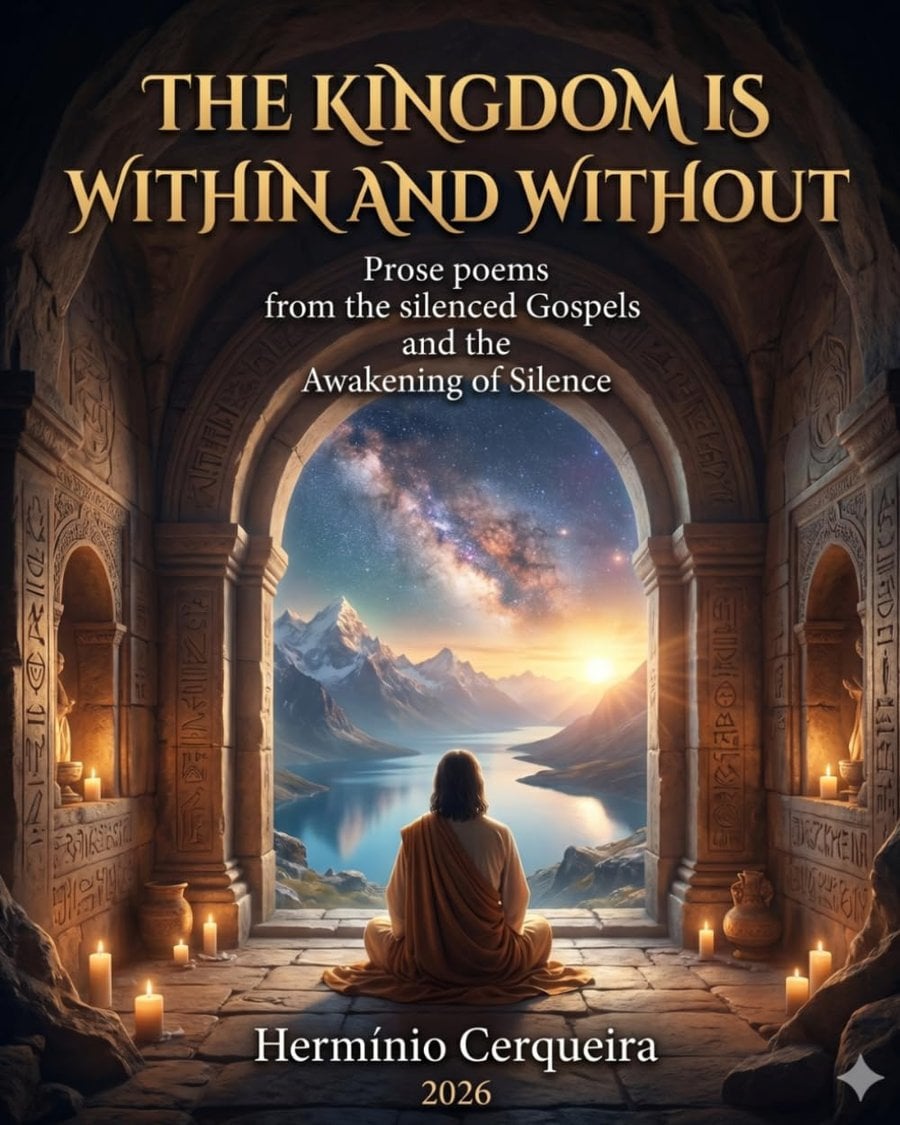
The Kingdom Is Within and Without
458 pagesKindle and paperback
Portuguese edition:
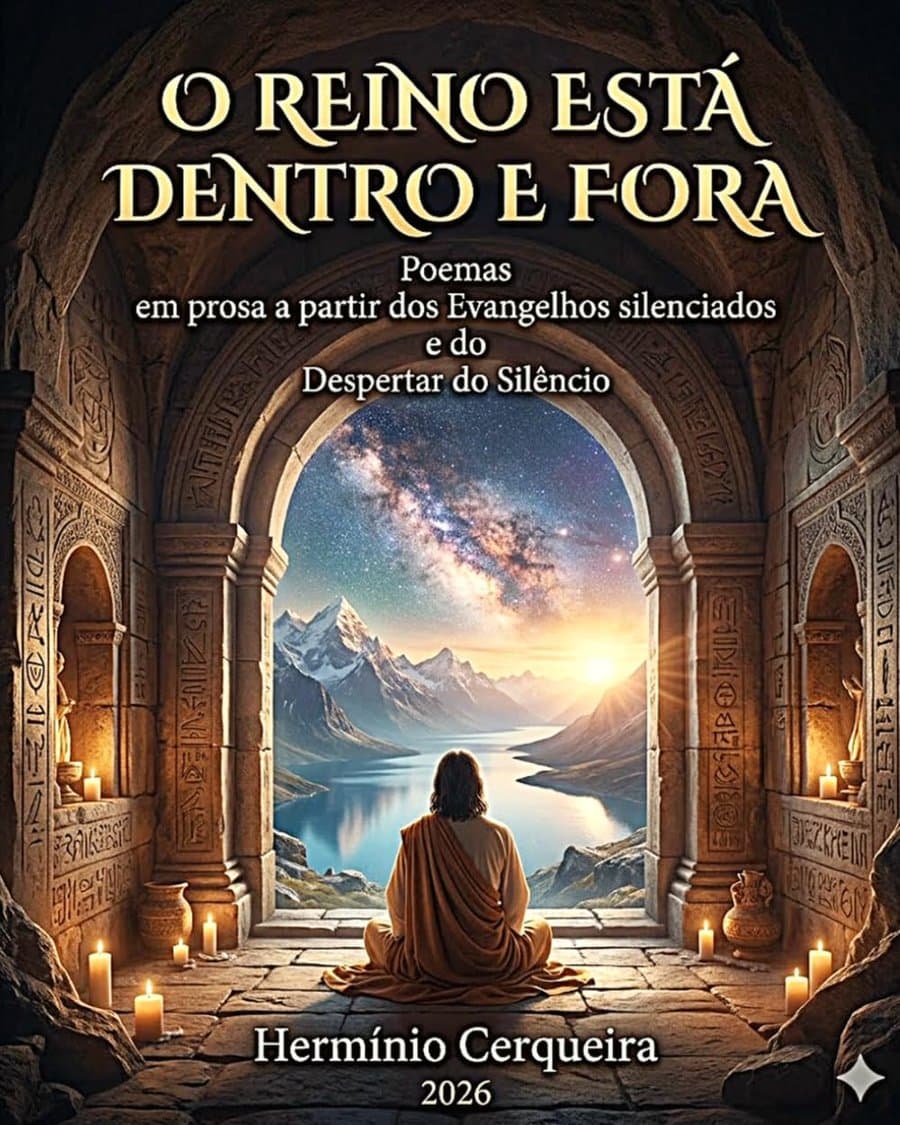
O Reino está Dentro e Fora
458 pagesKindle and paperback
- In the Amazon stores, each link uses the edition’s own code (ASIN); availability in each country is managed by Amazon.
- In Portugal, buy from Amazon Spain: there is no Portuguese Amazon store.
Critical reading — “A Obra Comentada” (2026)
A third-person critical reading, reproduced from “A Obra Comentada,” the annotated catalog of the work published by the author himself. It is not a press review.
Original text in Portuguese.
Se Os Evangelhos Silenciados é a catedral ensaística, O Reino Está Dentro e Fora é o seu claustro lírico: três centenas de poemas em prosa organizados em duas partes — «Dentro de Vós» e «Fora de Vós» — sob a epígrafe do logion 3 do Evangelho de Tomé: «O Reino está dentro de vós e está fora de vós». A dedicatória define de imediato o campo de tensão do livro: «Aos que ainda perguntam. E aos que aprenderam a calar.» O pórtico retoma a cena fundadora de toda a obra de Cerqueira — o dia em que tudo parou —, agora reescrita em registo místico: «Houve um dia em que tudo parou — e foi nesse dia que tudo começou». O sujeito descobre que «o vazio que sentia não era a ausência de um Deus distante; era o sinal de que um Deus íntimo estava a abrir, dentro de mim, o seu espaço», e que o tesouro esperava, «paciente como mãe, no chão do peito onde o ouro sempre se escondeu».
O livro assume dois «corpos de texto» confessados: os apócrifos (Tomé, Filipe, Maria Madalena) e os ensinamentos contemplativos do Oriente, tal como foram trabalhados em O Despertar do Silêncio. Daí a arquitectura singular dos capítulos, quinze poemas cada, que alternam ciclos bíblicos (o despertar da pergunta, a luz originária, a câmara nupcial do Evangelho de Filipe, Maria Madalena no jardim) com ciclos de matriz budista (maitri, o medo como portal, o kintsugi, o tonglen, a impermanência «como beijo»). É talvez o livro mais sincrético do autor, e o mais programático no seu ecumenismo: «Encontro nas Quatro Nobres Verdades a mesma coisa que encontro no Sermão da Montanha». As tradições, diz, «no seu cume, encontram-se; é só nas suas saias que se separam».
A forma é o poema em prosa longo, de respiração agostiniana, dirigido a um «tu» que é sempre o leitor concreto — herança directa das Confissões, que o livro cita como modelo de «fé interrogativa». Cada peça parte de uma pergunta bíblica (Onde estás? Quem dizem os homens que eu sou? O que queres que eu te faça?) e desdobra-a em meditação existencial, com uma convicção repetida como um baixo contínuo: «quem pergunta como quem ama está já, sem o saber, dentro da resposta». Do lado de Tomé vem a mais bela linha de leitura do conjunto, a glosa do «não saboreará a morte»: «não saboreará a morte aquele que tiver encontrado, dentro de si, o lugar onde a morte nunca chegou». No mapa da obra completa, este livro é a charneira perfeita entre o ensaio teológico e a lírica meditativa — e a prova de que, para este autor, a espiritualidade não é tema entre temas, mas método: a mesma atenção que noutros livros disseca a desinformação digital aqui se ajoelha diante de um logion copta. O estratega sente; por isso não é só cálculo.
Quotations from the book
“o vazio que sentia não era a ausência de um Deus distante; era o sinal de que um Deus íntimo estava a abrir, dentro de mim, o seu espaço”
“O Reino está dentro de vós e está fora de vós”
“Houve um dia em que tudo parou — e foi nesse dia que tudo começou”
“paciente como mãe, no chão do peito onde o ouro sempre se escondeu”
“Encontro nas Quatro Nobres Verdades a mesma coisa que encontro no Sermão da Montanha”
“no seu cume, encontram-se; é só nas suas saias que se separam”
“quem pergunta como quem ama está já, sem o saber, dentro da resposta”
“não saboreará a morte aquele que tiver encontrado, dentro de si, o lugar onde a morte nunca chegou”
Other expressions quoted from the book
“Dentro de Vós”“Fora de Vós”“corpos de texto”“como beijo”“tu”“fé interrogativa”“não saboreará a morte”
Source: «A Obra Comentada» (Sintra, Julho de 2026) — comentário crítico
Book details
- Genre
- Poetry
- Axis of the work
- Poetry, Spirituality, and Meditation
- First published
- Pages
- 458 (English edition)
- Formats
- Kindle e-book · Paperback
- Languages
- 2 — Portuguese and English
- ISBN
- 979-8198502260